


A little-watched civil rights case that threatens Silicon Valley’s Section 230 immunity took a huge step forward Friday as an appeals court that rarely does so agreed to review a lower court’s decision.
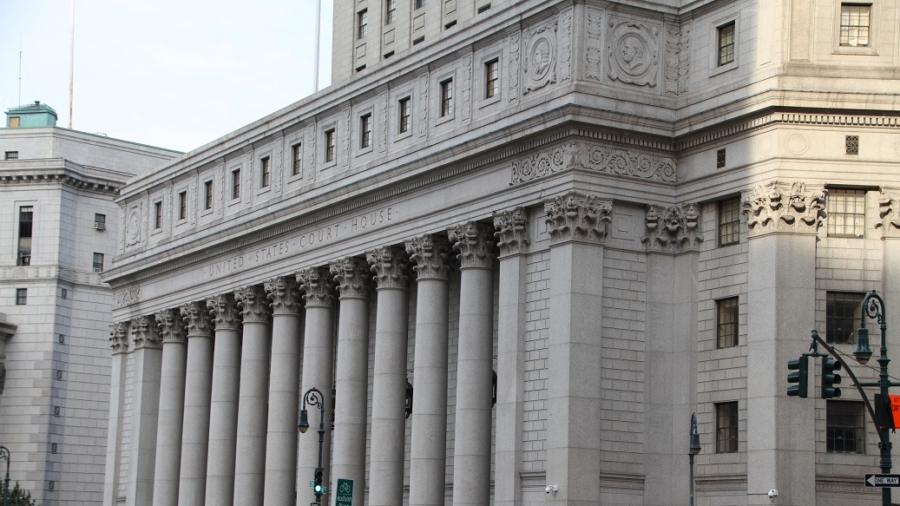
The U.S. Appeals Court for the Second Circuit in New York agreed to review a lower court’s ruling that Section 230 of the Communications Decency Act (CDA) protects Big Tech companies like Vimeo from civil rights liability in censorship cases.
Big Tech censorship became a hot button issue during the 2020 presidential campaign when President Donald Trump was selectively censored by Twitter, YouTube, and Facebook.
The controversy became especially heated late in the campaign when a New York Post series of news articles about the allegedly corrupt business dealings of President Joe Biden’s son, Hunter, was banned by the Big Tech giants.
A federal district court had previously held that Section 230 exempted firms like Vimeo and a three-judge panel of the Second Circuit upheld the lower court’s ruling.
As a result of Friday’s decision, however, the panel’s ruling will be reheard before the entire Second Circuit. The Second Circuit covers six federal district courts in three states, including New York, Connecticut and Vermont.
There currently are 10 active judges on the Second Circuit and 13 semi-retired senior judges.
“Section 230 was not intended to give Big Tech the right to exclude persons from their platform just because the customer is black, Muslim, white, Christian, homosexual or formerly homosexual. That is plain invidious discrimination,” said Tyler.
Church United is a non-profit that claims to have more than 750 pastors affiliated with its efforts to “positively impact the political and moral cultures of their communities.”
Tyler’s firm claimed in a statement made public Friday that the court’s decision “is even more remarkable given the Second Circuit’s notable reputation for shunning re-hearings.”
“I never thought I’d see the day that it would be legal in America to discriminate against my faith and the fact that I was previously engaged in the gay lifestyle,” Domen said in the statement. “As a pastor and former homosexual, I’m encouraged by the rehearing of our sexual orientation and religious discrimination lawsuit.”
“Under the District Court’s ruling, discrimination that is unconscionable in any other business or consumer context, is allowed if it is committed by an interactive computer service.
“The free ticket for internet platforms to discriminate is erroneously based on the Communications Decency Act … The legislature created this immunity to ensure that providers of an interactive computer service would not be treated as publishers of third-party content and therefore liable for the content of others.
“However, … applying the CDA to shield websites from liability for banning protected classes of customers based on discriminatory intent goes far beyond both the plain language of the CDA and the legislative purpose.”
Vimeo has been asked for comment, but has not yet responded.