


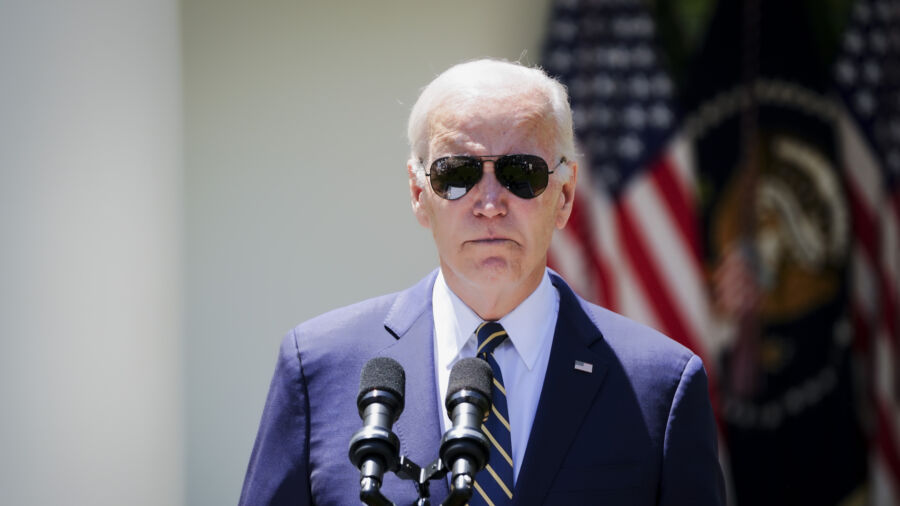
The administration and House Republican leaders looked to garner support for a tentative deal to increase the country’s borrowing limit amid ballooning government debt following weeks of intense negotiations.
Following the announcement that both sides reached an “agreement in principle,” the president said the deal eliminates “the threat of catastrophic default off the table” and ensures the nation’s economic recovery moves ahead.
Biden repeated the White House talking point of the agreement being a compromise in a divided government, meaning that “no one gets everything they want.”
“But that’s the responsibility of governing,” he said, adding that it keeps Democrats’ key priorities, such as Social Security and Medicare, intact.
The legislation—the Fiscal Responsibility Act—will now head to both chambers of Congress, where the president has urged lawmakers to pass the agreement.
“Let’s keep moving forward on meeting our obligations and building the strongest economy in the history of the world,” he told reporters on May 28.
The critical question in the nation’s capital is: Does House Speaker Kevin McCarthy (R-Calif.) have enough votes?
Biden conceded he did not know if McCarthy had the votes.
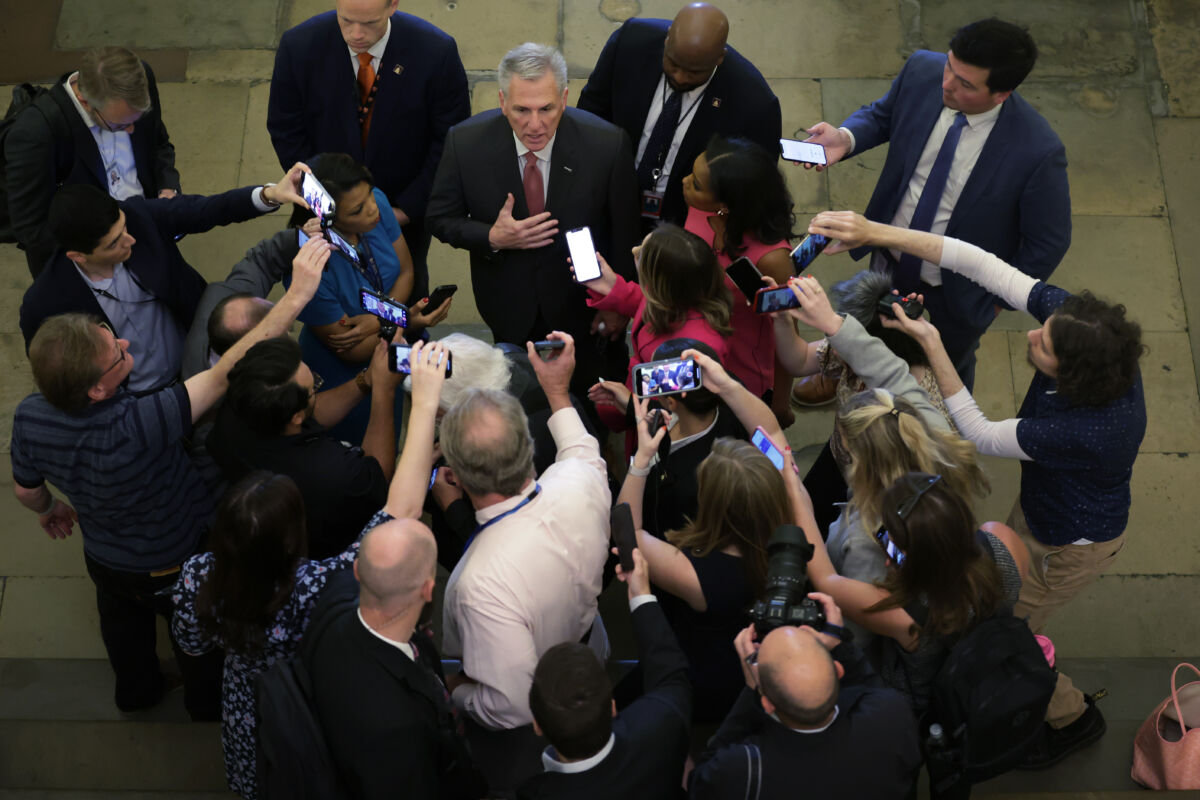
“This is a good strong bill that a majority of Republicans will vote for,” the House Speaker told the press on Capitol Hill.
Lawmakers on both sides of the aisle have been vocal in their disappointment about the debt limit deal.
What Republicans Are Saying
Rep. Ken Buck (R-Colo.), who has been vocal about his displeasure over the negotiations, saying on Twitter that he thinks Democrats are the winners, and they “got everything they wanted with this bill and don’t have to defend their reckless spending prior to the 2024 election.”Speaking with Fox News on May 28, Rep. Ralph Norman (R-S.C.) asserted that Republicans are the only party that can restore fiscal sanity to Congress. Still, the deal with the administration “fails to uphold that responsibility,” the congressman said.
Rep. Lauren Boebert (R-Colo.) said on Twitter that this is another example of “half-baked compromises” and why the federal government faces a $31 trillion national debt.
One common complaint from conservative critics is the lack of funding cuts to the Internal Revenue Service. As part of last year’s “Inflation Reduction Act,” lawmakers gave the tax-collecting agency $80 billion in new funding. However, the “Limit, Save, Grow Act” slashed the new funding by $70 billion.
According to a document obtained from a White House source, the debt limit agreement includes a provision to shift $10 billion in fiscal years 2024 and 2025 “to secure higher resources for non-defense priorities.”
Despite fiscal concerns from many Republicans, the House GOP leadership said the Fiscal Responsibility Act has “secured a historic series of wins worthy of the American people.”
What Democrats Are Saying
But while much of the focus is on the Republicans, there is also some consternation surrounding support from Democrats.One of the leading issues perturbing Democrats is tightening work requirements to obtain Supplemental Nutrition Assistance Program (SNAP), also known as food stamps, and the Temporary Assistance for Needy Families (TANF), the document confirmed. However, the proposal does not make any changes to Social Security and Medicare.
House Minority Leader Hakeem Jeffries (D-N.Y.) expects there will be Democratic support following a full briefing by the White House.
Sen. Chris Coons (D-Del.) told his colleagues who have “serious misgivings” about the Fiscal Responsibility Act that “this is far better than defaulting.”
“We must come together to pass this deal and avert a self-destructive default. After that, let’s work together to end the risk of these self-inflicted debt ceiling crises,” he said in a statement.
Votes are scheduled to take place in the House on May 30 at 6:30 p.m.