

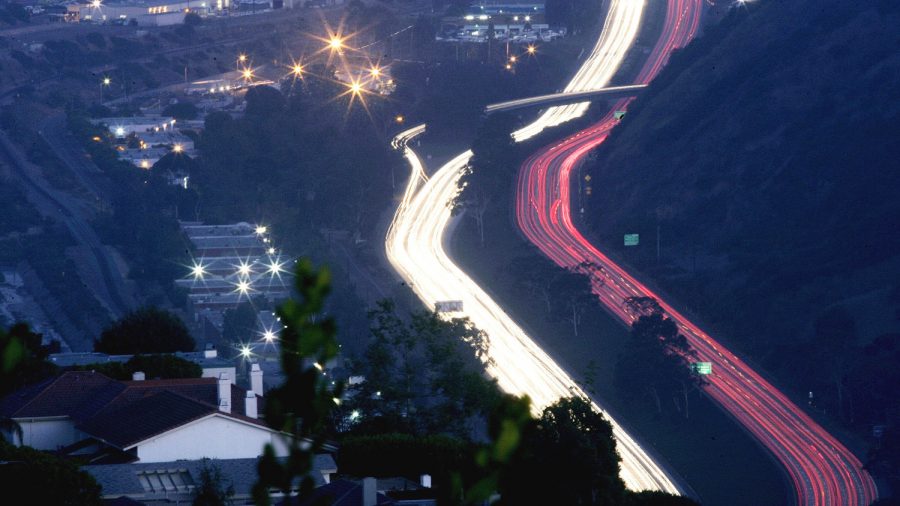
Drivers might be allowed to drive whatever speed they like on two major highways in California in the near future if a new bill proposed in February becomes law.
Senator John M. W. Moorlach, who authored the bill, named it "the High-Speed Road," after the state's high-speed rail project.
I-5 and SR 99 are key components to California's highway system, which connect several major cities in Northern and Southern California. By adding two lanes each, Sen. Moorlach suggests that it will help reduce road deterioration and traffic congestion caused by the state's growing population.
In addition, he said driving with no speed limit might not be as dangerous as it seems.
"The BASt Federal Highway Research Institute delved deeper into accidents in Germany, finding injured accident rates (per million vehicle km) on autobahns is 0.09, compared to 0.22 on national and rural roads. The fatality rate (per billion vehicle km) is 1.7 on autobahns, and 6.3 on national and rural road," he continued.
The exact cost of the project is still unclear, but the author's estimation is around $3.3 billion for the four new lanes from Grapevine to Sacramento.
The high-speed road project will be funded by revenue from the state's cap and trade program and would likely be cheaper than the high-speed rail, according to the author.
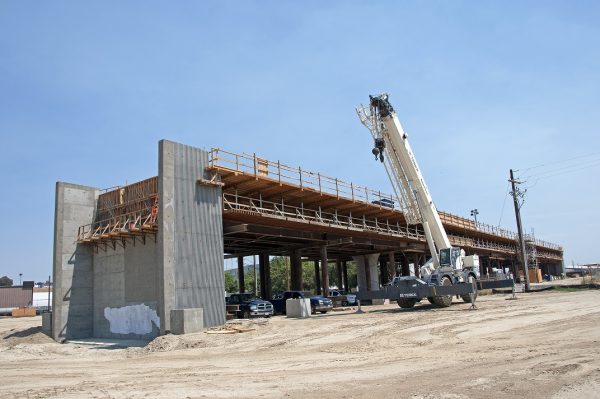
The high-speed rail project, which started in 2008 and was expected to be completed in 2033, has been deeply troubled with serious delays and financial issues.
The project originally planned to connect San Francisco and Los Angeles with a travel time of 2 hours and 40 minutes. However, because of speed restrictions, certain design requirements, and cost concerns, a subsequent report had an estimate of 3.5 to 4 hours of total travel time.
Newly elected Gov. Garvin Newsom suggested shrinking the scope of the project, saying it's too expensive, slow, and opaque during his State of the State speech on Feb. 12.
One week after Newsom’s speech, the U.S. Department of Transportation (DOT) canceled a $929 million grant to the project and began “actively exploring every legal option” for the return of $2.5 billion it has already allocated to the project.
“If Sacramento is serious about allowing Californians to travel between Los Angeles and the Bay Area, and High-Speed Rail will take too long to build, let's construct four additional lanes with no maximum speed limit to provide for high speed on a safe road,” said Senator Moorlach.