


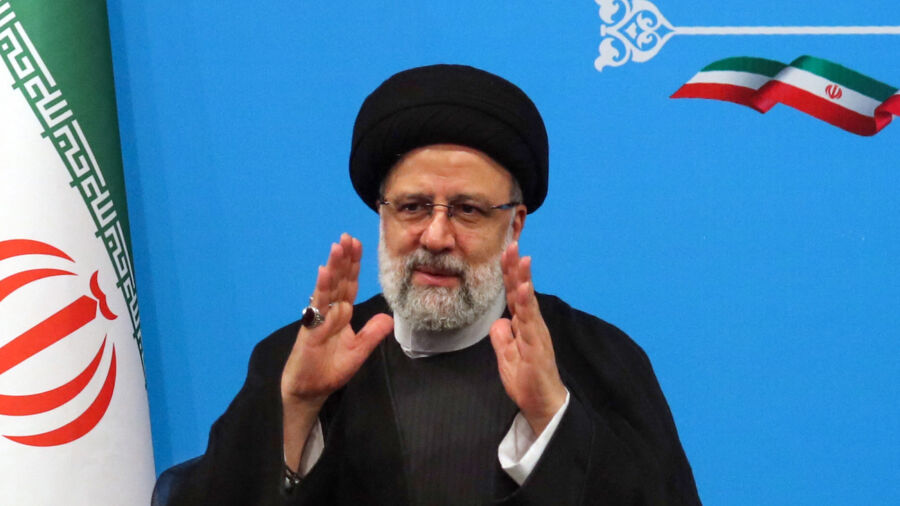
Iran has moved to expel nuclear inspectors from the United Nations just days after the Biden administration authorized the transfer of $6 billion in frozen Iranian funds as part of a prisoner swap deal.
Rafael Mariano Grossi, the director general of the International Atomic Energy Agency (IAEA)—a U.N. nuclear watchdog that promotes the safe and peaceful use of nuclear technologies—said in a statement on Sept. 16 that Iran had informed him of its "decision to withdraw the designation of several experienced Agency inspectors assigned to conduct verification activities in Iran under the NPT Safeguards Agreement," referring to the Non-Proliferation of Nuclear Weapons Treaty.
The NPT is an international agreement aimed at preventing the spread of nuclear weapons, promoting disarmament, and allowing the peaceful use of nuclear energy. It went into force in 1970. Under the NPT, five countries are recognized as official nuclear-weapon states (the United States, China, Russia, the United Kingdom, and France). The treaty commits them not to transfer nuclear weapons, while non-nuclear states promise not to acquire them. A total of 191 countries have joined the NPT.
The IAEA oversees and ensures the members comply, mainly by inspecting nuclear facilities to prevent the misuse of nuclear technology for military purposes.
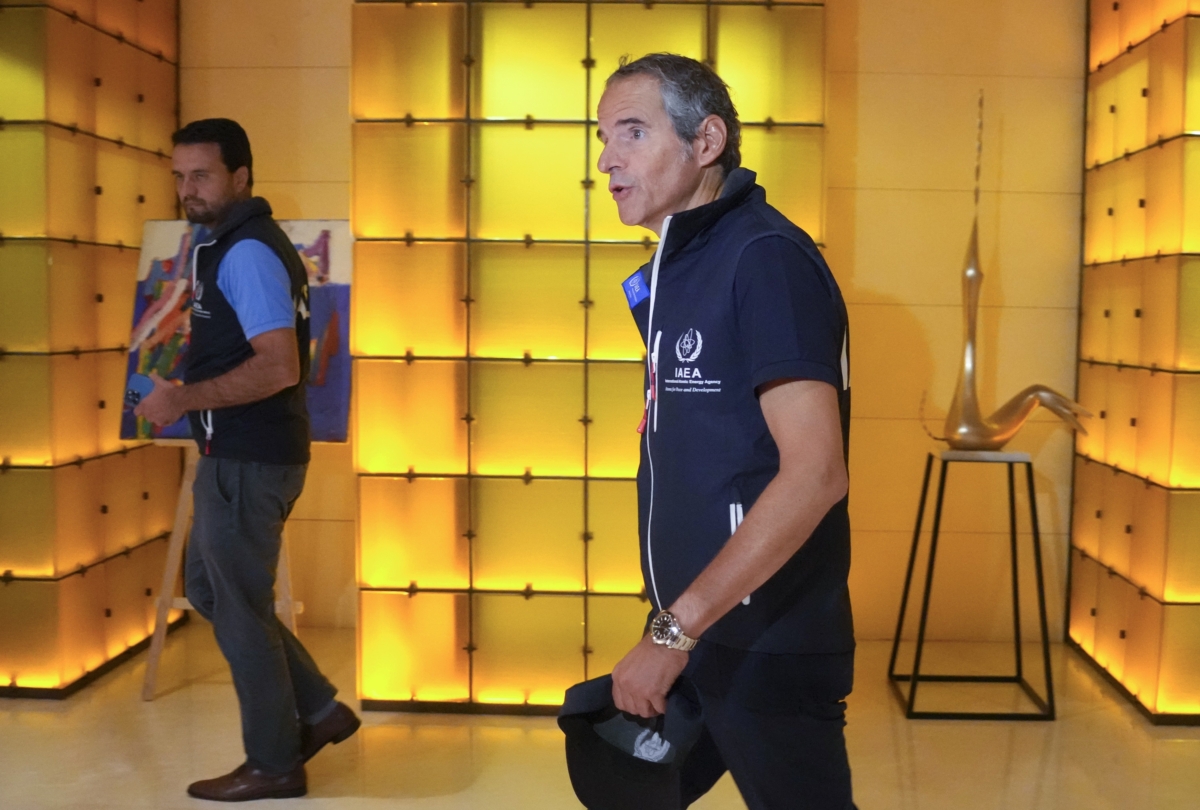
Mr. Grossi said Iran's removal of more nuclear inspectors from the U.N. comes after the recent removal of "another experienced Agency inspector for Iran."
"These inspectors are among the most experienced Agency experts with unique knowledge in enrichment technology. They have conducted essential verification work at the enrichment facilities in Iran which are under Agency safeguards," he said.
"With today’s decision, Iran has effectively removed about one third of the core group of the Agency’s most experienced inspectors designated for Iran."
Even though the NPT rules allow Iran's action, it makes it harder for the IAEA to check on Iran's nuclear activities and ensure that such nuclear activities are for peaceful purposes, Mr. Grossi noted.
"I strongly condemn this disproportionate and unprecedented unilateral measure which affects the normal planning and conduct of Agency verification activities in Iran and openly contradicts the cooperation that should exist between the Agency and Iran."
The IAEA Director General said Iran's removal of key inspectors is harming the agency's oversight capabilities and straining "the cooperation that should exist between the Agency and Iran."
Mr. Grossi urged Iran to reconsider its actions. "I also call upon the highest authorities of Iran to engage with me at the earliest opportunity to correct course and work with the Agency for the complete clarification of the outstanding safeguards issues," he added.
Iran’s Foreign Ministry linked its actions to what it said was an attempt by the United States and three European countries to misuse the IAEA “for their own political purposes," reported The Associated Press.
The United States, Britain, France, and Germany criticized Iran in a joint statement at an IAEA board meeting in Vienna this week, calling on Iran to step up cooperation with the agency.
Britain, France, and Germany also said on Sept. 14 that they would maintain sanctions on Iran related to its nuclear and ballistic missile programs.
Prisoner Swap Deal
The U.S. Congress was informed on Sept. 11 that the Biden administration had, as part of a prisoner swap deal, issued a waiver to assure international banks they could transfer $6 billion in frozen Iranian assets from South Korea to Qatar without U.S. sanctions.Specifically, the waiver covers banks and financial institutions in South Korea, Germany, Ireland, Qatar, and Switzerland.
The move cleared the way for the release of five U.S. citizens detained in Iran, as well as the release of five Iranian citizens held in the United States.
GOP Criticisms
Republicans in Congress largely criticized the overall deal."I suspect we'll have more people kidnapped pretty soon," Sen. Bill Cassidy (R-La.) told The Epoch Times. "It's a good deal for the Iranians."
Sen. Joni Ernst (R-Iowa) said that she was "very upset" that the United States was "getting into hostage negotiations." She noted that the deal "just encourages bad behavior by the Iranians."
Mr. Cruz also criticized the Biden administration's lack of action over recent years, saying that this has enabled Iran to come closer to advancing its nuclear capabilities.
Western nations have long suspected that Iran's nuclear program is aimed at eventually developing a nuclear weapon, but Iran insists the program is peaceful. The IAEA, the West, and other countries say Iran had a secret military nuclear program it abandoned in 2003.
At the time of withdrawing from the deal, President Trump said the JCPOA didn’t do enough to deter Iran from building a nuclear weapon and that it also failed to address other concerns the United States had with the Islamic regime, such as its ballistic missile development, support for terrorist groups and militias, threatening maritime shipping routes, and more.