


The House Wednesday, in a bipartisan 415-2 vote, passed a more than $8 billion spending package for emergency COVID-19 coronavirus funding.
Senate Appropriations Committee Chairman Richard Shelby (R-Ala.) announced the move and funding in a press release, explaining that it’s not a political matter—but a public safety concern.
House Speaker Nancy Pelosi (D-Calif.) noted that "Americans urgently need a coordinated, fully-funded, whole-of-government response to keep us safe from the widening coronavirus epidemic," while adding that $3 billion is being spent on the development of treatments, $300 million will be used to provide a free vaccine, $2.2 billion will be used on "public funding and prevention," and other measures.
The proposal provides a total of $8.3 billion to combat the coronavirus outbreak, and the majority of that funding–85 percent–will be spent domestically, Shelby's statement said.
It came after negotiations between Shelby and House Appropriations Committee Chairwoman Nita Lowey (D-N.Y.). The bill will first need to pass the House and the Senate before it is signed into law by President Donald Trump.
The $8.3 billion proposed to combat the coronavirus is more than three times more than the $2.5 billion initially requested by the White House. Later, Senate Minority Leader Chuck Schumer (D-N.Y.) responded with an $8.5 billion proposal, saying Tuesday that he expected the package to be in the range of $7 billion and $8 billion.
“We need to know who is infected in order to contain the spread of the virus and treat any American affected by the diseases. We asked the administration about the availability of testing kits but they could not answer how soon hospitals, medical labs, and public health centers would receive the tests, and if they would have enough of them to do the amount of testing required, fast enough,” Schumer said on the floor.
President Donald Trump, meanwhile, has said that he would be happy if lawmakers were willing to propose $8.5 billion. "I think I should say, 'I'll take it," said Trump on Tuesday at an event.
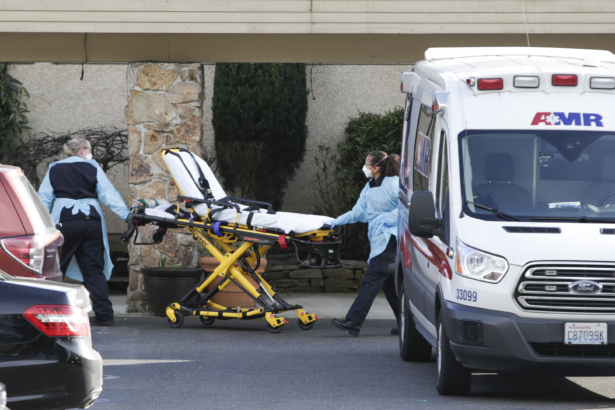
North Carolina, on Tuesday, also confirmed its first case. Officials said a man who had traveled from the Washington state nursing home returned back to the state before he was confirmed to have been infected.