


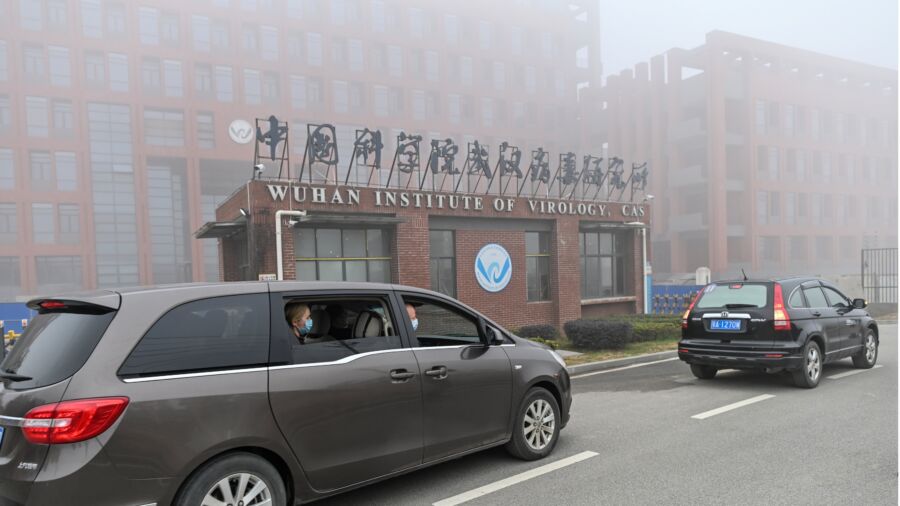
The National Institute of Health (NIH) has quietly removed the Wuhan lab suspected as a source of COVID-19 from its list of foreign facilities eligible to conduct animal experiments on taxpayer dollars.
The WIV has for years been a partner of the New York-based EcoHealth Alliance, conducting bat coronavirus research with U.S. funding, which totaled more than $3 million between 2014 and 2019.
Sen. Joni Ernst (R-Iowa), a vocal critic of the NIH funding to Wuhan, cheered the news as a “victory for taxpayers.”
“After years of advocacy, the Wuhan Lab finally appears to no longer be eligible for U.S. funding,” she told The Epoch Times. “The truth is, China’s state-run Wuhan Institute of Virology should never have received U.S. support for its dangerous experiments on bat coronaviruses.”
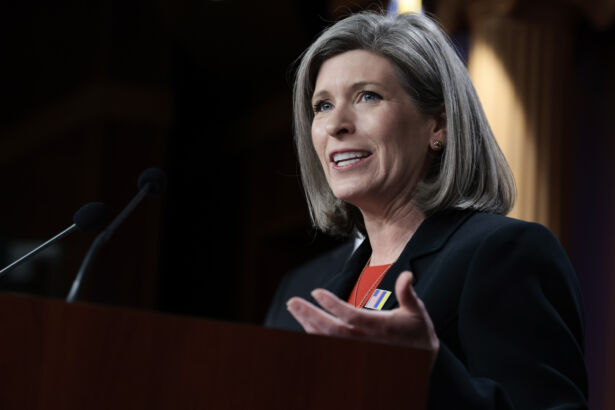
Ernst said that she feels troubled that the Wuhan facility was able to get funding in the first place.
“This incident has exposed a huge loophole that is allowing untold sums of U.S. dollars to be secretly spent in institutions in China and elsewhere,” she said, adding that she remains committed to ensuring “no other batty studies at the expense of taxpayers are flying under the radar” and there’s “full public transparency for every penny sent to an institution in China.”
With the renewed grant, EcoHealth now receives 17 active U.S. grants valued at more than $50 million collectively.
Justin Goodman of White Coat Waste Project, a watchdog group that has worked with Sen. Ernst on the issue, said he is “thrilled” to see the NIH’s “long overdue decision” to disqualify “white coats in Wuhan from future taxpayer funding.”
“Taxpayers shouldn’t be forced to fund a foreign lab run by an adversarial nation that wasted money, tortured animals, and engineered superviruses in dangerous gain-of-function experiments that violated the law and likely caused COVID," he told The Epoch Times.
The NIH, and the Office of Laboratory Animal Welfare, which oversees laboratory animal experiments, didn't respond to The Epoch Times' request for comment by press time.
A number of former and current health and intelligence officials have voiced support for the theory that COVID-19 might have originated from a Wuhan lab.
David Feith, an adjunct senior fellow at the Center for a New American Security and a former deputy assistant secretary of state, told the Select Subcommittee on the Coronavirus Pandemic that “it became harder to ignore the suspicious basic facts of the story” as they gathered information regarding the pandemic origins.
“As we documented these issues to inform our diplomatic engagements with China and others, our attention was drawn increasingly back to the Wuhan labs,” Feith said on April 18.
The 328-page report compiled a list of circumstantial evidence linking the origin of the pandemic to the Chinese lab.
During the second half of 2019, the report said, a “serious biocontainment failure or accident, likely involving a viral pathogen,” likely took place there, which the most senior Chinese leadership became aware of by at least November 2019.
The WIV, the report said, is “underfunded, underregulated, and understaffed,” but under authorities’ pressure to produce scientific breakthroughs to propel China to the forefront of the field.
“The WIV was almost an accident waiting to happen, and it appears that an accident, or perhaps accidents, did happen, and roughly concurrent with the initial outbreak of SARSCoV-2,” it stated.