


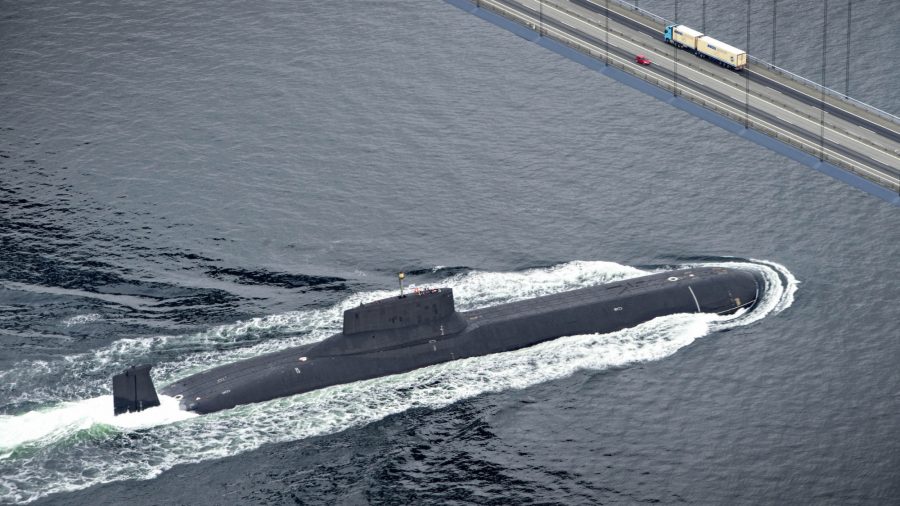
After a Russian military submarine caught fire and 14 sailors died, the Kremlin has said it will not disclose details, as the vessel is "state secret."
Kremlin spokesperson Dmitry Peskov, said on July 3 that while Russian President Vladimir Putin knew the details of the incident, he would not release details as it "is classified information, this state secret is being kept to protect the country’s national security."
State news agencies reported that the submersible was carrying out deep-sea research in Russian territorial waters, and is currently stationed at a navel base in the Barents Sea, following the fire.
Putin also called the submarine "not an ordinary vessel" on July 2, according to the report.
Russian officials have not disclosed why the incident occurred in the first place or how many people were aboard the ship.
Sergei Shoigu, Russia's defense minister, said the sailer's heroic efforts allowed one civilian to be evacuated.
"They first of all evacuated the civilian industry representative from the module that was consumed with fire, sealing the hatch behind him in order not to allow the fire to spread around the whole deep-water capsule and themselves fought to the end to preserve the ship," he said, according to ABC News.
"They were unique military specialists, highly qualified professionals, performing important research on the Earth’s hydrosphere," he added, according to The Guardian.
The victims reportedly included the son of the military unit's commander, seven high-ranking officers, as well as two recipients of the country's highest honor—the Hero of the Russian Federation.
Russia has not revealed why the submarine was in the Barents Sea, or what the mission was.
Following the 2000 incident, Putin and and military officials came under fire for allegedly lying about the rescue operation.
"The Russians are investing a lot of energy in developing new approaches to undersea warfare, but everything that I have seen...seems to indicate that certain legacies of the Soviet era, especially overly centralized design control and corruption, remain endemic," Don Thieme, a retired U.S. Marine officer told Radio Free Europe/Radio Liberty.