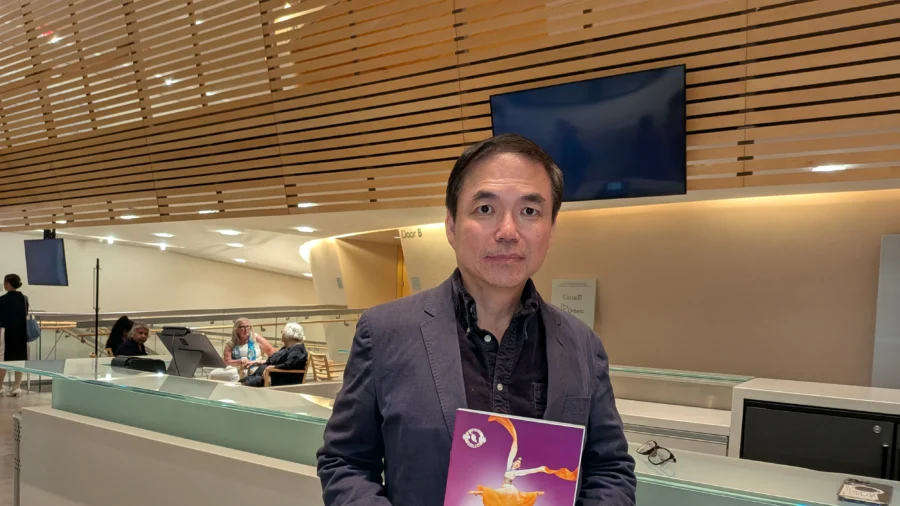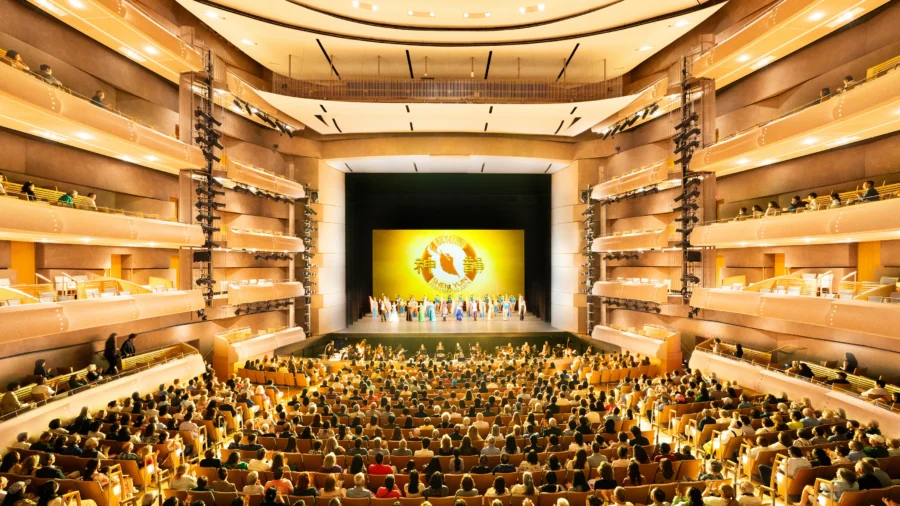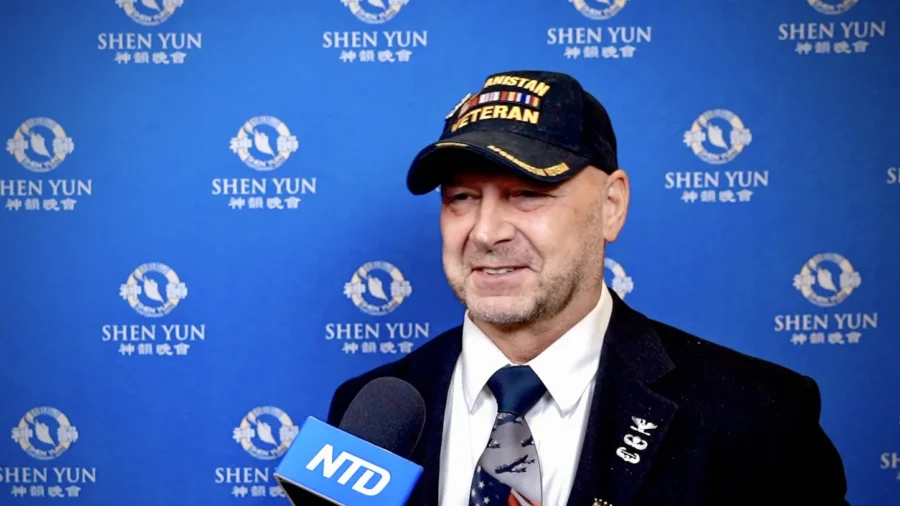

“I’m a bit of a martial artist myself,” Paul, a consultant, said after the performance. “The concept of having the very wise, wise, wise teacher, is something that I can relate to. I think that is something that comes across as key to the story. [The] monkey learns, and then [the] monkey went away and helped people.”
“I like the fact that [Shen Yun] actually told some of the stories in a very accessible way,” Paul said, adding that the Monkey King sparked memories of martial arts TV shows he’d seen years ago.
“I have been blown away,” he added. “I’ve been really impressed by what I have seen today.”
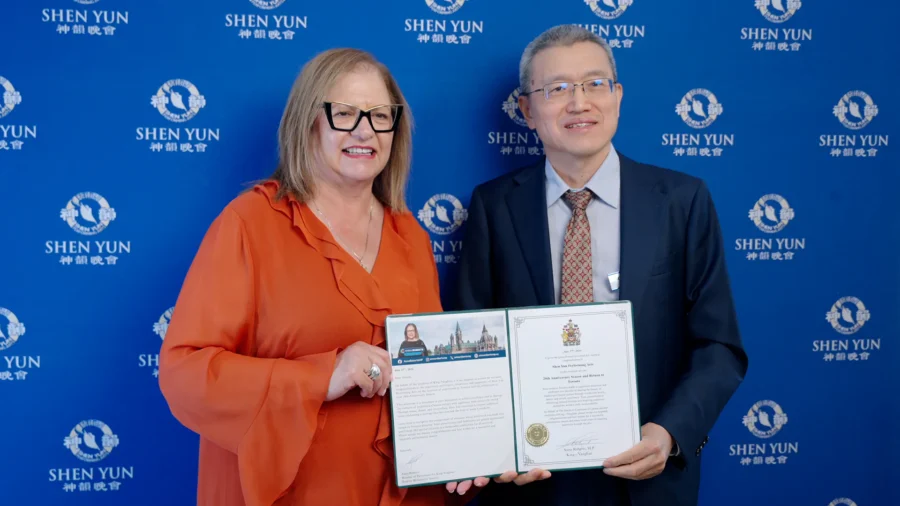
But the more traditional visual artistry—the colors, costumes, and dancing—was what stood out most strongly for Charlotte Grimmett, a Birmingham business owner who teaches English online, and who saw the performance on Friday. “I’ve never seen anything like this before,” she said.
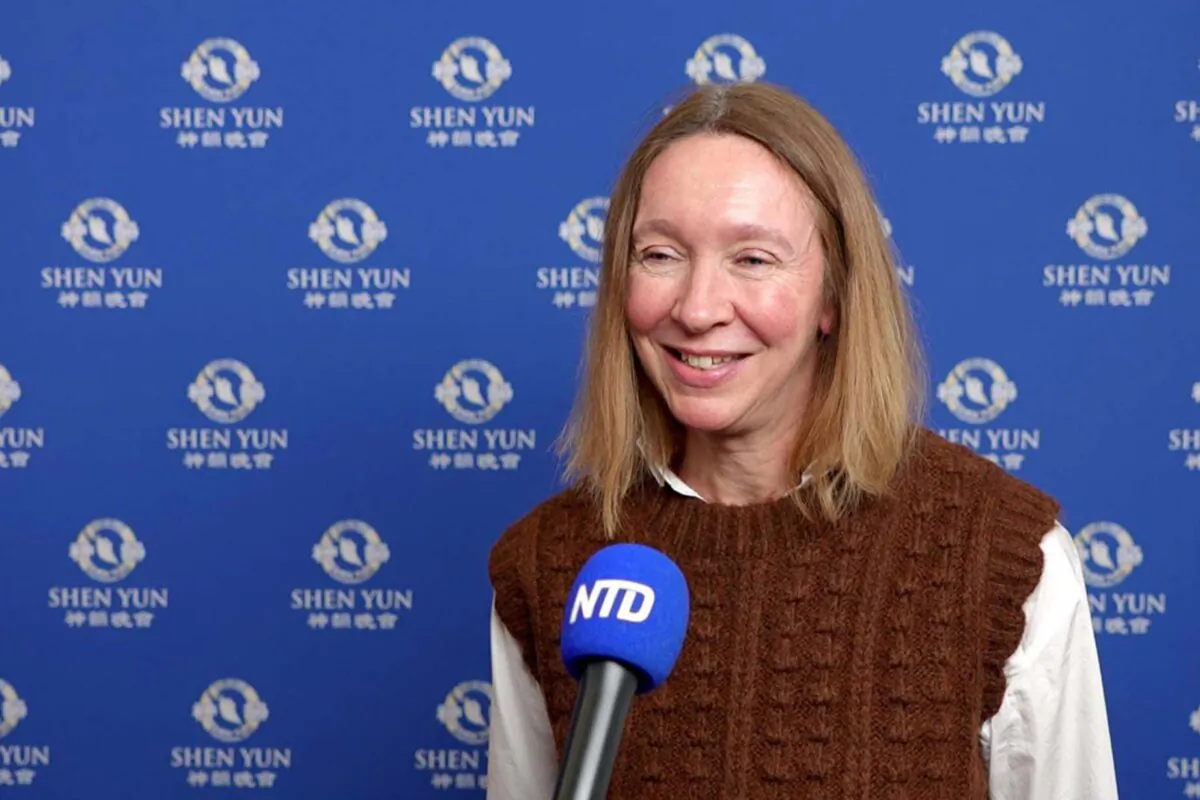
Ms. Grimmett said she was surprised when she heard this, but she soon found out why the company is banned in mainland China. The audience was told during the show that some Shen Yun dancers are American-born Chinese or expatriots who fled China to escape religious persecution. One piece depicted Falun Gong believers being attacked by agents of the CCP.
“I was a little bit taken aback,” Ms. Grimmett said. “It was something I didn’t know about, so, yes, I’m keen to learn more.”
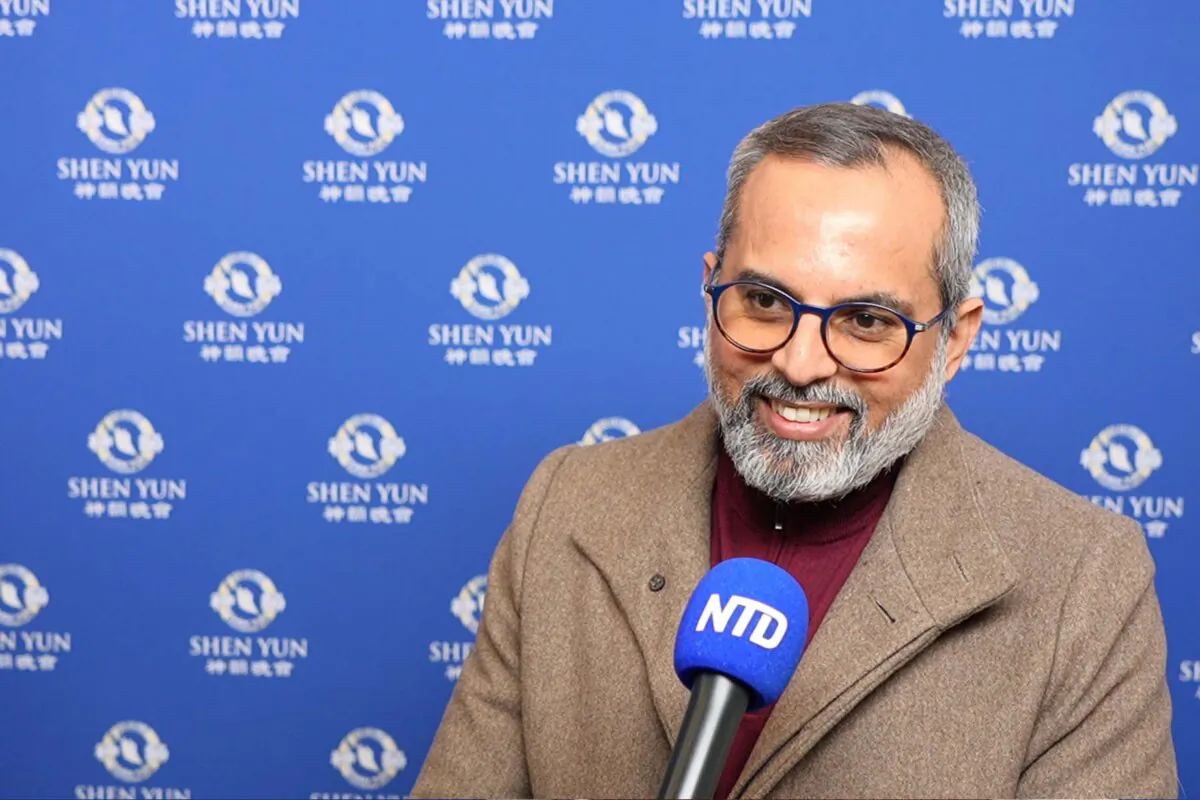
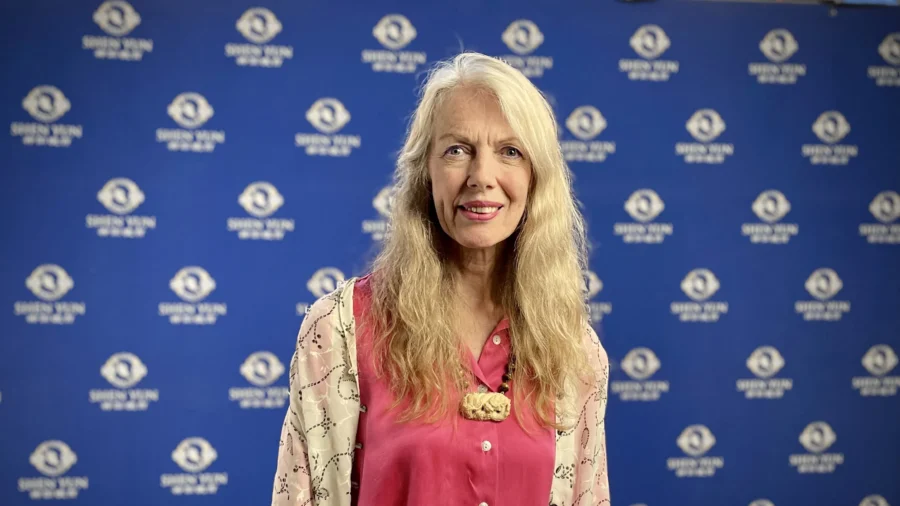
Unlike in modern performances in China today, the spiritual content from ancient China is an important part of Shen Yun. The devotion to a higher power connected strongly with Rohit Sujanani, a company director who watched Shen Yun on Friday. “I loved it,” he said, adding that references to spiritual figures were a highlight for him.