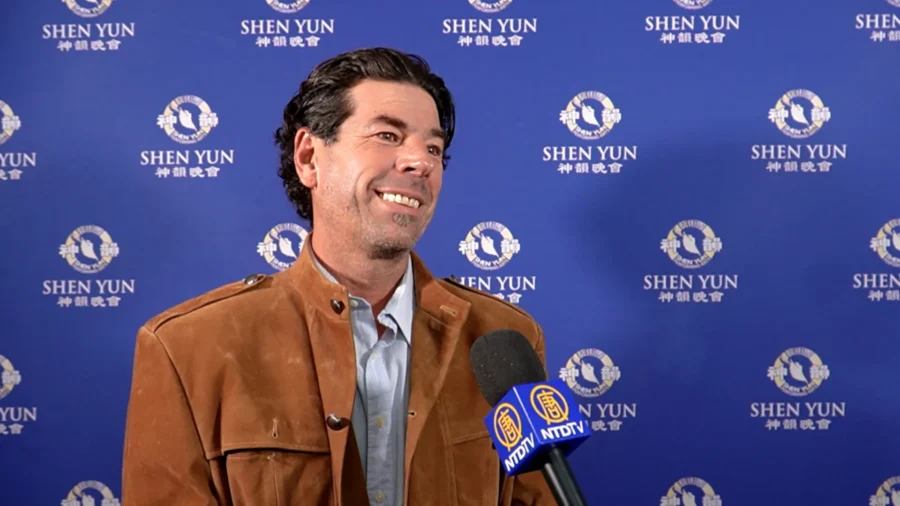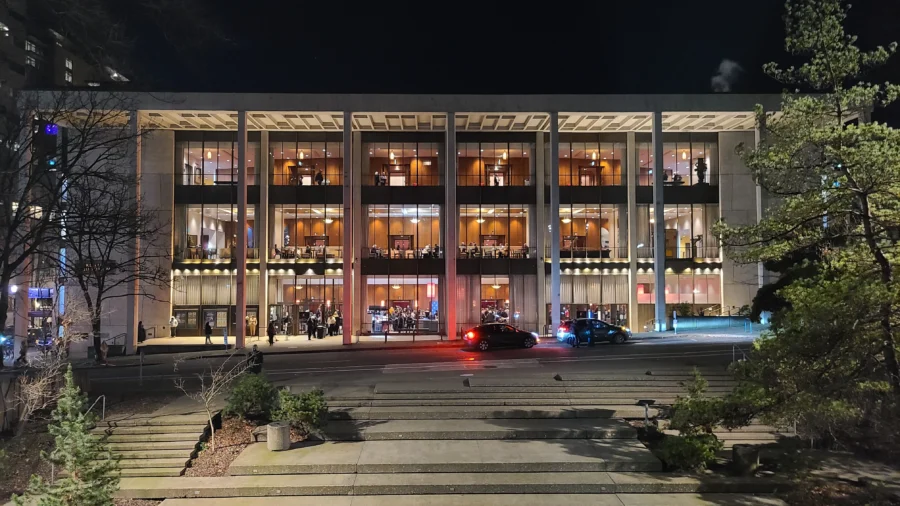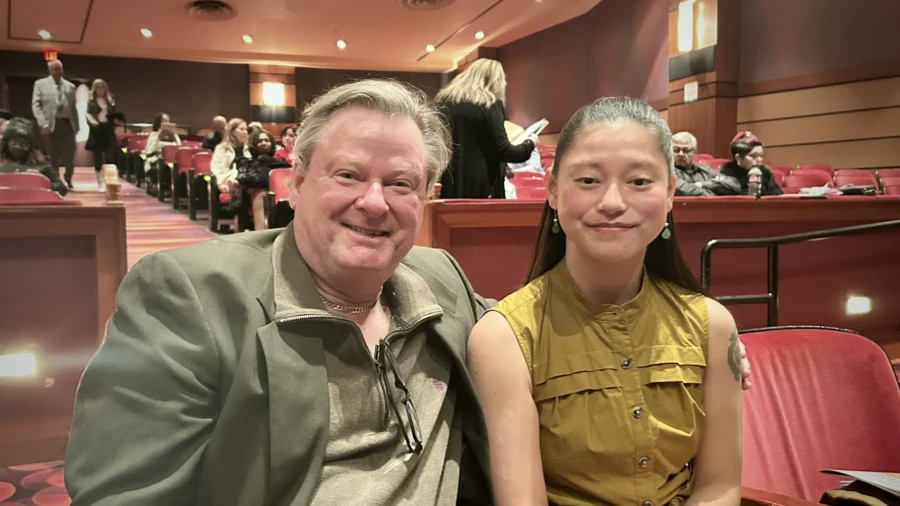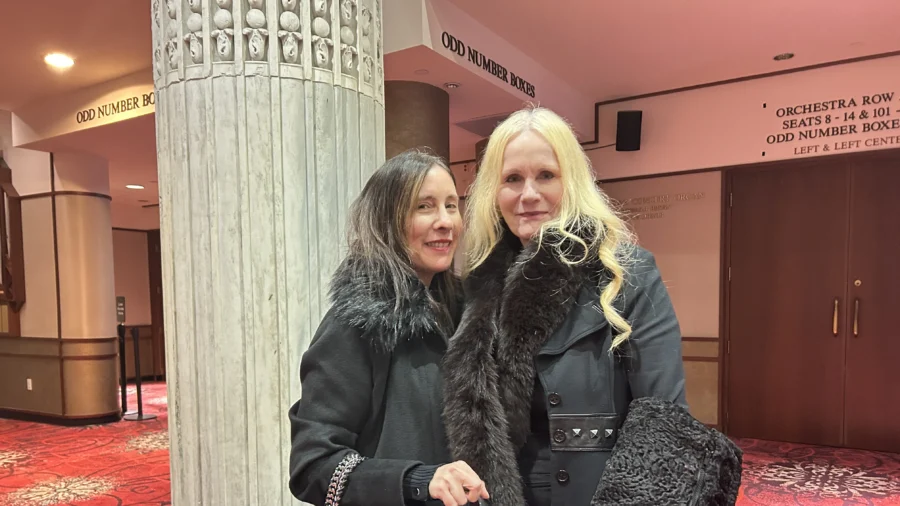

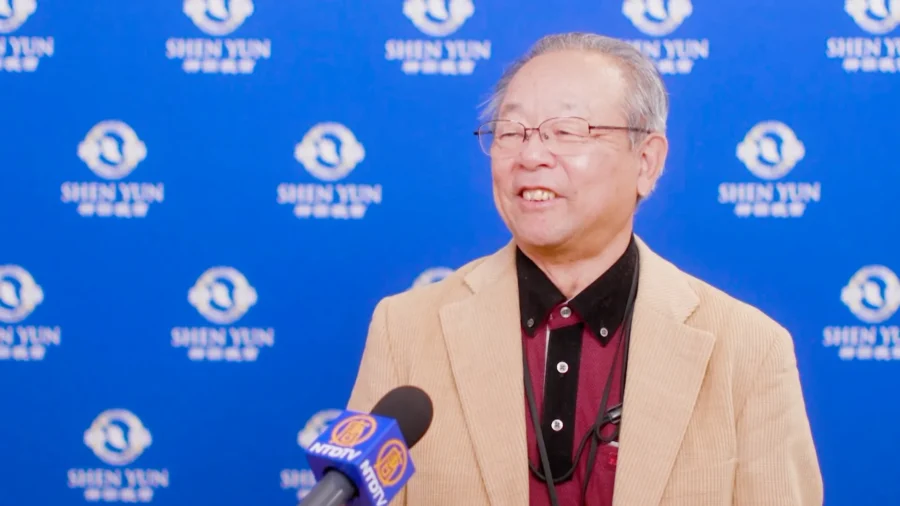

“It was like watching a movie, when the artists suddenly jumped off the stage. It was like entering Heaven, which is actually quite amazing. I don’t often go to see these kinds of plays, but I think it is a great idea to integrate visuals in creative ways,” said Yutaka Kitahara, an architect.
“I cried at the beginning, I was so moved,” said Hiroko Nishide, a group president and an etiquette trainer. “It was truly wonderful to see performers who devote themselves to their work every day on stage, and to see their daily efforts blossom on the stage.”
“It was very moving. The dynamic dancing and the spirit to preserve and carry on the tradition were wonderful,” said Nobuyuki Hirasawa, the head of a national law enforcement agency.
“All I can think is that it was amazing. I think there were scenes on screen for both the male and female artists, and they seamlessly switched from the screen to the stage. They both made great use of that, and there was not much inconsistency between the screen and the stage—they all seemed to blend together really well,” said Nielsen Taikawa, an engineer.
“I didn’t know that the orchestra was live at first, but I was very impressed when I saw it performing live,” said Toru Kumida, a company executive.
“[Traditional culture] is something that has been passed down for thousands of years, so I think it would be a shame if it were to disappear or be ruined because of the selfish ideas of modern people. So I believe it is something that must be passed down,” said Shinichiro Hirara, an executive officer at a debt management organization.
“The real important thing is to have forbearance. I still think that is something important,” said Mitsuhide Arai, a company executive. “The spirit of forbearance is something great, and I’m glad it caught my eye.”
“The costumes were quite colorful and you could really feel the historical atmosphere. It’s rare to see such a fusion of history, so I think it was a great opportunity,” said Toshio Takisaka, a company president.