


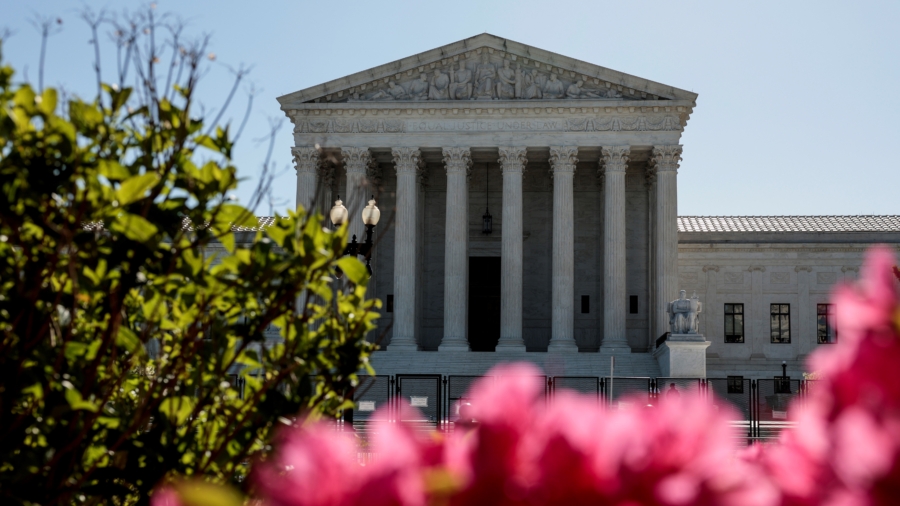
State attorneys general from Tennessee, Kansas, and 11 other states put 100 of America’s largest corporations on notice that, following the Supreme Court decision against racial discrimination at Harvard and the University of North Carolina, private companies would be held to the same standard.
In a July 13 letter to CEOs of Fortune 100 companies, the AGs wrote that “the Supreme Court’s recent decision should place every employer and contractor on notice of the illegality of racial quotas and race-based preferences in employment and contracting practices.
“If your company previously resorted to racial preferences or naked quotas to offset its bigotry, that discriminatory path is now definitively closed,” the letter states. “Your company must overcome its underlying bias and treat all employees, all applicants, and all contractors equally, without regard for race.”
The letter, authored by Kansas AG Kris Kobach and Tennessee AG Jonathan Skrmetti, was co-signed by AGs from Alabama, Arkansas, Indiana, Nebraska, Iowa, South Carolina, Kentucky, West Virginia, Mississippi, Missouri, and Montana.
They charged that the following companies, among others, had enacted racial hiring, promotion, or contracting quotas: Airbnb, Apple, Cisco, Facebook, Google, Intel, Lyft, Microsoft, Netflix, PayPal, Snapchat, TikTok, Uber, Goldman Sachs, and JPMorgan Chase. In all, they stated, 27 banks, tech companies, and consulting firms set explicit racial hiring quotas, which courts have consistently ruled are illegal under U.S. law.
Supreme Court Ends Race-Based Admissions
On June 29, the Supreme Court ruled that race-based admissions policies at Harvard University and the University of North Carolina violated the Equal Protection Clause of the U.S. Constitution’s Fourteenth Amendment.“Proponents of the Equal Protection Clause described its ‘foundation[al] principle’ as ‘not permit[ing] any distinctions of law based on race or color,”’ the justices wrote. “Any ‘law which operates upon one man [should] operate equally upon all’ … Eliminating racial discrimination means eliminating all of it.”
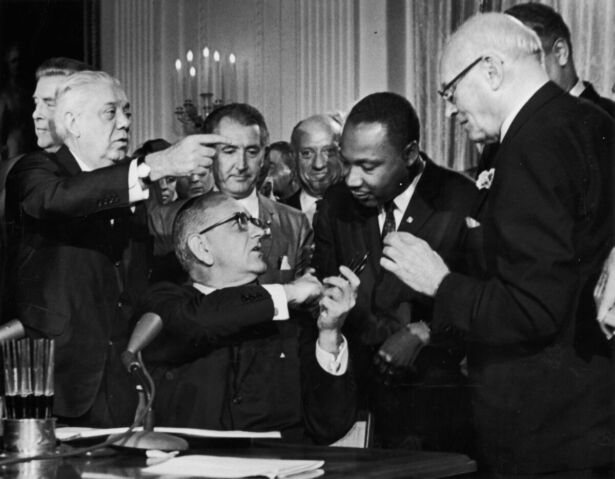
While this ruling concerned university admissions policies, the Supreme Court also argued that U.S. civil rights laws were applicable, which would apply to private companies as well. Title VI of the 1964 Civil Rights Act bars racial discrimination for any entity that receives federal funds; Title VII bars discrimination in employment and applies to private companies.
'Gulf-Sized Race-Based Gaps Exist'
In the dissenting opinion to the Supreme Court ruling, Justice Ketanji Brown Jackson wrote: “Gulf-sized race-based gaps exist with respect to the health, wealth, and well-being of American citizens.“They were created in the distant past, but have indisputably been passed down to the present day through the generations,” she stated. “Every moment these gaps persist is a moment in which this great country falls short of actualizing one of its foundational principles—the ‘self-evident’ truth that all of us are created equal.”
The states AG letter said that companies must "immediately cease any unlawful race-based quotas or preferences.
"Responsible corporations interested in supporting underprivileged individuals and communities can find many lawful outlets to do so," they wrote. "But drawing crude lines based on skin color is not a lawful outlet.”
Erin Wilcox, an attorney at the Pacific Legal Foundation, said that while some companies may choose to eliminate race-based policies following the Supreme Court ruling, others will continue to use racial criteria or use “proxy” policies that do not explicitly state racial terms but find other criteria that achieve the same goal.
“Attrition rates for DEI roles have outpaced those of non-DEI roles at more than 600 US companies that laid off workers since late 2020, and have accelerated quickly in the last 6 months,” the report stated. “Further, over 300 DEI professionals have left from these companies in the last six months. Amazon, Twitter, and Nike have shed between 5 and 16 DEI professionals each, and Twitter’s infamous diversity team layoffs are not far behind.”
The Epoch Times reached out to Airbnb, Apple, Cisco, Facebook, Google, Intel, Lyft, Microsoft, Netflix, PayPal, Snapchat, TikTok, Uber, Goldman Sachs, and JPMorgan Chase for comment regarding this article but did not receive a reply.