


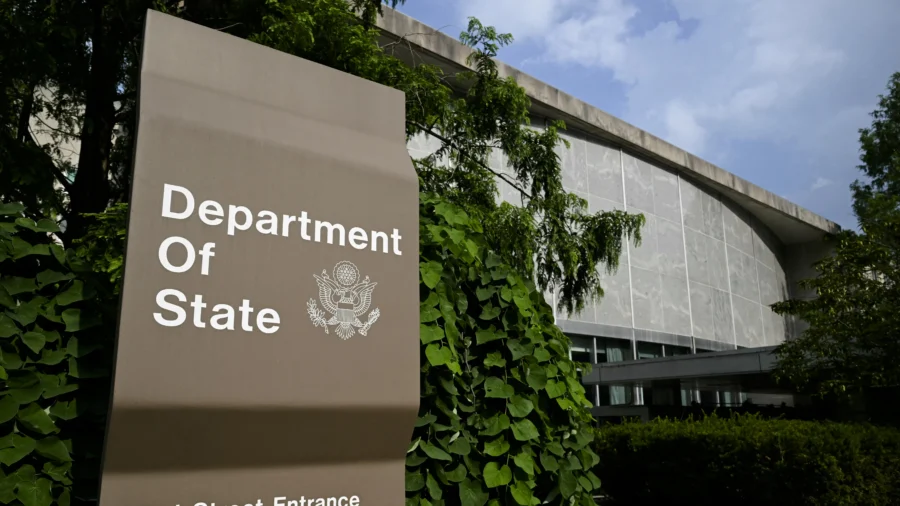
The U.S. Department of State has imposed a dress code for diplomats.
“Representing the United States of America is an honor — and this new policy ensures our diplomats project credibility, respect, and the dignity of the nation we serve,” Assistant Secretary of State for Global Public Affairs Dylan Johnson wrote in an X post.
The State Department’s Foreign Affairs Manual was updated with new employee dress code rules on April 2.
Johnson said the order will stop people from dressing “casual” while they represented the United States.
The newly changed Foreign Affairs Manual states that employees must “maintain appropriate professional attire and appearance when engaging with foreign interlocutors on behalf of the United States.”
The new guidelines don’t list what clothing items are inappropriate to wear while performing official work.
“Appropriate attire and appearance will depend on the duties performed, the work environment, and the level of interaction with foreign interlocutors and other external stakeholders,” the manual added.
Officials representing the United States must dress in business formal attire with a “polished and professional” personal appearance while participating in meetings or other official engagements.
“Application of these guidelines is determined by supervisors who are most familiar with the duties and responsibilities of their employees,” the manual added.
Anybody who fails to follow the new policy could face consequences.
Duffy encouraged all travelers to dress “with some respect” while at airports and on airplanes, but he stopped short of enforcing a mandatory dress code.
“Whether it’s a pair of jeans and a decent shirt, I would encourage people to maybe dress a little bit better, which encourages us to maybe behave a little better,” Duffy said on Nov. 24 during a speech about holiday travel at New Jersey’s Newark International Airport.
“Let’s try not to wear slippers and pajamas as we come to the airport.”
He separately encouraged flyers to use their manners and say “please” and “thank you” to flight attendants.