


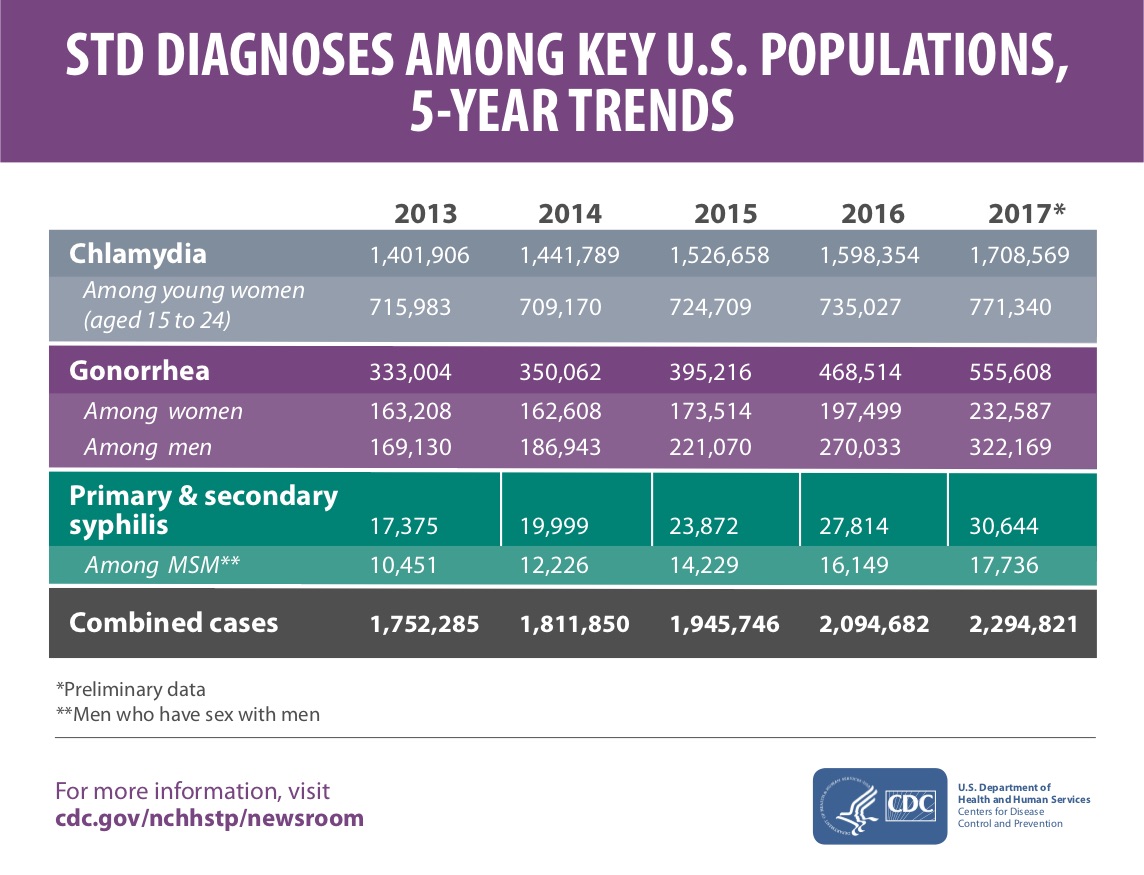
Gonorrhea diagnoses increased by 67 between 2013 and 2017. Syphilis diagnoses nearly doubled over the same period, with most cases in men who had sex with other men. At 1.7 million diagnosed cases, chlamydia was the most common condition reported to CDC in 2017.
Three years ago, the CDC started recommending that people get a single shot of ceftriaxone with an oral dose of azithromycin to help delay the development of resistance to ceftriaxone.
It seems to have worked so far, but now, an increase in resistance to azithromycin is being seen. One percent of gonorrhea lab samples were resistant to it in 2013, with more than 4 percent in 2017.
The other area of concern for medical professionals is lack of funding for education, prevention, research, and treatment of STDs.
Michael Fraser, executive director of the Association of State and Territorial Health Officials said he believes that part of the increase in STD diagnoses is due to a decrease in state and federal funding for prevention efforts.
David Harvey, the executive director of the National Coalition of STD Directors added that another part of the problem is that doctors can be too busy to screen for STDs, and patients don't know to ask for the tests.
It can also be a difficult conversation to have.
He added that because most people who spread STDs don't know they have them, educating the public about things such as how STDs don't always have symptoms will encourage people to get regularly tested.
The opioid epidemic may also be playing a role in the numbers. Harvey said there has been an increase in babies born with syphilis, and at least part of that he attributes to mothers who are trading sex for drugs.
Express visits allow people to do certain testing on their own, with minimal help from health providers. Collecting sexual history data electronically before a visit could also cut down on doctors' time and increase screening, she said.
"I think we’ve got a lot of opportunities," she said.