


In July, in PAIN: The Journal for the International Association for the Study of Pain, the study was titled "Prior use-dependent plasticity triggers different individual corticomotor responses during persistent musculoskeletal pain" and was led by Anna Zamorano at Denmark's Center for Neuroplasticity and Pain and Center for Music in the Brain.
Zamorano and her team at universities in Germany and Spain explained that fellow scientists already know that pain activates several reactions in our bodies and brains. This pain will change one's attention, thoughts, ways of moving, and behaving.
And while guitar players and string players and percussionists all get blisters and callouses and muscle pain, as do many other musicians, all from performing thousands of repetitive movements, Zamorano wondered about the pain that comes along with it and how musicians push through the perceived pain.
After all, Zamorano reminded readers that it is well known that learning to play an instrument can offer benefits beyond just musical ability—research shows it's a great activity for the brain—it can enhance our fine motor skills, language acquisition, speech, and memory, while also keeping the brain young and active.
The European pain researchers looked at how musical training influences how musicians feel and deal with pain. The 40 musical test subjects were given a nerve-growth factor compound that mimics muscle pain, like the pain pianists sometimes experience. The compound was temporary and safe.
Along with the compound, they used a technique called transcranial magnetic stimulation, which measures brain activity and can see where the body's "brain map" reacts to the pain as the brain controls the hand of the musician as they played for a while.
With "hand maps" created for each musician before pain injection, Zamorano and her team studied the musicians' hands two days and eight days after it was given to see if pain had an effect on the brain and its workings.
As it turned out, the hand map in the brain, which is where the brain controls the hand, was more finely tuned than those of non-musicians. The longer they practiced, the more refined the map was and the less pain was felt, after hours of musical training. This finding, Zamorano said, was "amazing."
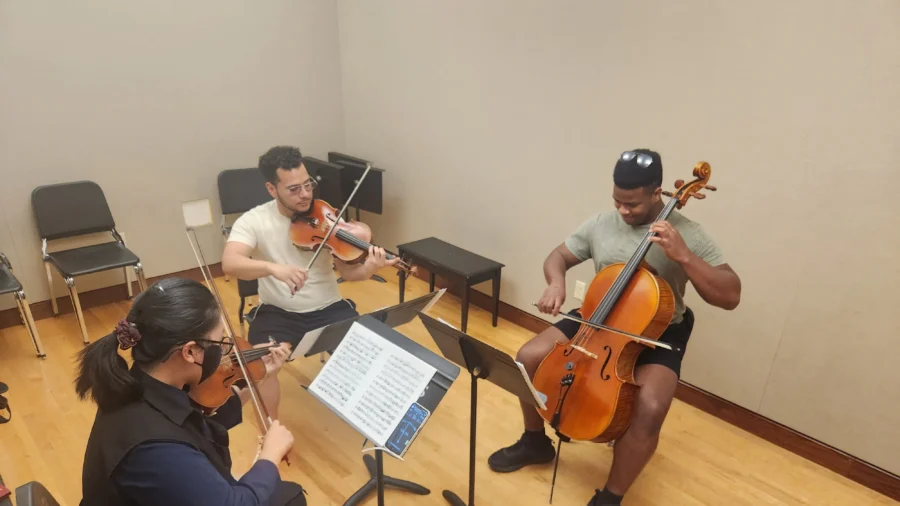
NTD spoke with a violinist who is in a graduate music program at Oklahoma City University in the Wanda L. Bass School of Music. Although she declined to have her name published, she did agree with the study's findings, having played string instruments for most of her life.
"I feel that musicians are very similar to athletes, because some instruments require sacrificing the comfort of their hands or other organs of the body, and only through a lot of practice and stimulation can you play what you want," she told NTD. "When practicing, the focus is mostly on the music rather than the pain—unless the pain is extreme—so we may be able to ignore some of the pain."
The student interviewed is likely experiencing what the European study discovered: that musical training somehow causes there to be a buffer against the effects of pain that is felt by others who use muscles in repetitive ways that are non-musical.
Zamorano, who is a musician, concluded her discussion in The Conversation, saying that her findings were "exciting" and that practicing every day not only hones her musical skills but it can "literally rewire my brain in ways that change how I experience the world, even something as fundamental as pain."