

Just days before one of the most sensitive anniversaries in China this year, Twitter suspended a host of Chinese-language accounts, many of which identified as “anti-CCP [Chinese Communist Party],” in what the company said was an accident.
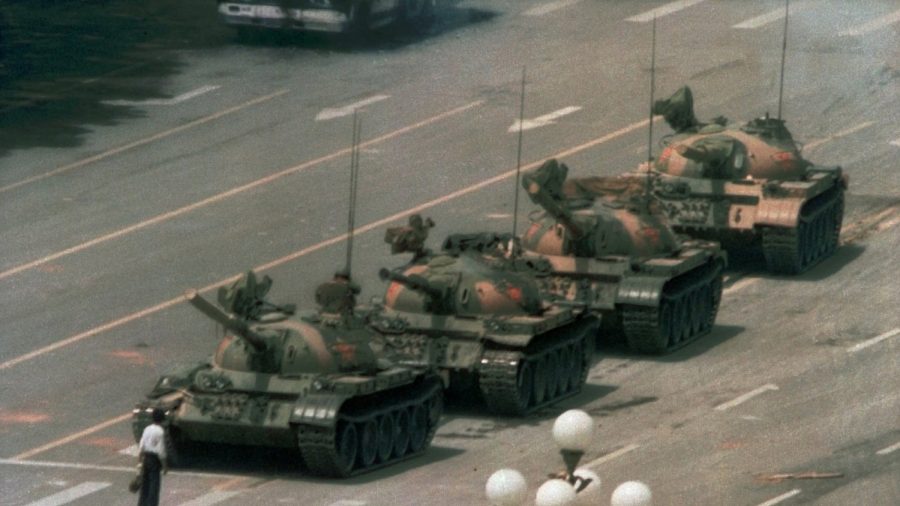
The action, which some say may have affected more than 1,000 accounts, occurred overnight between May 31 and June 1. It drew heavy criticism from China commentators on the platform, with many questioning whether the timing of the suspensions three days before the 30th anniversary of the Tiananmen Square massacre was more than a coincidence.
On May 31, many Chinese dissidents, rights lawyers, activists, college students, and ordinary netizens reported that they lost access to their Twitter accounts. While Twitter is banned in China, many netizens circumvent the internet blockade to use the platform.
“I cannot reply, retweet, comment, tweet, like or send private messages. I can see my tweets. However, all my followers and followings got cleared away. My friends cannot find me when searching with my name,” the user told the Chinese-language edition of the Epoch Times.
“So far, every suspended account I have located was critical of the Chinese government,” she said.
“Twitter’s action seems to be in accordance with that of the Chinese authorities, who launched sever crackdown against any criticism in the eve of the big anniversary [sic]. No wonder many Chinese call it ‘the twitter massacre.’”
"We suspended a number of accounts this week,” it said. “However, some of these were involved in commentary about China. These accounts were not mass reported by the Chinese authorities — this was a routine action on our part.
"Sometimes our routine actions catch false positives or we make errors. We apologize. We're working today to ensure we overturn any errors but that we remain vigilant in enforcing our rules for those who violate them."
Some users, however, were not convinced by Twitter’s explanation. One user named Jack Blum commented: “And this just so happened to occur right before the anniversary of Tiananmen?”
Other users, in response, posted an image of Twitter’s bird mascot with a “hammer and sickle,” the symbol of the Chinese Communist Party, as its eye on top of a red background.
The Great Firewall refers to China’s internet censorship apparatus that includes blockading foreign websites and censoring content deemed undesirable by the Chinese Communist Party.
Many Chinese dissidents and commentators have been forced by local police to shut down their accounts, while some have been detained and imprisoned.
In December, Twitter user Liu Hongbo from Yangzhou City in eastern China’s Jiangsu Province was sentenced to six months in prison for posting more than 400 tweets that allegedly “defamed the Chinese Communist Party and Party leaders.”
In October, independent commentator Wang Yajun was detained for ten days for his Twitter activity. After his release, he tweeted, “Twitter, it’s time to say goodbye!”