


The United Nations (U.N.) says it is battling mis- and disinformation on social media and beyond through what it calls a “digital army” located across the globe.
The intergovernmental organization has also been monitoring how mis- and disinformation and hate speech can “attack health, security, stability” as well as progress towards its Sustainable Development Goals (SDGs), officials said.
Such platforms have “given people hope in times of crisis and struggle, amplified voices that were previously unheard, and breathed life into global movements,” Mr. Guterres wrote.
However, they have also “exposed a darker side of the digital ecosystem,” the U.N. secretary-general noted.
“They have enabled the rapid spread of lies and hate, causing real harm on a global scale,” he wrote in the brief. “Optimism over the potential of social media to connect and engage people has been dampened as mis- and disinformation and hate speech have surged from the margins of digital space into the mainstream. The danger cannot be overstated.”
‘Digital Army Capable of Detecting False Information’
Disinformation is described by the United Nations Educational, Scientific, and Cultural Organization (UNESCO) as “false or misleading content that can cause specific harm, irrespective of motivations, awareness or behaviors.”The term “misinformation” is described in the U.N. policy brief as “the unintentional spread of inaccurate information shared in good faith by those unaware that they are passing on falsehoods.”
“Misinformation can be rooted in disinformation as deliberate lies and misleading narratives are weaponized over time, fed into the public discourse, and passed on unwittingly,” the U.N. brief reads. “In practice, the distinction between mis- and disinformation can be difficult to determine,” it adds.
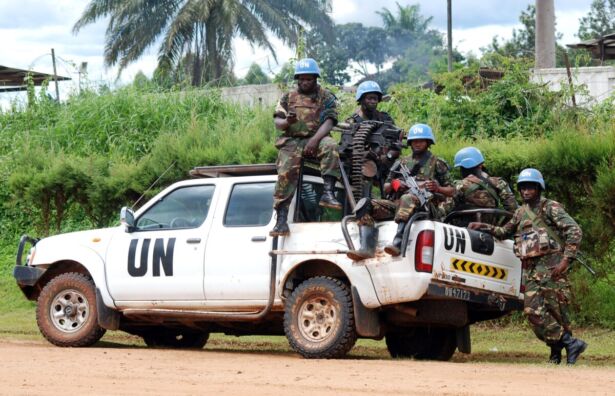
According to the U.N., peacekeepers have been working across the globe to put “new tools into the hands of civilians of all ages” aimed at combatting mis- and disinformation, including launching workshops in the Democratic Republic of the Congo (DRC).
Misinformation ‘Festival’
The U.N. is also launching similar efforts in Mali, where it recently held a “festival” to combat misinformation which drew crowds of nearly 400 people, officials said.Earlier this month, in Abyei—which is located on the border between South Sudan and Sudan and is a disputed region—the U.N. mission there, the United Nations Interim Security Force for Abyei UNISFA, also launched its own radio station called “Voice of Peace” aimed at countering hate speech and fake news, according to the latest press release.
“The ability to disseminate large-scale disinformation to undermine scientifically established facts poses an existential risk to humanity and endangers democratic institutions and fundamental human rights,” Mr. Guterres concluded in the June policy brief.
The tool, which is supported by the UNDP Chief Digital Office and the UNDP Brussels-based Task Force on Electoral Assistance and developed in concert with media organizations and the private sector, uses Artificial Intelligence, machine learning, and human-supported fact-checking to “identify false information and prevent and mitigate its spread,” according to the U.N.
On its official website, the U.N. says the new tool will be provided to “national actors,” who can then use it to review content and establish whether it is “fact-checkable and/or constitutes hate speech, as opposed to the expression of an opinion.”