


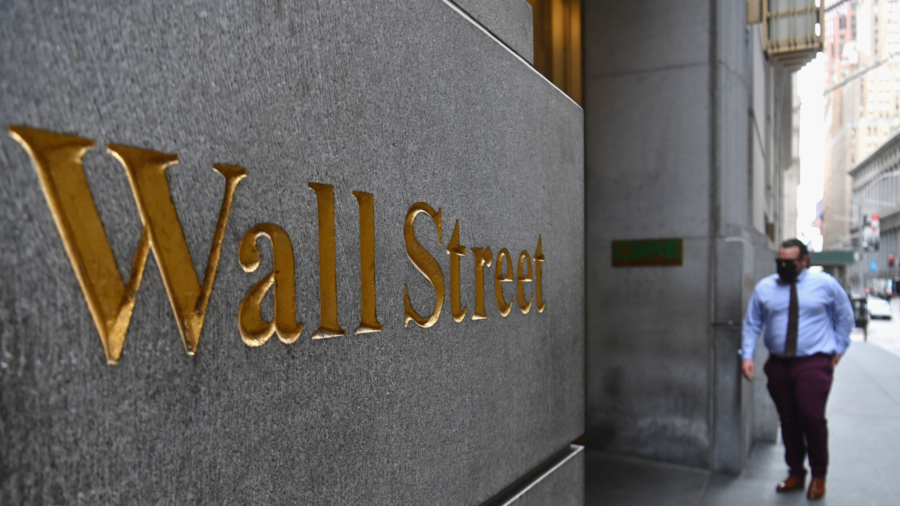
The United States is gearing up to uproot “red assets,” said an analyst after Washington moved to ban Americans from investing in dozens of Chinese military firms.
“It’s a cleanup of the U.S. capital and assets—to purge the red assets,” Su Tzu-yun, director of Taiwan's Institute for National Defense and Security Research, told The Epoch Times.
Li Hengqing, a Washington-based China analyst, said the decision reflects a more confrontational approach toward China.
“The national strategy that the United States has set up is to engage in full-fledged competition,” he told The Epoch Times. “It’s a competition on every front, rather than just a single aspect.”
“The two countries are now in a confrontational relationship. Why would I invest money in my rival to make it more powerful, so that it can turn around to counter me? It’s such a simple principle,” Li said.
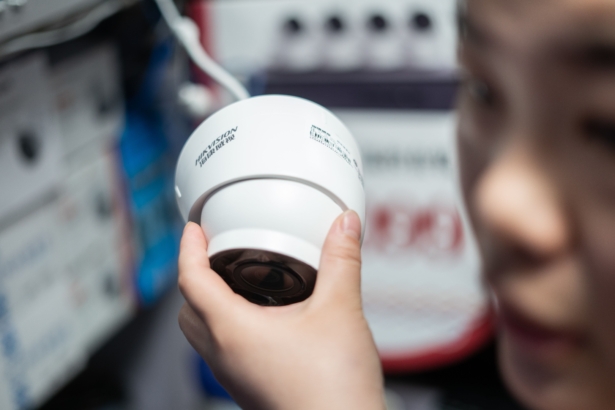
A senior U.S. official told reporters on June 3 that they “fully expect” to be adding additional companies to the list “in the months ahead.”
As many as 248 Chinese companies are trading on major U.S. stock exchanges as of May 2021, with a total market value of $2.1 trillion, according to U.S. government data.
If the banned companies can no longer raise their capital on Wall Street, one option, Li said, is for them to go to Hong Kong, which still has one of the world’s top five stock exchanges. However, that window is shrinking—investors have been fleeing the financial hub in light of Beijing's tightening control that is making the city ever more indistinguishable from the mainland.
Unless China becomes fully democratized, excluding entities with Chinese state or military ties from the U.S. market—though somewhat challenging—will eventually become inevitable, Li said of the challenges posed by China's ruling communist regime.
He pointed to the Chinese Communist Party's aggressive national strategy called “civil-military fusion,” under which the regime repurposes civilian technology and research to fuel its military rise. “China is fully capable of turning a private enterprise into a military-industrial enterprise overnight,” he said.
The company ran afoul of the regime after its founder Jack Ma publicly criticized Chinese financial regulators. Since then, it has met with one punishment after another. Ma vanished from public view for months and the company most recently was hit was a record 18.2 billion yuan ($2.8 billion) fine, to which it expressed “gratitude and respect.”
“No matter what powerful backing Ma had, in no more than four months, Alibaba is almost turning into a state-owned firm,” Li said. “Ma Yun (Ma’s name in Mandarin) has found himself with his back to the wall.”
Chinese foreign ministry spokesperson Wang Wenbin, in a Friday press briefing, accused the U.S. government of “abusing state security apparatus to wantonly suppress and restrict Chinese companies” and vowed to take “necessary measures.”
Li said the camera appearance was an effort by the regime to keep up appearances. “These are all a show for the Chinese people,” he said.
Su, the Taiwan defense analyst, said that Wang’s reaction was no different from how the regime has acted to similar situations in the past.
“I guess the Chinese foreign ministry probably doesn't have much to say at the moment, which is why it is repeating these dogmas like a record player.”
“It’s probably because the Chinese foreign ministry lacks confidence to back its position that it chooses to rely on bombastic verbal protests,” he said.