


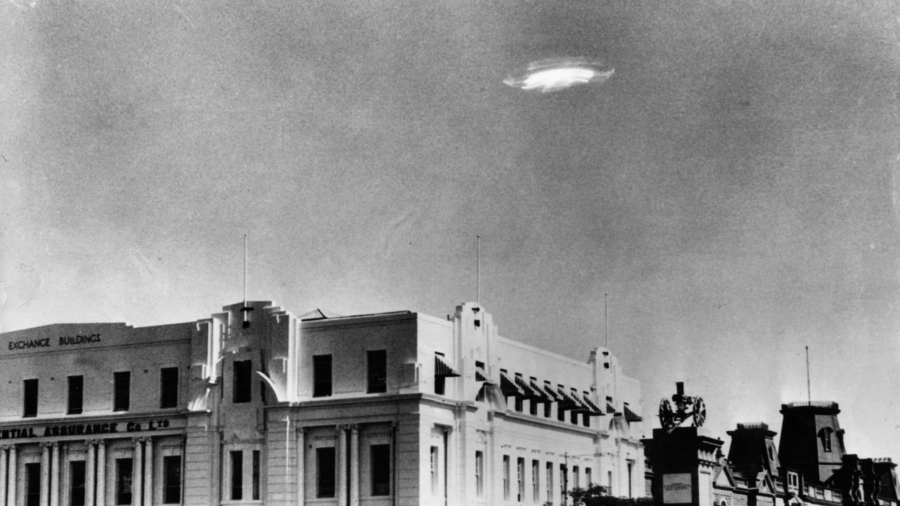
For the first time, the U.S. Navy acknowledged the three UFO videos that were released by the New York Times and To The Stars Academy of Arts & Science (TTSA) as real "unidentified" objects. The Navy admitted that the videos referred to as the "FLIR1," "Gimbal," and "Gofast" were "Unidentified Aerial Phenomena" (UAPs).
Two of the three UFO videos were released in December of 2017, and the "GoFast" video was released in March of 2018.
The first video of the unidentified object was taken on Nov. 14, 2004, by an F-18 gun camera. The second and third video was taken on the same day on Jan. 21, 2015, but it is still unclear whether the two videos display the same object.
Many contradictions arose on what these UAP encounters are, and some believe they may simply be a by-product of U.S. military training exercises using a classified drone or related technology.
These new statements by the Navy labeling the cases as "unidentified aerial phenomena" are making some second guess that theory.
Although the term, "Unidentified Flying Object" or UFO is much more common than UAP, the U.S. Navy is starting to accept the latter.
John Greenewald, Jr., who publishes The Black Vault, told Motherboard he was not expecting the language the Navy used in its official statement.
Luis Elizondo, the former head of the Pentagon's Advanced Aerospace Threat Identification Program (AATIP), has said that people should pay attention to the comments the government is making about UFOs.
"Furthermore, beyond what the pilots saw with their own trained eye, the technological feat they encountered was further verified by the impressive Aegis SPY-1 radar, America's premier radar system at the time, and even gun camera footage and sonar systems from submarines accompanying the carrier."
The Defense Department also briefed Senate Intelligence Committee Vice Chairman Mark Warner (D-Va.), in June, along with two other senators, as part of what appeared to be increased efforts to familiarize politicians about encounters with unidentified aircraft.
According to Politico, Warner's spokesperson indicated that the senator sought to examine safety concerns surrounding "unexplained interference" naval pilots faced.