


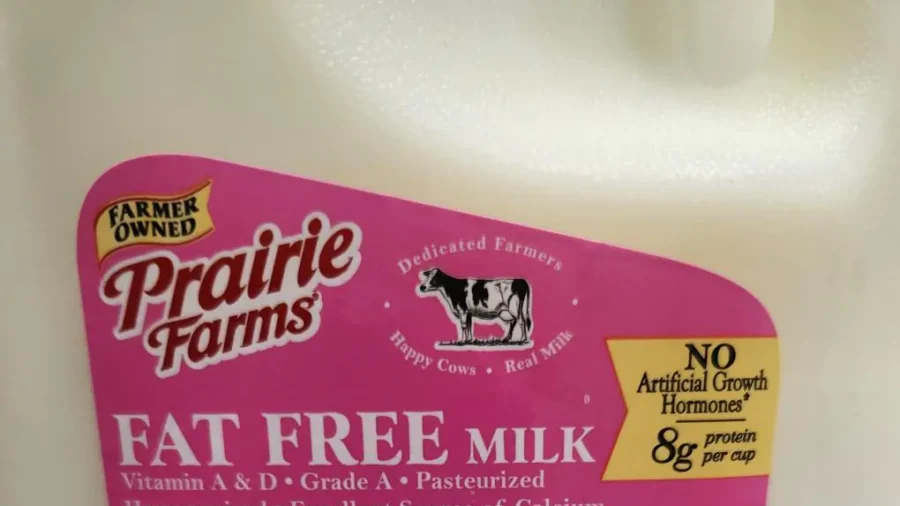
The U.S. Food and Drug Administration (FDA) assigned its second-highest risk warning to 3,752 gallons of recalled fat-free milk sold at Woodman’s stores in Illinois and Wisconsin.
“Many of these incidents aren’t reported because people don’t always make the connection between their illness and a specific food or beverage product," personal injury attorney Jason Reese told NTD. "What’s most troubling is that 3,752 gallons were recalled, which suggests this was not an isolated issue, but rather, a systemic problem that occurred during a 3.5-hour production timeframe.”
Food-grade cleaning agents, such as pot and pan detergent and liquid dish soap, can cause illness if consumed.
Prairie Farms was made aware of the potential quality issue on Nov. 24 and since then the FDA assigned its second-highest risk alert to the liquid dairy product.
Production facilities should have strict protocols in place to clean equipment on a regular basis, according to registered dietitian nutritionist Tiffany Bruno.
A Class 1 recall is defined as having a reasonable probability that the use of or exposure to will cause serious adverse health consequences or death, while a Class 3 event involves products that violate regulations but are unlikely to cause health problems, such as minor labeling errors.
“As a Class II recall, this means the risk is temporary or medically reversible adverse health consequences,” Bruno added. “Chemical contamination like we see in this recall are less common than microbial contaminations such as listeria or salmonella, which are naturally found in milk before being pasteurized and processed.”
Even food-grade chemicals need to be thoroughly rinsed to remove these residue, according to Reese.
"When someone ingests cleaning chemicals, even those that are labeled as food-grade, they can suffer serious health problems," Reese added. "I’ve seen victims with chemical burns to the mouth, throat, and entire digestive system. Others have suffered from nausea, vomiting, throat pain, and have trouble swallowing."