


A 29-year-old man from Kansas died after being struck by lightning while hiking on Sicily's Mount Etna, Europe's largest volcano, Italian firefighters said Monday.
The tourist was hiking through a barren, exposed section of the volcano when lightning struck him Sunday evening. Rescue crews airlifted him by helicopter from the area, but medical personnel later pronounced him dead.
His name has not been made public.
Volcano Already on Edge
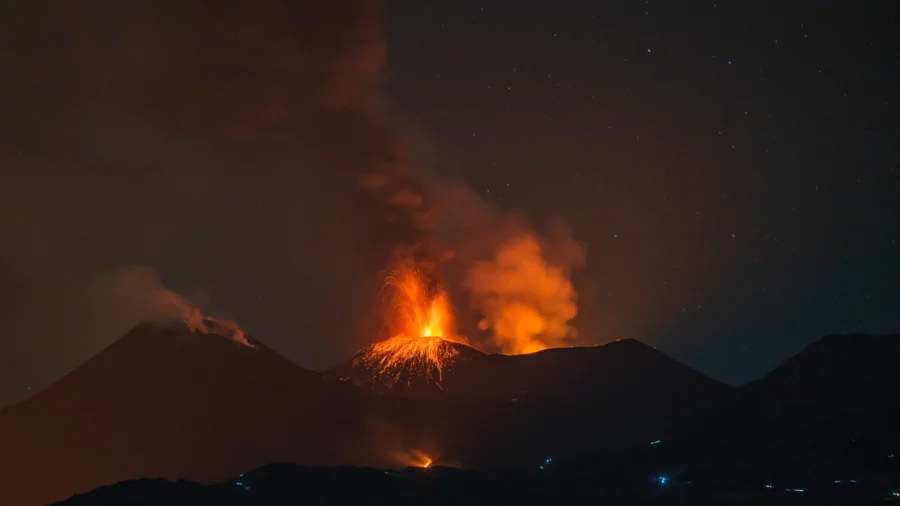
The incident unfolded as Mount Etna experienced a stretch of heightened volcanic behavior. Officials had already restricted hiker access to portions of the mountain's slopes because of the prolonged activity, though it remains unclear whether the man was within one of those closed zones.That same volcanic unrest had separately grounded air travel at Catania's airport for much of the preceding week. Airport operator SAC halted all arrivals and departures through 3 p.m. local time on Aug. 15.
Stranded travelers described days-long ordeals at the terminal. "We were due to leave on Wednesday, but our flight was canceled; then they rescheduled it for Friday. Now that one's been canceled too," said Antonella Thirande Warnakulasuriya Costa, a Messina resident bound for Sri Lanka.
Etna's Ongoing Eruptive Activity
Scientific monitoring has tracked the volcano's escalating behavior in near-daily updates. According to an Aug. 16 update from the National Institute of Geophysics and Volcanology's Etna Observatory, effusive activity continued from vents at 2,750 and 1,990 meters, with the most advanced lava front reaching 1,395 meters between Rocca delle Palombe and Rocca Musarra. The agency noted short-lived explosions at the Northeast Crater and a resumption of Strombolian activity at the Voragine crater, along with rising volcanic tremor amplitude.A follow-up Aug. 17 update from the observatory reported that a new effusive vent opened in the Valle del Bove at 6:09 a.m. UTC, between 2,200 and 2,350 meters elevation, producing a fresh lava flow. Ash emissions continued from the Voragine crater, drifting southeast, while tremor levels remained elevated, though slightly reduced from a peak the previous evening.
Despite the volcano's current turbulence, authorities noted that lightning has proven deadlier on Etna in recent decades than eruptions themselves, with the last eruption-related deaths dating to 1987.