


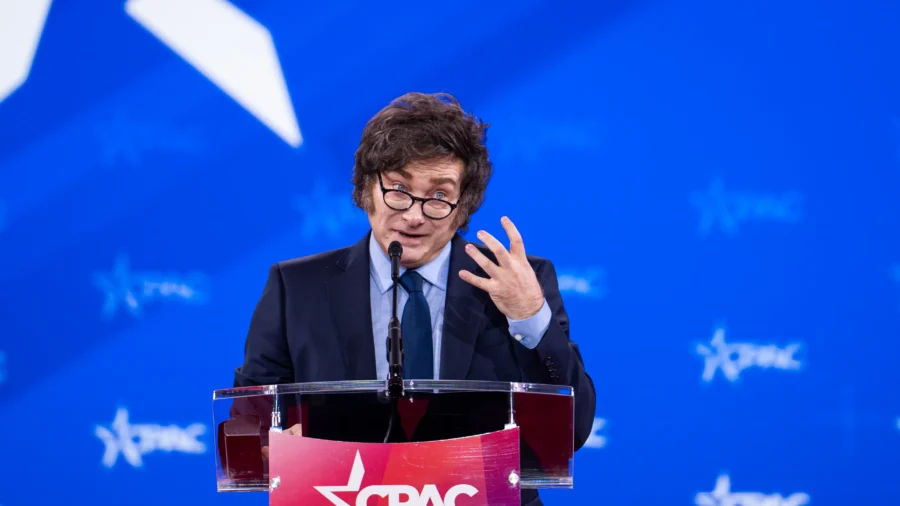
Argentina’s financial markets saw a modest rebound on Oct. 23, as both government bonds and the peso strengthened ahead of crucial midterm elections this weekend.
On Thursday, sovereign bonds maturing in 2035 climbed about $0.08, to trade near $0.561 on the dollar, reversing the previous day’s losses. The Argentine peso also rose as much as 0.7 percent, to 1,478 per U.S. dollar, marking its second straight day of gains.
The improvement came after JPMorgan Chase and Citigroup were active in Argentina’s spot currency market on Wednesday. The activity halted a week-long slide that had brought the peso dangerously close to breaching its official trading band.
In an additional effort to manage liquidity, Argentina’s central bank on Wednesday offered investors a swap of short-term, dollar-linked bonds maturing at the end of October for longer-term securities. The move aimed to prevent a surge of pesos into the market that could weaken the exchange rate further.
In the second quarter of this year, Argentina’s economy—the third largest in Latin America after Brazil and Mexico—grew 6.3 percent year over year, marking its third straight quarter of expansion.
Last month, Argentina's inflation rate slid down to 31.8 percent, stabilizing from the surge of 209 percent in September 2024.
President Donald Trump said on Oct. 19 that the United States may purchase beef from Argentina as part of efforts to ease rising meat prices at home.
“We would buy some beef from Argentina. If we do that, that will bring our beef prices down,” the president told reporters aboard Air Force One.
The president said that the imports would likely be limited in volume, but could help temper domestic beef costs while providing economic support to Argentina.
These actions build on a recently signed $20 billion currency swap agreement with Buenos Aires, bringing total U.S. financial backing for South America’s second-largest economy to $40 billion. Bessent did not disclose details of the peso purchases, which follow an earlier operation on Oct. 9.
Milei’s 2024 reforms included cutting energy and transport subsidies by more than 60 percent, slashing provincial transfers by more than 90 percent, and eliminating 48,000 public-sector jobs. He also eased pension eligibility, scrapped import licenses, limited central bank deficit financing, and moved to privatize state-owned firms.
The upcoming midterms will test support for Milei and his economic agenda. Half of the seats in the National Congress, 127 in the lower house and 24 in the upper house, will be contested on Sunday.