


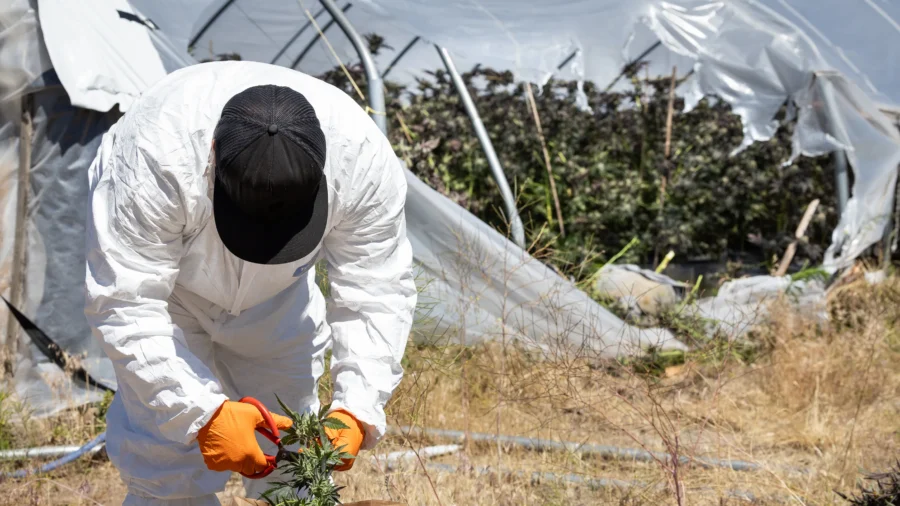
Bipartisan support at the federal and state levels is escalating to ban the sale and use of paraquat in the United States.
Prohibited in 70 countries, including China and the European Union, paraquat is the center of concern for researchers studying Parkinson’s disease. The weed killer is sprayed on almonds, apples, grains, grapes, strawberries, and many other common crops.
Parkinson’s is the fasting-growing neurological disease, according to the Parkinson’s Foundation, impacting around 1.1 million people in the United States who live with the condition.
The disease is a progressive brain disorder that damages dopamine-producing neurons. Symptoms include tremors, stiffness, slow movement, and non-movement issues like depression and sleep problems.
On June 18, Rep. Anna Paulina Luna (R-Fla.) and Rep. Chellie Pingree (D-Me.) introduced the Paraquat Prevention Act. The legislation would cancel all registered uses of the pesticide paraquat under the Federal Insecticide, Fungicide, and Rodenticide Act and permanently prohibit its reregistration, according to a press release.
“Paraquat has been banned in over 70 countries, including every nation in the European Union, because the science is clear about the devastating neurological risks associated with exposure,” Luna said.
“The United States has no business allowing a chemical linked to Parkinson’s disease to keep being sprayed on American farmland, and this bill ends that,” she added.
Pingree noted that Vermont “proved a paraquat ban is possible. Now Congress must make it national.”
When the U.S. House of Representatives passed the Farm Bill on April 30, sections that would have preempted states’ rights to restrict certain herbicides and pesticides were removed. This allows other states to follow Vermont in banning paraquat.

The Parkinson’s Foundation and the Michael J. Fox Foundation (MJFF) have called for a ban on paraquat, which has garnered bipartisan support.
Last month, Vermont became the first state in the nation to ban paraquat. Republican Gov. Phil Scott signed House Bill H.739 into law on May 26, prohibiting the sale and use of the herbicide.
The new law establishes a phased implementation schedule that gives farmers time to adapt. The ban on the sale and use of paraquat takes effect on Nov. 1.
Apple and other fruit growers, who account for most of the paraquat use in Vermont, have a transition period that lasts until Dec. 31, 2030. During that time, farmers must obtain special permits from the Vermont Agency of Agriculture, Food & Markets.
Upon signing the measure, Scott praised Fox and his foundation “for their work on this issue and hope this can serve as a model for other states to follow.”
Fox, who became a well-known actor in the 1980s and 1990s, emerged as an advocate for research into Parkinson’s after he went public about his battle with the disease in 1999.
“I’m grateful to the patients, advocates, lawmakers and scientists who stepped up to protect Vermonters from paraquat,” Michael J. Fox said in a statement. “Now it’s time for other states—and Washington—to do the same.”

Paraquat is banned by more than 70 countries, including China and the European Union, but the U.S. Environmental Protection Agency (EPA) allows use of the pesticide in the United States.
The agency has designated paraquat as a restricted-use pesticide, which means it can be sprayed only by licensed applicators. Yet concerns about accidental or airborne exposure, and long-term health impacts, remain.
“Independent scientific evidence has found that exposure to paraquat has led to increased risk of Parkinson’s disease, yet the EPA has continued to allow this pesticide to be used in our communities,” said Andi Fristedt, executive vice president and chief strategy and policy officer for the Parkinson’s Foundation, in a statement.
“By banning paraquat, the Paraquat Prevention Act would protect Americans and help create a world where fewer people develop Parkinson’s disease in the first place,” he added.
Paraquat is mostly applied to soybean, corn, and cotton crops to control invasive weeds and grasses, according to the EPA.
The agency said it would review the safety of paraquat in December 2022, but that reassessment has not been completed.
“The evidence linking paraquat exposure to increased Parkinson’s risk is strong and has been building for decades,” said Dan Freehan, MJFF's chief policy and government affairs officer.
“Vermont’s leadership sends a clear message: We do not have to wait to act. Other states should follow Vermont’s lead—and the federal government has an obligation to protect all Americans with a national paraquat ban."
Vermont resident and former exercise physiologist Ron McConnell lives with Parkinson’s and testified in favor of the bill.
“In 2017, a toxic exposure changed my life, and Parkinson’s followed," he said in a statement. "There is no cure for this disease yet. Until there is, addressing preventable risk is the strongest tool we have. I’m proud of my home state of Vermont for leading the way.”
MJFF said that it is working on legislation in a dozen states to ban paraquat.
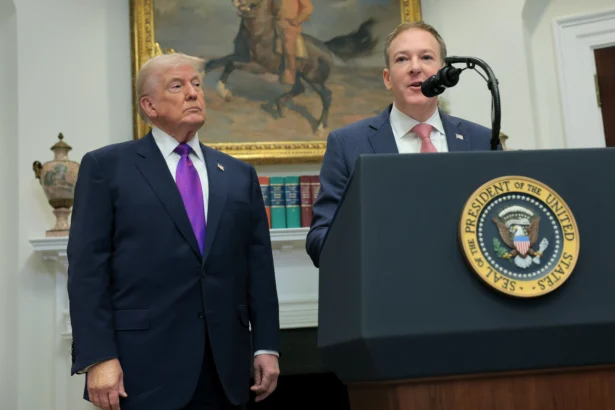
In January, the EPA said it would reassess the safety of paraquat. In a post on X, EPA Administrator Lee Zeldin wrote that the agency is requiring manufacturers to provide clear evidence that current uses are safe under real-world conditions.
Syngenta, a Swiss-based manufacturer that markets paraquat under the brand name Gramoxone, announced in March that it would cease global production of paraquat by the end of June.
“The decision reflects significant competition from generic producers around the world, which has eroded Syngenta’s competitiveness in the production of this herbicide,” the company said in a statement.
Syngenta faces multiple lawsuits in the U.S., where plaintiffs argue that exposure to the chemical caused them to develop Parkinson’s.
The company has said there is “no credible evidence” that paraquat causes Parkinson’s.
A 2024 study by researchers at the University Institute of Pharma Sciences found that environmental factors, including exposure to paraquat, are a cause of Parkinson’s.
Earlier research shows that people who apply paraquat are more likely to develop Parkinson’s compared with those who use other pesticides.
Living and working near areas where paraquat is sprayed can elevate Parkinson’s risk, according to another 2024 study in the International Journal of Epidemiology.
The National Advisory Council on Parkinson’s Research, Care, and Services will have its inaugural meeting on June 29. The panel was created in 2024 under the Biden administration to implement the National Plan to End Parkinson’s Act, which Biden signed into law as the first federal measure dedicated to preventing, diagnosing, treating, and curing the disease.
The Advisory Council brings together people living with Parkinson’s, care partners, clinicians, researchers, nonprofit leaders, and federal representatives to advise the National Institutes of Health (NIH) on Parkinson’s-related research, care, and services, according to the American Parkinson's Disease Association.
Under HHS Secretary Robert F. Kennedy Jr., the agency appointed new experts to the council in April.
Dr. Stephanie Haridopolos, director of national health communications for the Office of the Surgeon General and acting Surgeon General, is on the panel.
She told the MAHA Action Media Hub on June 10 that around 13 percent of today’s Parkinson’s cases are genetic and that her focus will center around prevention and environmental exposure.
“That means overwhelmingly 87 percent are due to multifactorial, mostly environmental toxins,” Haridopolos said.