


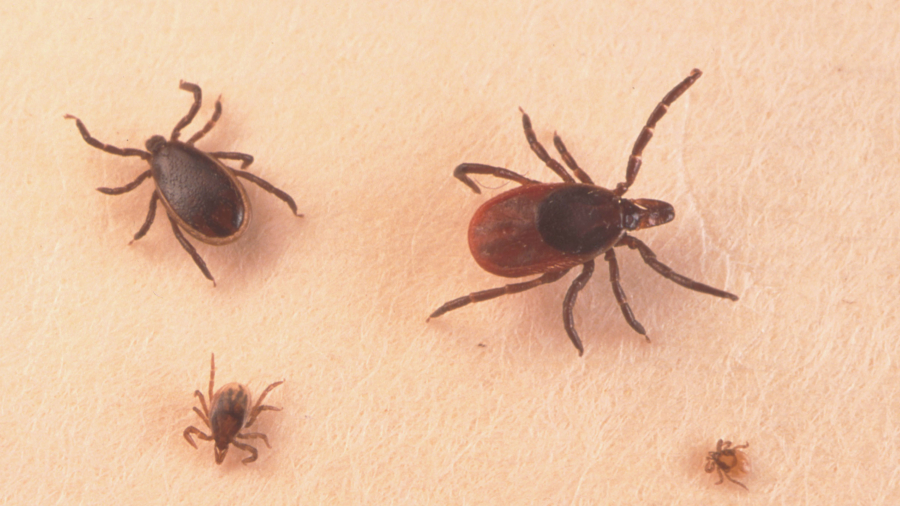
California health officials said that a state resident was hospitalized after contracting a rare tick-borne bacterial infection caused by Rickettsia lanei. The illness has been documented in only three people previously, according to the Centers for Disease Control and Prevention’s (CDC) Emerging Infectious Diseases journal.
Rickettsia lanei is a bacterium first identified in rabbit ticks in Sonoma County, California, in 2018. The earliest known human infection was identified years after the patient fell ill, through testing of stored samples from a 2004 illness in Northern California that initially resembled Rocky Mountain spotted fever.
State health officials say the newly reported California case is the third identified in the state and the fourth known human infection.
Symptoms of spotted fever illnesses can include fever, headache, muscle aches, and rash. Severe cases may lead to complications involving the brain, kidneys, and other organs.
Anne Kjemtrup, a CDPH research scientist and veterinarian, told SFGATE the illness can be fairly severe, as it’s similar to Rocky Mountain spotted fever.
According to the CDC report from the case in 2025, a man older than 50 sought emergency care after a week of fever, headache, and muscle pain that progressed to confusion, difficulty walking, and breathing changes. He told doctors he had recently seen a tick crawling on him while outdoors in eastern Oregon.
Other Rare Tick-Borne Illness
The California case comes as health officials in other parts of the country continue to monitor rare tick-borne diseases during the heavy tick season.Reagan’s friend Tom Wright said Reagan felt exhausted the day he went to Concord Hospital for a tick bite. The following day, he lost the ability to speak and struggled to move. Two weeks later, he was transferred to Massachusetts General Hospital. He needs a ventilator to breathe, and Wright said he can now move his fingers, toes, and eyelids, WMUR reported.
“They have given him a drug to help him wake up and come out of this,” he said.
How to Avoid Tick Bites
Given the severity of illness from tick bites and the limited treatments available, it's recommended to take as many precautions as possible to prevent them. The CDC recommends the following to avoid tick bites.- Know where ticks are found: grassy, brushy, and wooded areas, including yards and neighborhoods.
- Treat clothing and outdoor gear with 0.5 percent permethrin.
- When outdoors, stay in the center of trails and steer clear of tall grass, brush, and leaf litter.
- Use EPA-registered insect repellents containing DEET, picaridin, IR3535, oil of lemon eucalyptus (OLE), PMD, or 2-undecanone.