


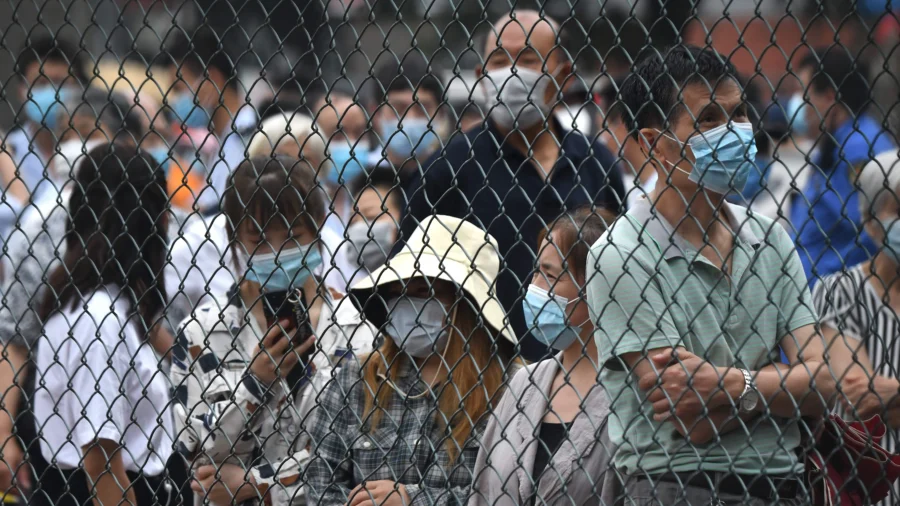
COVID-19 infection rates in China have continued to rise recently, with the positivity rate surpassing 20 percent for the first time this year, sparking concerns over a resurgence of the virus.
Among these cases, the COVID-19 positivity rate ranked first across almost all age groups. What's more, positive detection rates in southern provinces were significantly higher than those in northern provinces, with the prevailing variant lineage remaining NB.1.8.1.
Because the Chinese regime has a track record of concealing the scale of epidemics and disaster information, it is difficult for the outside world to obtain true epidemic data.
On social media, netizens from Shanghai, Hangzhou, Shanxi, Beijing, and other regions have been posting that they or people around them have "tested positive" or "caught it" again, with some even reporting whole-family infections.
An infected woman in Shanghai told the Chinese edition of The Epoch Times: "This wave of COVID in Shanghai is too brutal.”
She said, “For the first three days, I had fever, diarrhea, and razor-blade throat. On the fourth day after the fever broke, I started coughing intensely, vomiting, and having diarrhea. On the fifth day, it returned to razor-blade throat, though other symptoms subsided."
"I wear a mask every day when going out, but I still couldn't protect myself," she said. "The hospital was crowded; queuing up and getting examined took three hours."
On July 31, Luo Yi, a doctor of Traditional Chinese Medicine in China, posted on Weibo stating that COVID-19 has "come roaring back" once again.
On the same day, a doctor in Shandong posted on Weibo: "The hospital emergency room is jam-packed, with no room left even to lie on the floor. Everyone remaining is critically ill. There are no beds left—strictly no beds."
Taiwan's COVID-19 rates have also continued to heat up.
Unlike the prevailing NB.1.8.1 variant in China, over the past four weeks, local domestic variants in Taiwan were predominantly PQ.16.1.1. This is a sublineage derived from NB.1.8.1.
Taiwan CDC said vaccines still offer a certain degree of protection against severe illness.
The scientific community has long held varied opinions regarding the origin of COVID-19.
On Aug. 2, Dr. Ashish Jha, who served as the White House COVID-19 Response Coordinator under the Biden administration, said that he now believes the most likely explanation for the pandemic's origin is a "lab leak."