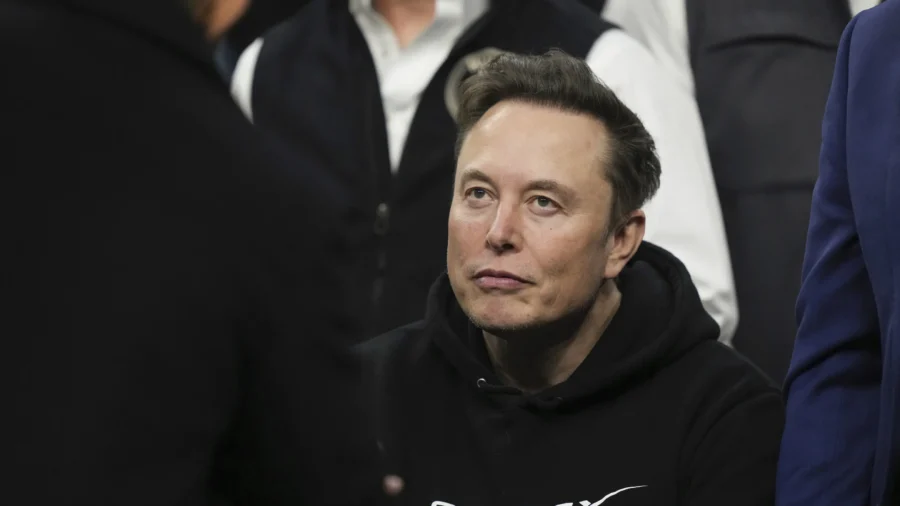
Elon Musk—the world’s richest man and a figure often synonymous with boundless ambition—sparked a global conversation this week after sharing a somber reflection on wealth.
On Wednesday, the Tesla and SpaceX CEO
posted to X, the platform he owns: “Whoever said ‘money can’t buy happiness’ really knew what they were talking about.”
His post has since been viewed more than 100 million times and prompted more than 120,000 comments, including thoughtful replies from spiritual leaders, financiers, and fellow billionaires.
Among those responding was pastor Jeremiah Knight, who cited a Bible lesson that warned against the emptiness of an abundance of wealth.
“King Solomon, the richest man who ever lived, wealthier than even you, @elonmusk,” Knight
wrote. “After tasting every pleasure, possessing limitless power, and building unimaginable riches, Solomon concluded, ‘ALL IS VANITY.’”
Financial titan Bill Ackman, CEO of Pershing Square Capital Management, wrote in his own post that fulfillment might come less from money than from meaning.
“A lot of happiness comes from helping others,” he
wrote. “You have helped millions, and someday it will likely be billions. Happiness can also be found in a long-term relationship with someone really special. It is time for you to find that someone for the long term.”
Musk’s post comes amid a period of record-breaking financial success. In October he became the
first person ever to exceed a net worth of $500 billion, fueled by rising valuations across his growing portfolio of companies—Tesla, SpaceX, xAI, and the social media platform X.
The electric car maker’s stock climbed more than 14 percent in 2025 despite slowing sales, helping lift Musk’s fortune to over half a trillion dollars at the time. Tesla Chair Robyn Denholm recently described Musk as being back “front and center” at the company after months focused on other ventures, while shareholders in November approved a new
compensation plan valued at nearly $1 trillion—enough to make him the world’s first trillionaire if all goals are met.
The package ties Musk’s payout to ambitious milestones, from delivering 20 million vehicles to developing robotaxis and humanoid robots by 2035. The measure passed with more than 75 percent of shareholder votes despite concerns raised by proxy advisory firms and Norway’s sovereign wealth fund, which opposed it.
According to
Forbes estimates, Musk’s current net worth is estimated at $844 billion, more than double runner-up for world’s richest man Larry Page, who co-founded Google and has a reported $264 billion net worth.
Research Shows Money’s Limits
Musk’s remarks reignited the long-running debate over whether money can buy happiness—a question researchers have examined for decades.
According to the
Happier Lives Institute, wealth can indeed boost happiness, but mainly up to a point. Citing Nobel laureates Daniel Kahneman and Angus Deaton’s influential 2010 research, the institute noted that “beyond about $75,000/y, there is no improvement whatever in any of the three measures of emotional well-being.” Later studies challenged this ceiling, finding that happiness can continue to rise with income but that the benefits taper off.
Recent research suggests that money most effectively amplifies happiness among those already content. “Money can buy you more happiness if you’re already happy,” the institute wrote. “But if you’re miserable to start with, money will only do so much.”
The Psychological Cost of Extreme Wealth
Even for the ultra-wealthy, money can create its own set of struggles. A 2012
report by the American Psychological Association examined the inner lives of people worth $25 million or more. Developmental psychologist Robert Kenny, who led the study, said wealth can ease life’s pressures but often complicates emotional well-being.
“They worried whether their children would know if people really loved them or their money,” Kenny said, adding that many wealthy parents feared their kids might lack motivation or meaning.
The study found that despite their abundance, respondents frequently felt isolated and bewildered by limitless freedom—a problem few can imagine but many in that bracket reportedly share.
“The takeaway from all of this is that you can’t buy your way out of the human condition,” Kenny said.