


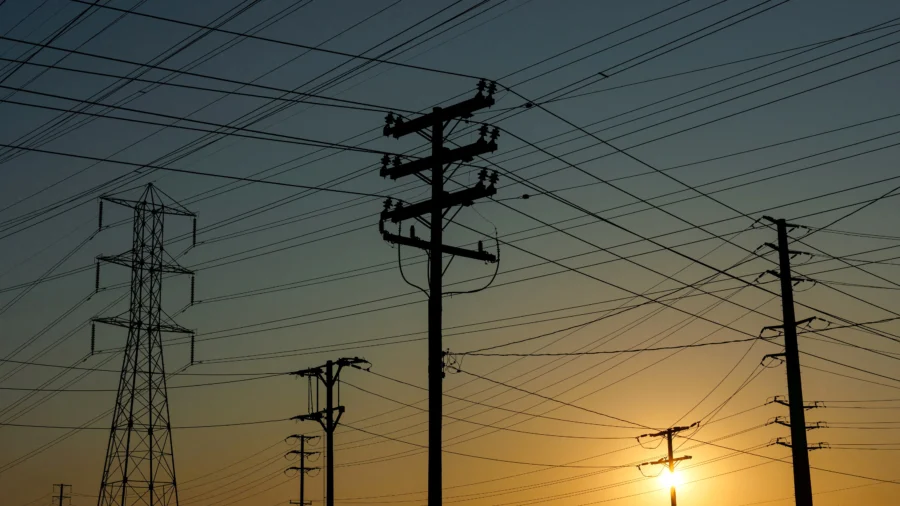
Less than a week after President Donald Trump expanded the federal Ratepayer Protection Pledge, the U.S. Department of Energy issued an emergency order that allows a regional grid operator to draw power from emergency backup generators, including those at technology data centers.
Southwest Power Pool (SPP) requested the authority to prevent rolling blackouts across the central United States during extreme heat.
The federal action comes as a July 26 National Weather Service (NWS) alert warned of a heat wave extending into early August and spanning Nebraska, South Dakota, Kansas, and Oklahoma.
Up to 100 million people are expected to feel the extreme temperatures.
One of the order’s provisions permits SPP to unlock and deploy backup generation resources located at data centers, including those owned and operated by various technology companies.
“SPP also requested authority to unlock and deploy backup generation resources (whether auxiliary, standby, directly-connected, battery storage or other, and whether synchronized or not to the bulk-power system) at data centers (including, but not limited to, hyperscaler facilities), and at other large load industrial and commercial customer sites as another tool to mitigate any undue risk to the bulk-power system,” the order states.
The federal Ratepayer Protection Pledge enables cooperation between grid operators and technology companies, such as Amazon Web Services (AWS), Microsoft Azure, Google Cloud, Meta, and Apple.
Under the pledge, the tech giants agree to allow grid operators access to their generators to help prevent blackouts.
“Electricity bills for American families will actually come down,” Trump said on July 23. “They’re going to have a lot of electricity left over, and they’ll put that into the grid.”
The DOE order also temporarily suspends federal, state, and local clean air limits on emissions, particulate matter, and sulfur dioxide.
However, the Energy Department is requiring SPP to report the environmental impacts of the Order and its compliance.
“All operations of the Specified Resource and backup generation resources must comply with applicable environmental requirements, including but not limited to monitoring, reporting, and recordkeeping requirements, to the maximum extent practicable while operating consistent with the emergency conditions,” the order states.