


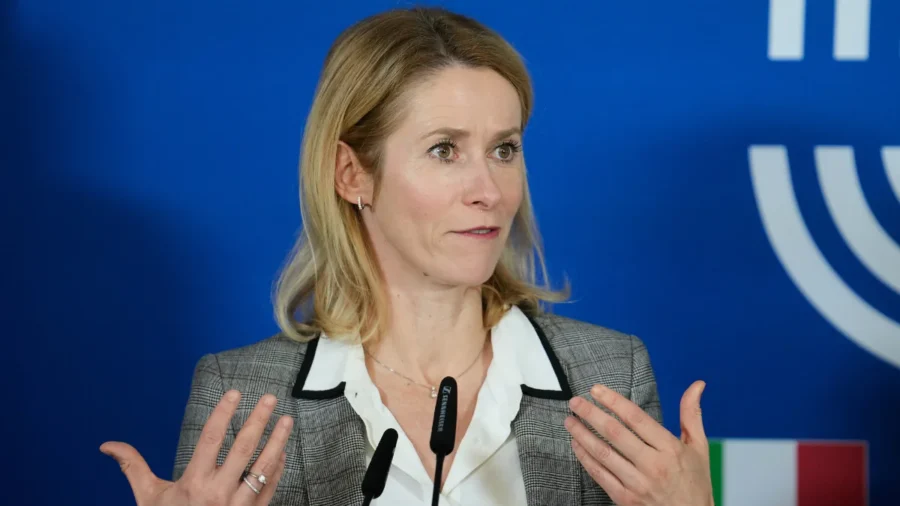
The European Union has confirmed reports indicating that the Chinese military has assisted in training Russian servicemen for participation in the ongoing war in Ukraine. In response, the EU has imposed sanctions on several Chinese entities.
Kallas did not provide additional details regarding how the information was confirmed, but mentioned that ministers focused their discussions on the diplomatic and security dimensions of EU-China relations.
Her remarks align with previous media reports suggesting Chinese involvement in training Russian forces.
According to a Reuters report in May, China’s armed forces secretly trained approximately 200 Russian military personnel in late 2024, indicating a deeper and more direct level of involvement in the Ukraine conflict than previously understood.
Documents reviewed by European intelligence agencies reportedly reference a confidential dual-language agreement signed on July 2, 2025. The agreement outlined reciprocal training arrangements, with Russian personnel sent to Chinese facilities in cities such as Beijing and Nanjing, and Chinese troops deployed to Russia.
Training reportedly focused on drone warfare, electronic warfare, mortars, and demining operations. Internal Russian reports from late 2025 describe training sessions involving flight simulators, FPV drones, and electronic warfare equipment designed to counter unmanned aerial vehicles.
Many of the trainees were reportedly senior instructors capable of disseminating acquired knowledge throughout the Russian military chain of command. Intelligence officials have confirmed that some of these trained servicemen have since returned and participated in combat operations in Ukraine.
These include Xinxiang Richful Lubricant Additive, a major manufacturer of lubricant additives accused of supplying chemical components for Russian military equipment; Shenzhen Minghuaxin, an equipment supplier alleged to have exported technology and components to Russian drone manufacturers and other military-linked entities; and Nord Axis Ltd, a Hong Kong-registered firm accused of facilitating the transport and export of Russian oil and operating vessels linked to Russia’s “shadow fleet.”
European governments continue to watch the relationship between China and Russia closely, viewing Russia as a significant geopolitical threat.
Shortly before Russia’s invasion of Ukraine in 2022, the two countries announced a “no limits” partnership and committed to expanding military cooperation, including joint exercises.
Following the imposition of Western sanctions on Russia, China has played a significant role in sustaining the Russian economy by increasing imports of Russian oil, gas, and coal.
Demonstrating the continued closeness of their relationship, China leader Xi Jinping recently hosted Russian President Vladimir Putin for a two-day meeting, shortly after a high-profile visit to Beijing by U.S. President Donald Trump.
Western nations have repeatedly urged China to leverage its influence to encourage an end to the war in Ukraine. However, Beijing continues to assert that it maintains a neutral stance in the conflict.