


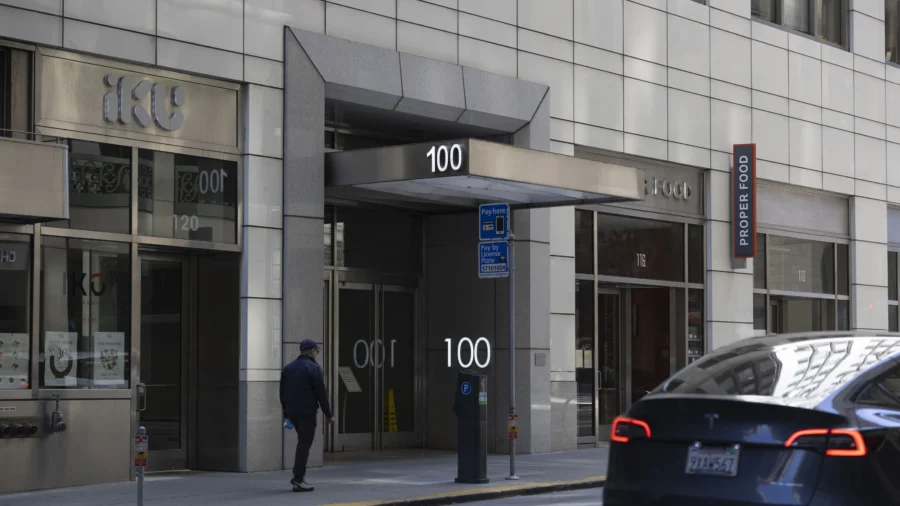
A federal judge in California on June 23 vacated the Trump administration’s policy for federal agents to conduct arrests at immigration courthouses across the nation.
“The policies discuss the benefits of courthouse arrests to the government’s enforcement of immigration laws but do not directly address the concerns raised in earlier guidance concerning chilling effects, safety risks, and impacts on hearing attendance,” the judge wrote.
The judge also said that Immigration and Customs Enforcement (ICE) and the Justice Department’s Executive Office for Immigration Review (EOIR) failed to provide “reasoned explanations” for implementing the policy, as required under the Administrative Procedure Act.
Pitts said that while the policy cited the routine activities of law enforcement agencies near courthouses, he found the analogy did not hold in the context of immigration courts, where “ICE is not arresting individuals who appear for criminal or civil violations ‘unrelated’ to the arrest but instead arresting noncitizens based on the very immigration offenses for which the noncitizens are appearing in immigration court.”
“In sum, ICE’s 2025 courthouse-arrest policies are devoid of rational explanation for (or even acknowledgement of) the agency’s choices (1) to remove its earlier restrictions on civil arrests at immigration courthouses and (2) not to extend the new policies’ limitations to immigration courthouses,” the judge wrote.
The ruling stemmed from a lawsuit by Carmen Aracely Pablo Sequen, an asylum-seeker from Guatemala, who sought a writ of habeas corpus—a legal challenge to determine the legality of detention—after being arrested by ICE agents while she was leaving a routine hearing at the San Francisco immigration court.
According to court documents, Pitts had previously issued a temporary restraining order and preliminary injunction requiring Pablo Sequen’s immediate release and barring the government from re-detaining her without prior notice and a hearing before an immigration judge. Pablo Sequen later added two more plaintiffs, who are also asylum seekers, in an amended complaint.
James Percival, general counsel for the Department of Homeland Security, expressed his opposition to the judge’s ruling in a post on X.
“When a judge sentences a defendant, the defendant is taken into custody. If an alien is ordered removed by an immigration judge, the same should happen,” he said. “A district judge ordering otherwise is naked judicial activism in service of an anti-American, open borders agenda.”