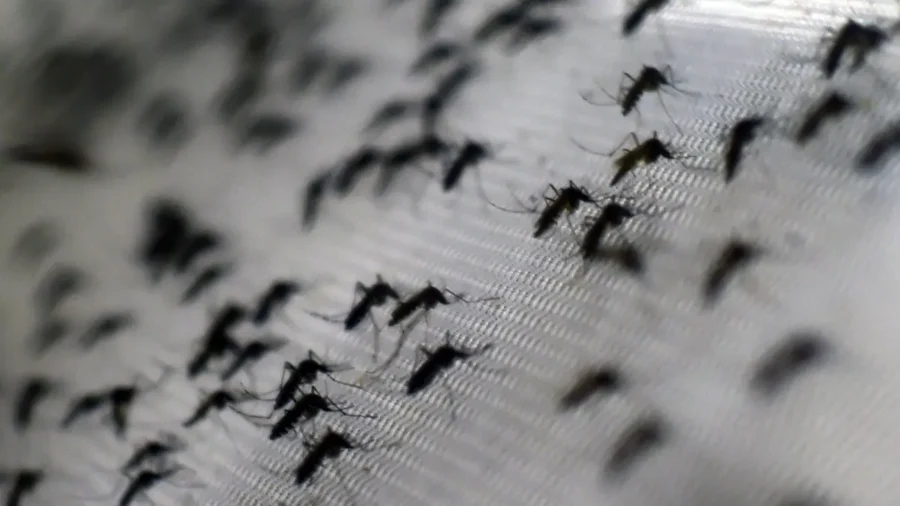
Google LLC has applied for federal permission to release up to 32 million sterile male mosquitoes across California and Florida. Its goal: a bold biological campaign to suppress one of the world's deadliest animals, according to a
notice published in the Federal Register.
The Environmental Protection Agency (EPA) received the application in June 2025, published a notice of it last month, and is now accepting public comments through June 5, 2026.
The mosquitoes at the center of the proposal are no ordinary insects. According to Google's Debug
project, the males being targeted for release carry a naturally occurring bacterium called Wolbachia pipientis wAlbB—a microorganism that renders them unable to produce viable offspring when they mate with wild females. The species involved is Culex quinquefasciatus, known as the southern house mosquito, and the specific strain is referred to as the DQB strain.
Under the proposal, up to 16 million mosquitoes would be released in each state during the first year of the program, with an additional 16 million released in each state during the second year. The goal is to gather data to support a full product registration under the Federal Insecticide, Fungicide and Rodenticide Act.
The science behind the effort is not new. Google's Debug team
says the approach is rooted in the Sterile Insect Technique, or SIT, a method first developed in the 1950s that has already been deployed successfully against fruit flies, screwworms, and codling moths. The core idea: flood wild populations with sterile males. When a wild female mates with one, her eggs simply don't hatch—and the population shrinks with each successive generation.
"Male mosquitoes can't bite or spread disease," the Debug project states on its website, "so good bugs will stop bad ones from reproducing."
Mosquitoes are the deadliest animals on the planet, killing more people annually than every other animal species combined,
according to the Centers for Disease Control and Prevention. A single species—Aedes aegypti—is responsible for transmitting dengue, Zika, yellow fever, and chikungunya, diseases that collectively sicken hundreds of millions of people each year. Forty percent of the world's population lives in areas at risk of contracting a disease spread by that mosquito.
Traditional defenses have struggled to keep pace. Pesticides are increasingly ineffective as mosquitoes develop resistance, and can harm the surrounding environment. Eliminating standing water—long a cornerstone of public health campaigns—falls short because breeding sites are nearly impossible to find and eradicate entirely. No effective vaccines exist for most of these diseases.
The process involves several engineered steps. Scientists first rear millions of male mosquitoes in automated facilities, then use sensors and algorithms to sort males from females with precision. Only the males—which have no mouthparts capable of biting—are released into the wild. Monitoring software tracks population changes before, during, and after each release to guide future efforts.
The technique has been shown to work on a small scale. Debug published field trial results from a 2018 study in Fresno, California, in the journal Nature Biotechnology in April 2020. The company has also partnered with the Centers for Disease Control and Prevention, Singapore's National Environment Agency, and Australia's Commonwealth Scientific and Industrial Research Organisation, among others.
The California and Florida trial comes as the federal government is investing heavily in similar biological pest control elsewhere. The U.S. Department of Agriculture is spending $21 million to renovate a sterile fly production facility in Metapa, Mexico, and is partnering with the U.S. Army Corps of Engineers to construct a new domestic facility at Moore Air Base in southern Texas—capable of producing 300 million sterile flies per week—to fight New World screwworm, according to an April 29 USDA Animal and Plant Health Inspection Service
update.
The EPA's review of Google's mosquito application will weigh public comments alongside scientific data before deciding whether to approve or deny the experimental use permit. Any approval will be announced in a new Federal Register notice.
Those wishing to comment may do so through regulations.gov using docket ID number EPA-HQ-OPP-2025-3951 before the June 5, 2026 deadline.