


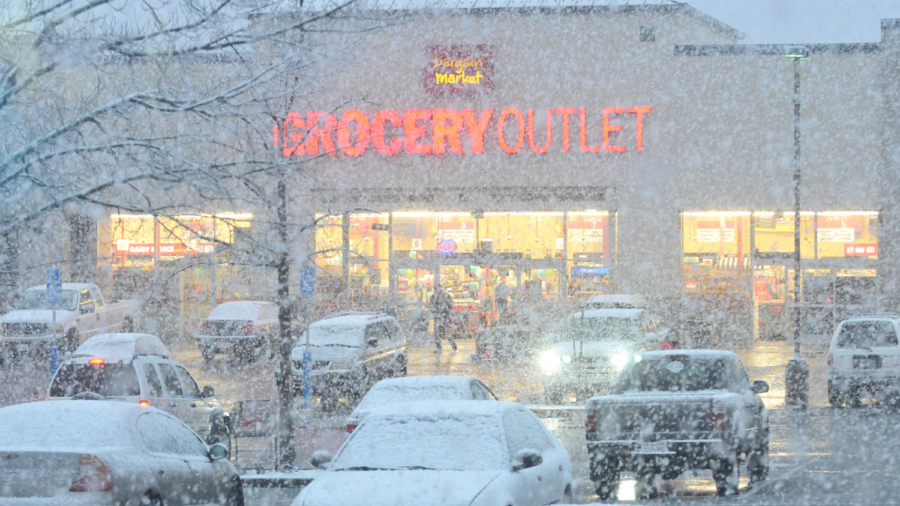
Grocery Outlet plans to shut down 36 underperforming stores across the United States this year as part of a “optimization plan” that executives say is meant to correct an expansion strategy that moved faster than the business could support.
According to President and CEO Jason Potter, “It’s clear now that we expanded too quickly, and these closures are a direct correction.”
According to the company, the 36 stores represent financially lagging locations that “did not have a viable path to sustained profitability.”
Most of the cuts will fall in the eastern United States, where the company has pushed hardest into new territory in recent years. According to Potter, 24 of the 36 locations slated to close are in the East, accounting for roughly 30 percent of the company’s store base in that region. He emphasized that Grocery Outlet “is not fully exiting any state” and continues to see “meaningful opportunity to grow in the East over the long term.”
Despite the closures, the company said that the remaining eastern stores are performing solidly. According to Potter, the 51 locations that will remain open in the East are profitable on a “four-wall basis” and delivered a 3.3 percent comparable sales increase in the fourth quarter.
Executives described the closures as part of a broader effort to stabilize performance after what Potter called “unacceptable” results in the final quarter of 2025.
According to the company’s news release, net sales in the fourth quarter rose 10.7 percent to $1.22 billion, boosted by an extra 53rd week, while comparable store sales slipped 0.8 percent on a 13-week basis as shoppers bought fewer items per trip. Gross margin edged up to 29.7 percent, but Grocery Outlet swung to a net loss of $218.2 million for the quarter, driven largely by noncash impairment charges tied to underperforming stores and goodwill.
In other words, on paper, the company reported an operating loss of $221.7 million because it took large accounting write-downs to mark certain stores and other assets down to what they are now believed to be worth.
For the full year, the retailer reported net sales of $4.69 billion, up 7.3 percent from 2024, and a 0.5 percent comparable sales increase on a 52-week basis.
Grocery Outlet expects between $14 million and $25 million in net restructuring charges tied to the optimization plan this year, including an estimated $51 million to $63 million in cash costs, largely for lease termination fees, and $11 million to $14 million in bad debt expense. Those expenses are projected to be partly offset by a noncash write-off of lease-related assets and liabilities of between negative $48 million and negative $52 million. The company also estimates a $4 million to $6 million hit to 2026 gross profit from inventory markdowns as it liquidates merchandise at the closing stores.
Even as it pulls back in some markets, Grocery Outlet is not abandoning growth. According to Potter and Chief Financial Officer Christopher Miller, the company still intends to open 30 to 33 net new stores in 2026, but under tighter standards.
Management said it is “reshaping our new store growth strategy” by clustering locations to better leverage the supply chain and marketing, and by piloting a model in which some new eastern stores, including upcoming openings in Virginia, will start as company-operated.