


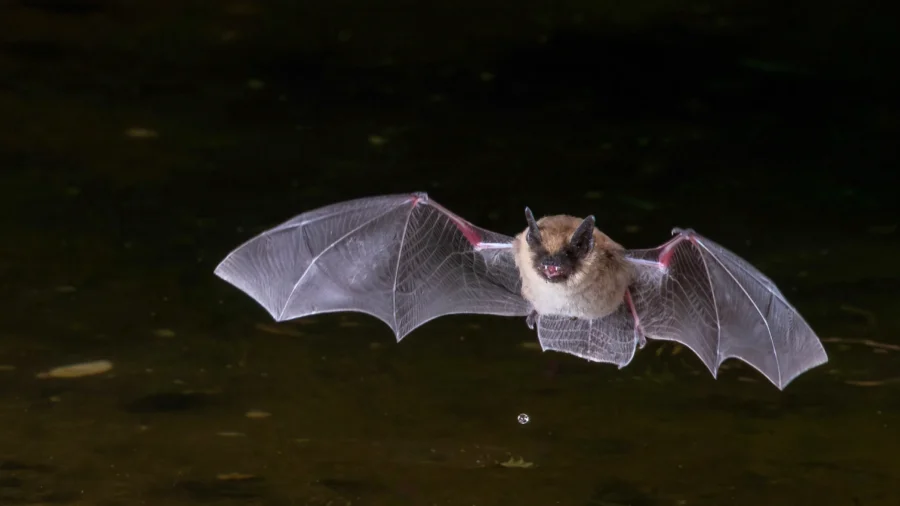
San Diego County health officials are asking anyone who may have handled a bat that landed on a table at a Vista restaurant last weekend to seek medical attention after lab tests confirmed the animal was infected with rabies.
County officials said no direct skin contact with the bat has been reported so far. Still, anyone who touched or held the animal, or who knows someone who may have, is being urged to contact a health care provider immediately, since only people with direct physical contact face any risk of infection.
Health officials said that rabies post-exposure prophylaxis works well when administered before symptoms appear, but once symptoms set in, there is no treatment and the disease is almost always fatal.
Two earlier rabid bats were also found in March near Escondido's White Oak Villas condo complex and at the Safari Park's Okavango Restaurant.
"Rabies is an extremely serious viral disease, one of the deadliest, with nearly 100% fatality if not caught early enough," said Dr. Ankita Kadakia, the county's deputy public health officer, in an announcement following the earlier incident. "We are investigating to ensure anyone who came into contact with the bat receives care quickly. Once symptoms start there is no treatment for rabies.”
County Public Health Services continues to urge residents to avoid touching or approaching bats or any wildlife, and to wash any exposed skin with soap and seek medical advice immediately after contact. Rabies symptoms can take weeks to months to appear, but the illness is almost always fatal once symptoms begin.
Human rabies cases remain rare. California's most recent human case occurred in 2024, involving a Fresno County resident exposed to a bat in Merced County.
Despite the recent cases, officials noted bats play an important ecological role in San Diego County, feeding on insects such as mosquitoes and pollinating plants by feeding on nectar. Residents may spot bats around sunset, when they are most active, and officials asked the public to give the animals space.
Anyone with questions about a possible exposure or rabies prevention can contact the county's Epidemiology unit at (619) 692-8499.