The Trump administration on Wednesday began stripping federal certification from Network for Hope, the organ procurement organization serving Kentucky and parts of Indiana, Ohio, and West Virginia.
Multiple reviews found the group repeatedly failed to protect patient safety despite years of warnings, the U.S. Department of Health and Human Services (HHS)
said.
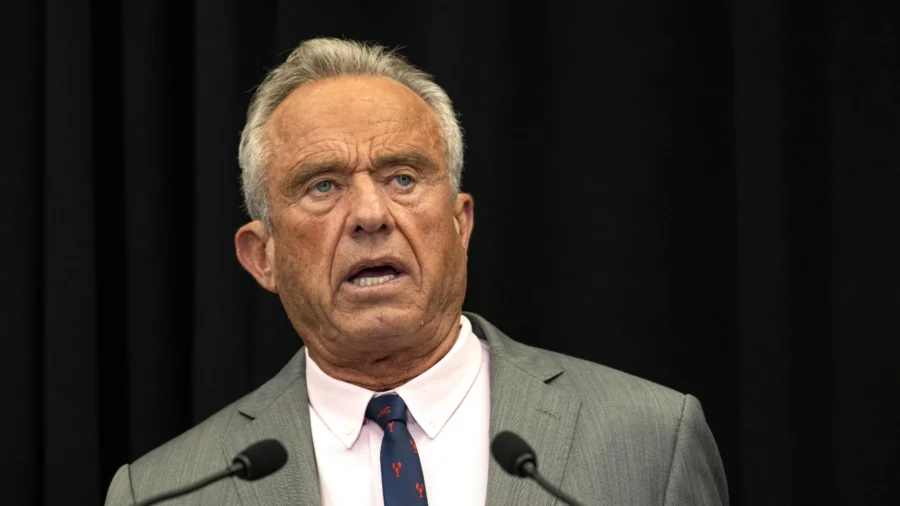
HHS Secretary Robert F. Kennedy Jr. announced the decertification at a
press conference the same day, saying federal reviewers found deficiencies in nearly 30 percent of cases they examined, including patients placed on the organ donation pathway who never should have been, and cases where the donation process moved forward despite signs the patients weren't suitable donors.
"Americans who choose to become organ donors deserve a system that honors their gift and protects every patient," Kennedy said in the press release. "Today's action reflects the Trump Administration's commitment to protecting the sanctity of life. Organizations that repeatedly fail to meet federal standards and put patients at risk will be held accountable."
Kentucky Man's Case Highlighted
Kennedy pointed to the case of T.J. Hoover, a Kentucky man who showed signs of awareness on an operating table moments before doctors were set to remove his organs."Physicians refused to proceed with the organ recovery because they believed that he was still alive," Kennedy said at the press conference. "T.J. we are grateful that you're here, and we're grateful to those physicians who had the courage to do the right thing."
Kennedy said Hoover's case shows why federal safeguards matter, calling Network for Hope a "bad apple" while stressing that most organ procurement groups act professionally and treat donors and recipients with respect. He noted more than 103,000 Americans are currently waiting for transplants and that a single donor can save up to eight lives.
Reviews Cited Widespread Problems
A separate HRSA review of 351 cases from 2021 to 2024 found concerning features in 103 of them, including 73 patients showing neurological signs inconsistent with organ donation. The review also raised questions about whether some potential donors were actually deceased when procurement began, and pointed to weak medical evaluations, poor coordination among medical teams, and questionable consent practices.Kennedy said the Biden administration was aware of safety problems at the organization but failed to act. HRSA Administrator Tom Engels said his agency spent the past year working with Network for Hope on corrective steps, but the organization never showed sufficient improvement. CMS Administrator Dr. Mehmet Oz said the decision should serve as a warning to other providers that fail to protect patients.
The decertification builds on other changes, including a public dashboard
HRSA launched in August 2025 to track organ offers made outside the standard priority order. "Every patient and family waiting for a transplant deserves a fair, transparent, and accountable process," Engels said at the time.
CMS also proposed a rule in January to tighten oversight of organ procurement groups, including clearer definitions of unsafe practices and steps to encourage use of organs from older or higher-risk donors. "Every missed opportunity for organ donation is a life lost," Oz said in a January
press release announcing the proposed rule.
Kennedy said all organ procurement organizations must now appoint a patient safety officer to monitor incidents in real time and serve as a point of contact for families and hospitals.