


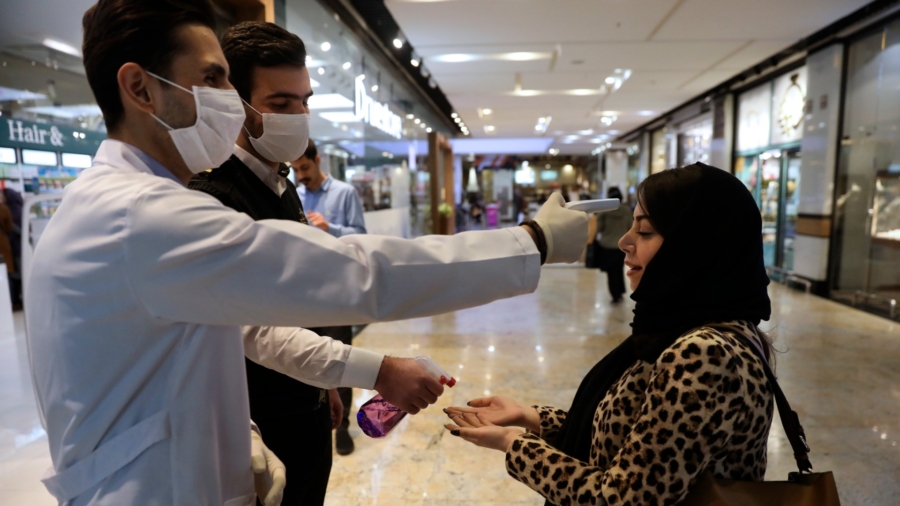
The city of Qom in Iran, a significant destination of Shia pilgrimage and the epicenter of the Islamic Revolution in 1979, has become an epicenter of the coronavirus crisis, and experts believe this has political repercussions within Iran and in the entire Middle East.
"In the 1960s, Qom became the center from which Ayatollah Khomeini opposed the Pahlavi dynasty," said Dr. Pierre Pahlavi to The Epoch Times in an email. Pahlavi is a professor at the Department of Defense Studies at the Canadian Forces College and a member of the Pahlavi family that ruled Iran before the Ayatollah took over.
Spread From Qom
Iran reported the country's first two deaths in Qom on Feb. 19. Since then, the virus has become unstoppable, initially spreading unabated by the clergy's message to pilgrims to keep coming, unlike other cities in the world that immediately shut their doors."We call this holy shrine Daralshafa, means people come and heal from mental and physical illnesses, so they must be open," said Seyyed Mohammad Saeedi, the Custodian of the Shrine of Masoumeh and Supreme Leader Ali Khamenei's representative in the city, according to a video on the social media.
Nicole Robinson, a Middle East expert at the Washington-based Heritage Foundation, told The Epoch Times in an email that hundreds of Chinese students and junior clerics study at the seminaries in Qom and the senior clergy's management of the virus was a disaster.
"It is unclear how long ago the outbreak began, but the Iranian government’s response to keep religious shrines open despite the initial outbreak is likely the reason the virus was not contained and instead spread to other cities in Iran," said Robinson.
Since the Iranian leaders visit Qom often, the virus spread into the ruling elite, killing one of Khamenei's advisors, three Revolutionary Guard commanders, the deputy minister of health, a former ambassador to Syria who was currently working as an advisor to Foreign Affairs Minister Mohammad Javad Zarif, Khomeini’s ambassador to the Vatican, and an advisor to the head of the Judiciary.
"Additional visits to Qom from top Iranian government officials such as Iraj Harirchi-Iran’s deputy health minister spread the virus among high-level officials in the Iranian government," said Robinson.
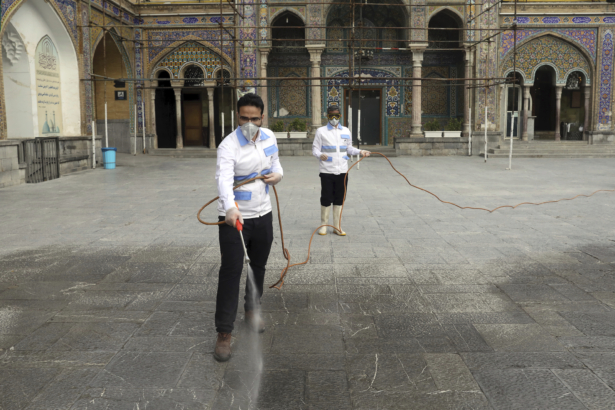
Shifting the Blame
Seyyed blamed U.S. President Donald Trump for the growing crisis in the city because Qom is a "shelter for the Shiites of the world, the center of religious seminaries and the city where Shiite sources of emulation live."Pahlavi said conspiracy theories have always flourished in Iran under such situations.
"Since Operation Stuxnet, the cyber virus used to neutralize Iran’s nuclear program a decade ago, Iranian politicians and military leaders have developed a besieged citadel syndrome that tends to get mixed up in paranoia," he said.
Repercussions Inside Iran
The coronavirus crisis has added to the Iranian regime's internal woes, as it has already been experiencing public protects since December.Pahlavi said this new crisis is adding to the regime's sources of tension and could prove "very damaging" for its future.
"The inability of Iranian leaders to contain this new crisis and their propensity to minimize its magnitude have only increased the distrust of the Iranians vis-à-vis a system which they deem more and more incapable of defending their interests," said Pahlavi.
Gregg Roman, the Director of the Middle East Forum, called protests in December 2017 an "ironic" situation because they started over a bird flu crisis that led to the mass culling of chickens and other salad poultry, leading to a huge rise in the price of eggs.
"So now, the fact that they are the ones [elite] who are being subjugated and are being more prone to this virus, this sort of like, you know, the Faustian bargain that they made with their public health officials," said Roman adding that the virus has come back to "bite them."
Kill Zones
Roman alleged that the Iranian regime is refusing to take responsibility for the public health crisis and is "creating kill zones, kill zones throughout cities which are allegedly infected with the virus."The NCRI said in a March 10 release that the deaths exceeded 3,600 and that the regime's coverup in Qom has turned "Tehran's 9.7 million population into a killing ground," since Qom and Tehran are extremely connected.

Repercussions in the Middle East
Experts said that the coronavirus will make Iran more isolated and less secure in the Middle East, thus substantially impacting its power in the region."Because the Middle Eastern countries such as Iraq, Kuwait, Afghanistan, Bahrain, and Oman have already reported their first virus cases and all these countries have strong links to Iran," said Serim.
"Even, Lebanon, UAE and Bahrain have already claimed that their virus cases were stemmed from the Iranians."
She said the epidemic will impact Iran's significance as a religious pilgrimage center.
Ali Bakeer, an Ankara based political analyst told The Epoch Times in a message that the crisis will impact the legitimacy of the regime in the region.
He said it will "increase the economic pressure on Iran, and contribute to further isolating it as more states are aware right now how dangerous this regime is."
Bakeer said the Iranian regime never enjoyed transparency and the coronavirus crisis shows that it can't be trusted even in times of such disasters.
Pahalvi said the governments of other Arab countries with Shia minorities are concerned that their citizens will travel to the religious sites in Iran and bring home the virus.
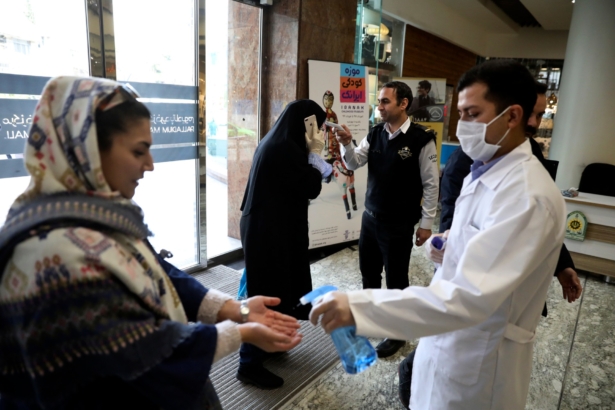
In a statement, the Saudi Arabian government denounced the Iranian regime for granting Saudi citizens entry to Iran amid the virus outbreak and urged Iran to reveal the identities of the citizens.
Pahalvi said that the Saudi statement illustrates that in addition to being a major public health problem in the Middle East region, the coronavirus epidemic has become the subject of a real psychological war between the different countries of the region.
Esra Serim, a France-based Turkish analyst, told The Epoch Times in an email that she doesn't expect the domestic unrest to escalate inside Iran in the next few days but it can continue.
"Because, a regime isolated by the U.S. administration could pose grave danger to both the regional and global health and environment," she said.
Serim said Iran's economic woes will continue to increase because the country was under U.S. sanctions and was relying on China for help.
"And now Iran’s relationship with China is forced to be disrupted due to the serious epidemic in China," she said.