


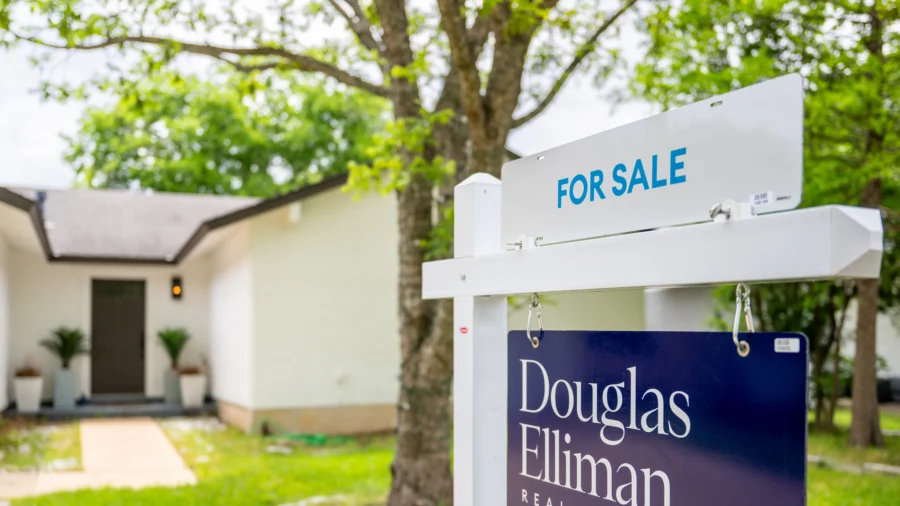
Home investor purchases across America saw a 6 percent year-over-year decline in the first quarter—marking the lowest level since 2020, according to a recent Redfin report.
The national real estate brokerage analyzed county sale records in the country’s 50 most populated metro areas from January 2000 through March 2026. It defines investor buyers as those with “LLC, Inc., Trust, Corp. or Homes” following their personal or company name. Ownership codes on purchasing deeds included either “association, corporate trustee, company, joint venture, or corporate trust.”
According to the report, real estate investors accounted for 19 percent of homes sold in the first quarter, down slightly from 20 percent a year earlier. Purchases of lower-priced homes dropped by 10 percent year over year to their lowest first-quarter level in 10 years, while condo buys experienced an 8 percent year over year decrease during the same time period.
Townhome investor purchases suffered the most with a 13 percent decline. Redfin suggests that rising homeowner association fees and insurance costs may have played a role in the decline.
In total, investors held 7.8 percent of all listings in the quarter, the smallest share in five years.
“Higher mortgage rates, slowing price growth, and rising construction costs are giving both investors and individual homebuyers pause,” Redfin Premier Denver agent Tamara Mattox-Kabat said in the report. “Flippers and investors are scaling back, and being much more strategic when they do buy homes.”
She added that they’re tending to gravitate toward less expensive materials and be more cautious about the timing of their projects so that they can list them during the stronger spring and summer seasons.
“It’s also noteworthy that large institutional investors are focusing more on building new homes than buying existing ones,” Mattox-Kabat shared.
The report indicated that while mortgage rates skewed slightly lower in the first quarter, they remained at double the rates during the pandemic years. As a result, investors faced higher costs in buying properties, which in turn reduced their profits on flips or rentals.
In early May, the National Association of Realtors (NAR) reported that the median single-family home price increased 0.5 percent year over year to $404,300, down from 1.2 percent growth in the fourth quarter of 2025.
Meanwhile, the average interest rate on a 30-year fixed-rate mortgage was 6.53 percent for the week ending May 27, marking the highest level in nine months, according to Freddie Mac.
The Redfin report states that as some markets are cooling, investors may have less confidence that home prices will rise quickly.
“At the same time, rising insurance premiums, property taxes and maintenance costs are cutting into margins, particularly for smaller investors,” the report states.
The median capital gain for investor-sold homes increased by 5.3 percent in the first quarter, far below the typical double-digit gains during 2020 and 2021, the report noted.
The drop in investor purchases was also attributed to economic uncertainty related to the war in Iran and a potential market slowdown, as investors may choose to preserve cash rather than expand their real estate holdings.
The Detroit metro experienced the largest annual drop in investor purchases at 35 percent in the first quarter. Orlando investor buys fell by 25 percent and Cleveland by 21 percent.
Those metros seeing an increase in investor purchases during the same time included San Francisco, with a 19 percent hike, and Virginia Beach, Virginia, with 15 percent.
In a letter to Congressional leadership, NAR President Kevin Brown urged the passage of this bill.
“This legislation confronts barriers to housing at all levels of government and represents the kind of comprehensive response needed to restore affordability and expand the dream of homeownership to more Americans,” he said in the letter.