


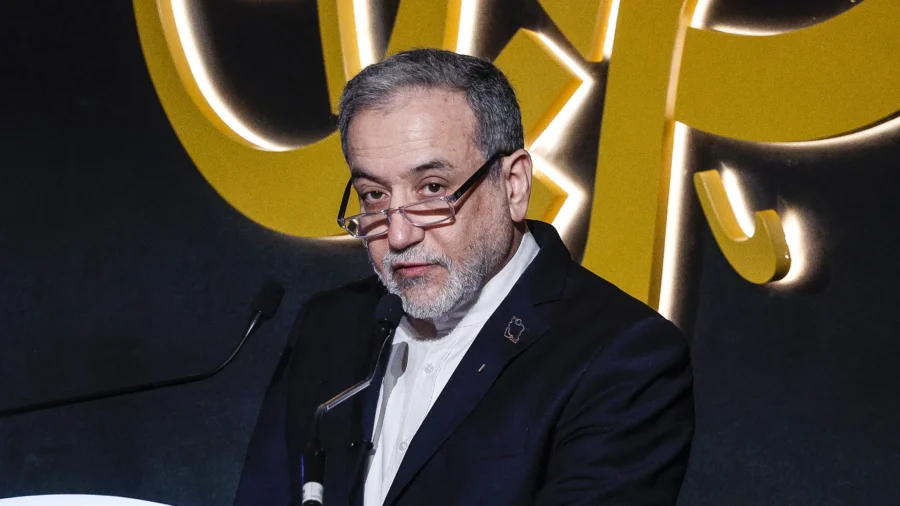
A top Iranian official issued a warning to Ukraine after that country’s military attacked one of Tehran’s vessels in the Caspian Sea as the Middle Eastern conflict threatened to spill over into Europe.
Iranian Foreign Minister Abbas Araghchi said in a post on X on Sunday that Ukrainian President Volodymyr Zelenskyy allegedly “has attacked an Iranian commercial vessel, killing a sailor.”
Describing it as “a blatant UN Charter violation done at Israel's behest to drag Europe into its war,” Araghchi said that he spoke with a top European Union official and Russian Foreign Minister Sergei Lavrov and said that he has “made clear that what the freeloader in Kyiv did CANNOT GO UNANSWERED.”
Ebrahim Azizi, the head of Iran’s parliamentary national security commission, wrote on X that the war-torn Eastern European country could face retaliation. He did not specify what measures Tehran might take.
“Attacking Iran has never been and will never be without cost; America and the Zionist regime know this full well,” he wrote on Monday morning. “Ukraine too will soon realize that the Islamic Republic of Iran does not leave debts unpaid. The list of defeated forces is getting longer!”
Over the past weekend, Zelenskyy said that long-range strikes were carried out against “vessels used in military cargo shipments involving Iran, as well as a warship” in the Caspian Sea, along with attacks against Russian military assets.
“The warriors of our Defense Forces hit targets across different regions of Russia that are fueling this war,” he also wrote. “Once again, a plant in Kirov was struck—the one supplying components for the weapons Russia uses to attack our people.”
U.S. President Donald Trump recently warned that Russia and China should not get involved in the U.S.–Iran conflict.
Trump on July 26 ordered a pause in strikes against Iran on July 26, after attacking the country’s military for 13 consecutive days.
The president wrote on social media on July 24 that Chinese leader Xi Jinping said he would not “under any circumstances” sell or otherwise provide weapons to Iran, adding that Chinese companies would follow suit.
Russian President Vladimir Putin, who launched the invasion of Ukraine in February 2022, had also informed Trump that he would not sell weapons to Iran and that he believed Russia and China were not participating in the Iran conflict, Trump said on Truth Social.
"If they did, it would be very bad for them—certainly not in their best interests," Trump said, according to the post.
On Sunday, top White House aide Steven Cheung and U.S. Ambassador to the United Nations Mike Waltz confirmed a pause in the U.S. military operation. They did not say how long the cessation would last.
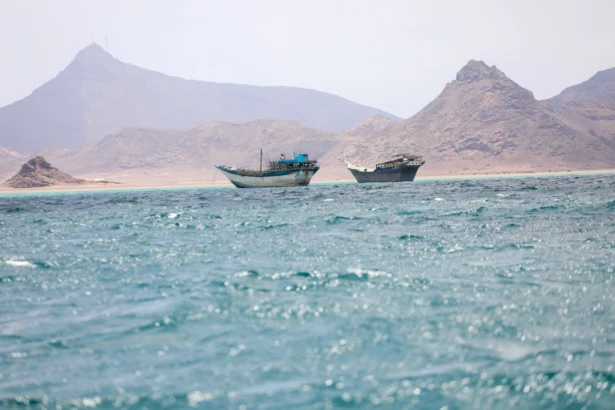
“President Trump has always been consistent in saying he prefers a diplomatic solution, but he continues to retain all options if Iran continues terrorist activities in the Strait of Hormuz or against allies,” Cheung told media outlets.
An Iranian army spokesperson told Iran’s state television later that day that Tehran had halted its own attacks over the same two nights, leading to a significant drop in oil prices on Monday.
U.S. Central Command, which is overseeing the Iran campaign, wrote, however, that the American blockade of Iranian ports remains in effect. In a post on July 25, it said 12 commercial vessels were redirected, two were disabled, and two were boarded.