


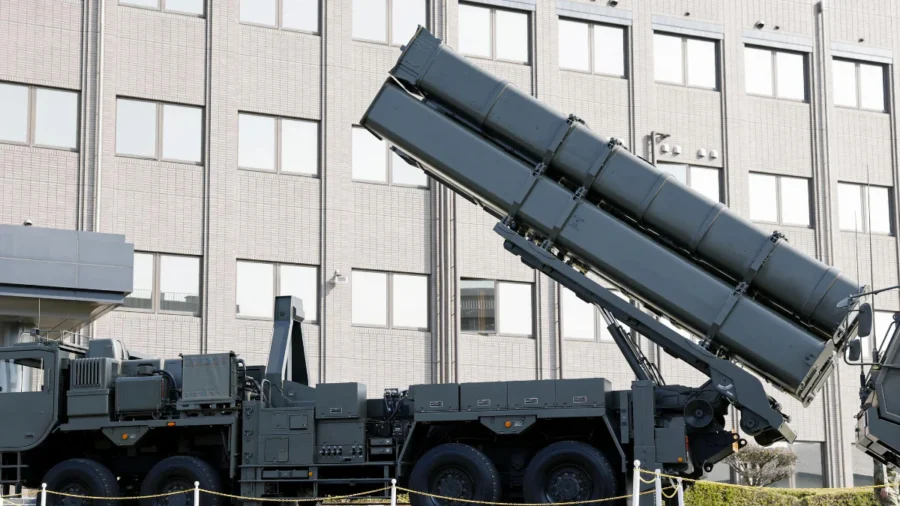
Tokyo has deployed Japan's first long-range missiles as the country works to boost its defense capabilities, Japanese Defense Minister Shinjiro Koizumi announced on March 31.
Koizumi told reporters that the upgraded Type 12 surface-to-ship guided missiles were set up at Kengun Garrison in Kumamoto Prefecture, according to a transcript of the press conference.
He also said that upgraded Type 12 high-speed glide missiles for island defense have been deployed to Fuji Garrison in Shizuoka Prefecture.
The minister described it as Japan's first deployment of domestically-produced "stand-off" missiles. This means they can strike enemy missile bases from afar instead of merely intercepting missile strikes, marking a departure from Japan's self-defense-only policy, which follows the country's post-World War II pacifist constitution.
"Stand-off defense capability is an extremely important initiative for strengthening Japan's deterrence and response capabilities, as it allows us to deal with enemy forces attempting to invade our country from outside the threat zone while ensuring the safety of our personnel, especially given the most severe and complex security environment since the end of the war," the minister said.
"We believe that steadily developing these capabilities will demonstrate our strong will and ability to defend our country," he said.
Defense Buildup Continues
In December, Prime Minister Sanaei Takaichi's Cabinet approved a record defense budget in excess of 9 trillion yen ($56.6 billion) for 2026.This is up 9.4 percent from the year before, marking the fourth year in a row that Tokyo has increased defense spending as part of a five-year plan to double annual arms spending to 2 percent of gross domestic product.
The increase in spending also comes as Tokyo experiences ongoing tensions with China.
Regional Relationships
Japan and other Pacific nations have been reinforcing their mutual defense cooperation amid rising tensions with Beijing.Philippine Foreign Secretary Maria Theresa Lazaro said after the signing that she and Japanese Foreign Minister Toshimitsu Motegi “both recognized the value of promoting the rule of law, including the freedom of navigation and overflight, especially in the South China Sea.”
The Ministry of Foreign Affairs of Japan said in a statement released after the meeting that the two ministers “shared serious concerns over the continuation and the intensification of the unilateral attempts to change the status quo by force or coercion in the East China sea and the South China sea and concurred to continue closely working together.”
While the Japanese ministry did not name China specifically in its statement, the remarks about the East and South China seas appeared to be a rebuke of Beijing’s increased aggression.