


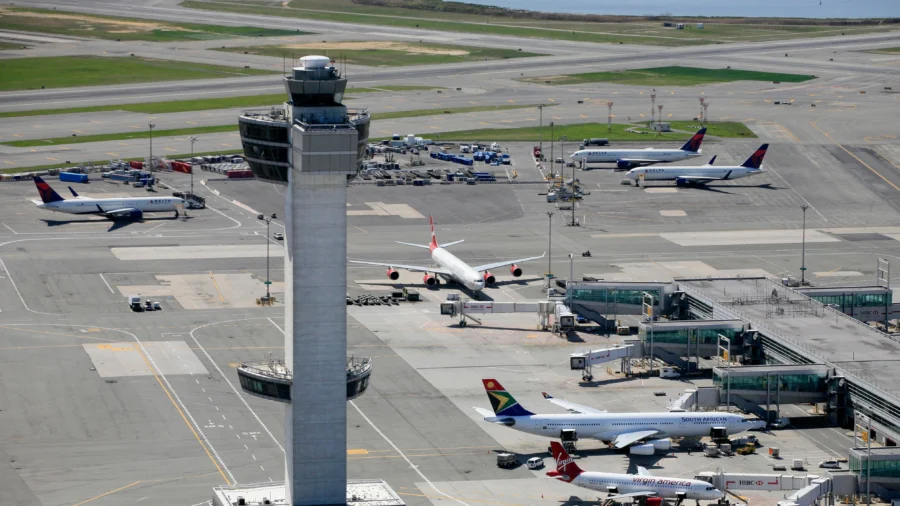
A JetBlue flight descending into New York's John F. Kennedy International Airport on June 29 struck what the pilot described as a drone at roughly 3,000 feet.
The Airbus A321, which had been flying overnight from Las Vegas, was crossing the coastline when the reported collision occurred at around 7:15 a.m., according to the Federal Aviation Administration (FAA). Despite the alarming mid-air encounter, the plane landed without incident, and all passengers deplaned normally.
"We collided with a drone back there in the turn," the pilot radioed to an air traffic controller, according to audio obtained from ATC.com. "It hit us right above the cockpit."
JetBlue subsequently pulled the plane from service for inspection. The airline said its team found nothing to confirm the pilot's account. "JetBlue found no damage or evidence of a collision," the airline said in a statement, adding that "safety is JetBlue's first priority" and that it would cooperate with any relevant investigations.
The FAA said it is investigating the incident.
Federal rules generally prohibit recreational drones from flying above 400 feet, and restrict airspace around airports and major public events, including FIFA World Cup 2026 venues, where violations can result in civil penalties up to $75,000, criminal fines up to $100,000, and possible federal prosecution.
Scott Shtofman, vice president and counsel for regulatory affairs at the Association for Uncrewed Vehicle Systems International, said even a five-pound drone is capable of reaching altitudes above 3,000 feet. "Now the rules restrict that, but that doesn't mean that somebody couldn't do it," Shtofman said.
The FAA receives more than 100 drone sighting reports near airports each month. The risk is sharpest close to airports, where drone and aircraft flight paths most often converge.
During the 2025 California wildfires, a drone operated by a Culver City man punched a hole in the wing of a firefighting Super Scooper aircraft, grounding it for days during critical operations, according to the U.S. Department of Justice. The operator later agreed to plead guilty and pay more than $65,000 in restitution.
Planes are built to withstand bird strikes, but a drone impact—especially on an engine or a flight-control surface—can inflict far more serious damage. In October 2025, a United Airlines flight was forced to make an emergency landing after hitting a weather balloon, inflicting damage to its windshield.