


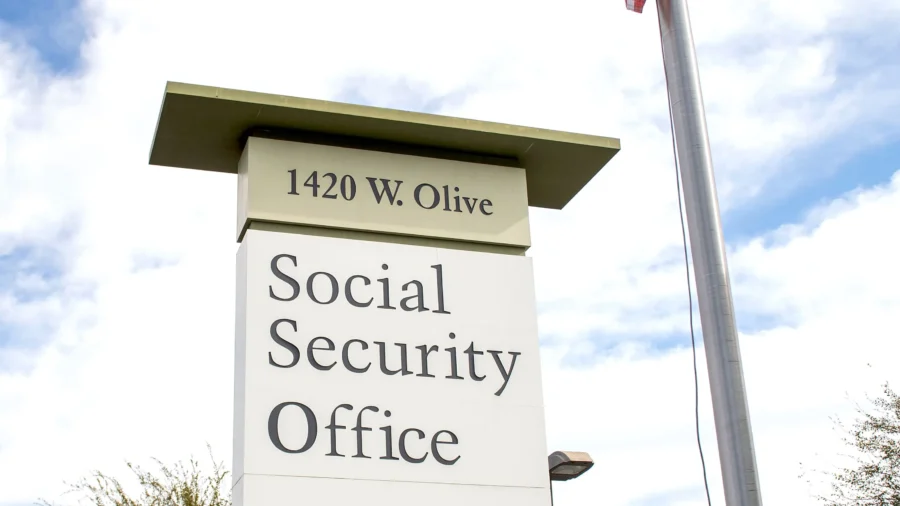
Social Security is a lifeline for millions of Americans and proposals to eliminate federal taxation on that income aims to allow retirees to keep more of the benefit. But experts foresee advantages and disadvantages to the policy.
If approved, the measure would amend the Internal Revenue Code of 1986 to terminate the inclusion of Social Security benefits in an individual’s gross income.
“Eliminating federal tax on Social Security benefits would be advantageous for high-income retirees receiving part-time wages or distributions from retirement accounts by increasing their overall take home pay," DisabilityGuidance.org co-founder Jackson Ruggiero told NTD News.
It's only advantageous to high-income retirees because individuals receiving less than $25,000 or $32,000 for joint filers already don't pay tax on social security income.
CPBP estimates that 50 percent of Social Security beneficiaries pay no tax on their benefits and those who do pay taxes, pay about 7 percent of their benefits in income taxes.
"Eliminating federal tax could allow people who would otherwise not retire to retire and take their SSI early without taxes," private wealth advisor Richard McWhorter told NTD News. "This would depend on many personal factors, but could definitely make this possible."
Replacing Lost Tax Revenue
Federally, there are many ways to replace this lost revenue, such as tariffs but the Trump administration has not yet disclosed its plans."The downsides include the need to find other funding sources to make up for the income that federal taxation provided to the Social Security Trust Fund," Hispanic Construction Council (HCC) CEO George Carrillo told NTD News.
“Once we get a better understanding of how this administration plans on doing this, the advantages and disadvantages will be much clearer,” McWhorter said.
Some experts worry the government could make up the shortfall by raising the full retirement age or reducing benefit amounts.
"It could affect someone's plans, especially for those who have calculated they could retire at a certain point or with a specific amount," McWhorter added. "It could also impact a number of other personal issues, like the availability of jobs, as people will not be retiring as early."
Full retirement age for U.S. citizens is 67 for those born in 1960 or after, and they are permitted to claim Social Security benefits as early as 62 years old.
“There have been ideas about an External Revenue Service where we will tax other nations instead of our countrymen,” Las Vegas financial advisory firm Thrivin' Life founder Lucas Barcelo told NTD News. “We have yet to see exactly if and how this would be implemented.”
Other ideas that have been tossed around include raising the payroll tax cap or slightly increasing payroll taxes over time.
The current payroll tax cap is $176,100.
“Whatever solution we adopt, it’ll take careful planning to ensure Social Security continues to support today’s retirees and future generations,” Carrillo added.