

Regeneron Pharmaceuticals on April 23 became the latest drug manufacturer to enter a Most Favored Nation drug pricing agreement with the United States.
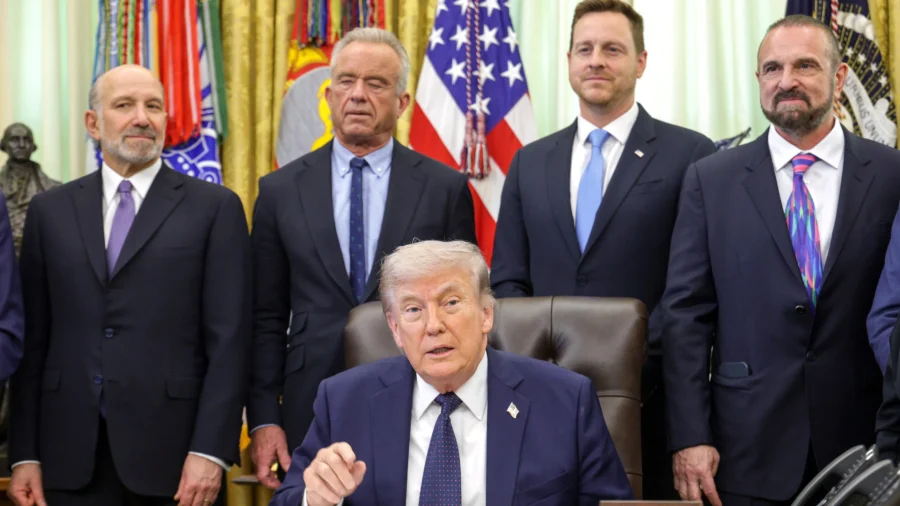
President Donald Trump announced the deal from the Oval Office.
“With this announcement, 17 of the world's largest pharmaceutical companies, representing 80 percent of the branded drug market, have now agreed to sell their drugs to American patients at the lowest prices anywhere in the world,” Trump said.
With Regeneron's agreement, all of the pharmaceutical CEOs that Trump directly asked to join the Most Favored Nation pricing model have responded favorably.
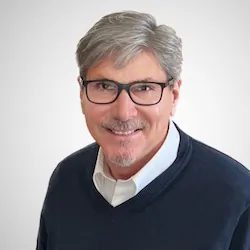
Regeneron CEO Leonard Schleifer touted the deal as a benefit to both the country and scientific innovation.
“We've been arguing for more than a decade that other wealthy nations have been getting a free ride on American innovation,” Schleifer said. “Discovering cures is perhaps the hardest scientific challenge humans undertake.”
The company announced a new gene therapy called Otarmeni earlier in the day, which has been proven to reverse genetic hearing loss in children. Regeneron pledged to provide it in the United States for free.
Regeneron Chief Scientific Officer Dr. George Yancopoulos said, “We do this to highlight the power of disruptive biotech innovation and all the good that we can bring to all of our lives and our health.”
In keeping with the Most Favored Nation policy, Regeneron will also lower Medicaid prices and offer future medications in the United States to align with those in other countries.
Terms of the Agreements
The president announced the most favored nation prescription drug policy in May 2025, saying in a social media post, “The United States will pay the same price as the Nation that pays the lowest price anywhere in the World.”The confidential nature of the agreements makes their impact difficult to assess.
Trump said his vision was for drugmakers to offer their best price to Medicaid on their “full portfolio of existing drugs” and to do the same for all new drugs offered in Medicaid, Medicare, and through commercial insurers.
Yet some drug companies have said their agreements exclude certain new and existing medications.
When manufacturers mention specific discounts on products, those discounts are substantial.
Bristol Myers Squibb will offer Eliquis to Medicaid patients for zero dollars. Merck will offer Januvia, Janumet, and Janumet XR at a 70 percent discount. Pfizer will offer primary care medications at an average discount of 50 percent.
Yet some manufacturers have left pricing vague.
Eli Lilly & Co.’s SEC statement states that it will introduce new medications with “a more balanced pricing approach” across developed nations.
Sanofi, the 10th-largest drugmaker, said it agreed to offer “substantial discounts.”
The agreements are for a three-year term and are made in exchange for tariff exemptions.
Ongoing Negotiations
The administration continues to negotiate with hundreds of other drug makers who control about 14 percent of brand-name medications, Chris Klomp, director of Medicare and deputy administrator of the Centers for Medicare and Medicaid Services, said.“No family should have to [decide] whether or not they can pick up their prescription because they can't afford it,” Klomp said. “It will no longer be the case.”
More than 40 percent of U.S. adults reported not taking prescribed medication during the past year due to the cost, according to polling conducted by health policy research group KFF.
Seventy-six percent believe a candidate’s position on health care costs is important in deciding their vote in the 2026 midterm elections, according to an April poll by United States of Care.