


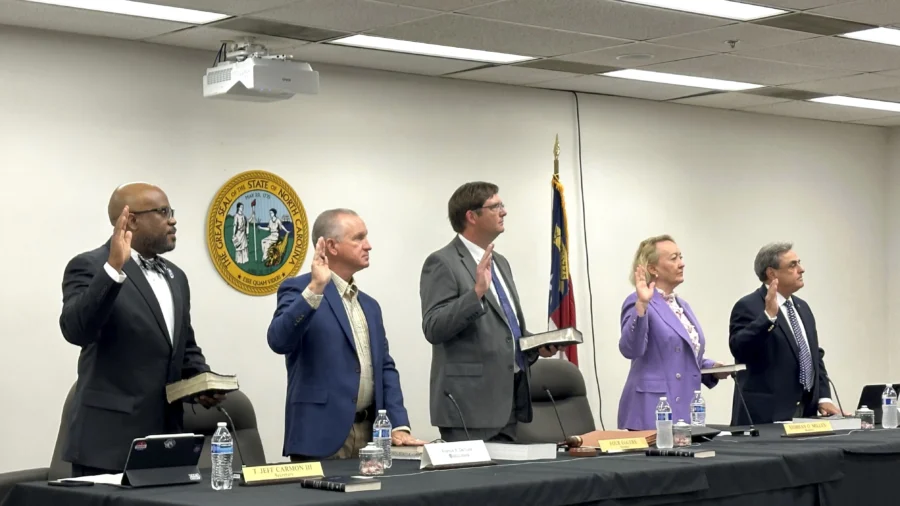
The five new appointees to the Republican-majority North Carolina State Board of Elections were sworn in on May 7, immediately electing a new chairman and appointing a new executive director.
The board elected Republican Francis X. De Luca as board chairman.
Republican Sam Hayes was appointed in absentia as the board’s executive director, replacing Karen Brinson Bell, beginning May 15 when Brinson Bell's two-year term ends.
Brinson Bell's removal was not surprising, given that there’s precedent for a new director to be hired with a changing partisan majority. But Democrats denounced her removal as a partisan power grab due to a recent change in law.
The new law removes authority to appoint board members from the governor’s chair, currently a Democrat, and hands it to the state auditor, currently a Republican.
The recent changes reflect the culmination of multiple attempts by Republican lawmakers to alter how the State Board of Elections is structured. Since 2016, GOP leaders have introduced at least three measures to change the appointment process. The first two were ruled unconstitutional, and a proposed constitutional amendment failed at the ballot box in 2018.
Under the old system, the governor’s party controlled three of five seats on the board. The new system gives appointment power to the state auditor, who selects five members from slates submitted by the state’s two major political parties—no more than three board members can be from any one party.
The new law is currently being challenged in court by the new governor, Democratic Josh Stein, and his predecessor Cooper. A trial court struck down the law as unconstitutional on April 23. One week later, the North Carolina Court of Appeals ruled on April 30 that the new law can take effect for now, suspending the trial court’s ruling. Within 24 hours of the law's enactment, State Auditor Dave Boliek appointed a 3–2 Republican majority to the board.
Former director Brinson Bell faced criticism from Republicans for what they saw as “circumventing state law” during the COVID-19 pandemic.
GOP lawmakers objected to her role in extending mail-in ballot deadlines through a court settlement, temporarily relaxing voter verification requirements, and adjusting early voting and ballot drop-off procedures. While Brinson Bell defended these as emergency responses to ensure voter access, Republicans argued the changes disproportionately benefited Democrat-leaning voters and undermined legislative authority.
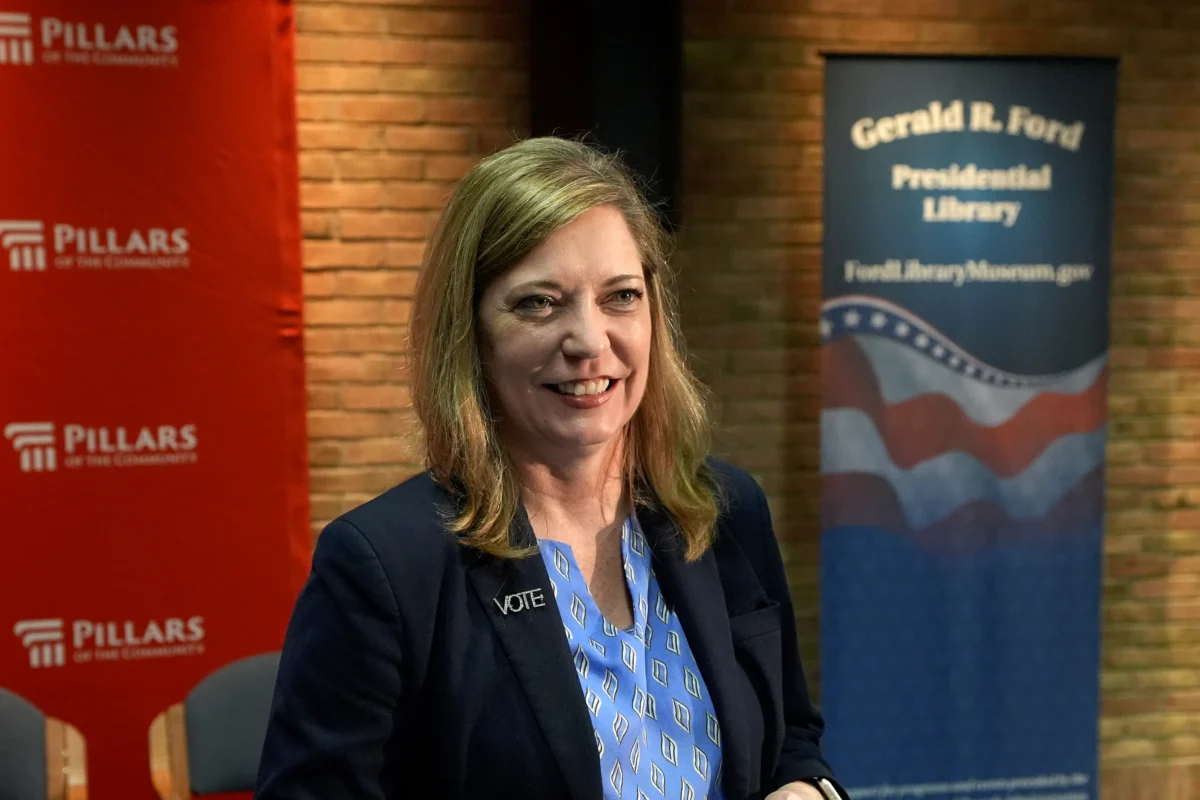
Brinson Bell announced she would deliver her speech to anyone who wants to stay behind.
In her remarks, Brinson Bell expressed that while she would have liked to continue serving the county boards of elections and voters of North Carolina, the state board had made a different decision.
She said that she hoped for a place where "dedicated hardworking election workers are supported and rewarded for their work rather than vilified by those who don't like the outcome." She also added that she hopes for a return to a time when those who lose elections "concede defeat rather than trying to tear down the entire election system and erode voter confidence."
“This is not just about me—it’s about protecting the integrity and independence of our elections," Brinson Bell said.
They stated that the State Board of Elections has a duty to remain an independent agency, but partisan Republicans in the General Assembly "unconstitutionally ripped the authority to make appointments away from the Governor’s office and tapped the Republican State Auditor to make them instead."
Republicans defended the move, stating the leadership change was necessary to restore public confidence in the state’s elections and to ensure a more balanced approach to election oversight.
Boliek noted Hayes's work across state agencies and his legal background, saying he brings a "sharp legal mind" and that he is confident in Hayes's leadership capabilities to improve election management.
During her tenure, she oversaw more than 10 elections, including the 2020 presidential election, which was described as the largest in North Carolina's history and was held during the COVID-19 pandemic.