


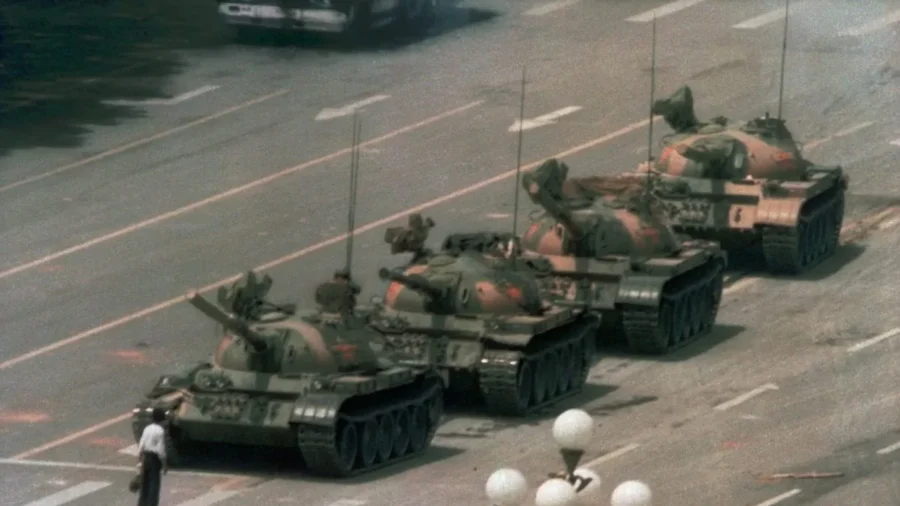
U.S. Secretary of State Marco Rubio issued a statement to mark the 37th anniversary of the Chinese Communist Party’s Tiananmen Square Massacre.
“On June 4, the world marks 37 years since the Chinese Communist Party ordered its troops to attack thousands of peaceful demonstrators in and around Tiananmen Square,” Rubio said in a statement late June 3 in the United States, which is hours behind China.
“Chinese students, workers, and other civilians who lost their lives had gathered to exercise their natural rights and demand democratic reforms and accountability for corruption. We remember their lives and honor their legacy,” he said.
“No amount of censorship can erase the past. Those who sacrificed to uphold their unalienable rights of free expression and peaceful assembly will be vindicated someday.”
Mention of the 1989 Tiananmen Square Massacre is heavily censored in mainland China, with terms such as "June 4," "6/4," "64," "六四" (in Chinese), and related phrases routinely blocked across all information platforms by China’s internet police. Closer to the sensitive date, even terms like "that year" are censored in an effort to suppress all mention of the Chinese lives lost that day and what they stood for.
Despite being unsuccessful in China, the protests sent shockwaves throughout the world and helped strengthen the resolve of people in other communist states, such as East Germany and Romania, also seeking liberty.
At the same time, the Chinese Communist Party (CCP) dispatched Vice Premier Yao Yilin to East Germany in October 1989 to share its methods for suppressing protests.
Xu’s testimony revealed operational details of the military response in 1989—information that the CCP considered to be state secrets.
The video footage was quickly scrubbed from the Chinese internet after it was leaked, but it generated widespread attention among Chinese-speaking users outside of mainland China.
Every year, the CCP harasses or rounds up dissidents, activists, journalists, lawyers, and Tiananmen-related figures for preemptive detention or house arrest ahead of the June 4 date as part of its "stability maintenance" operations.
But in a first such action in more than three decades, the Tiananmen Mothers group, representing the families of victims of the massacre, was blocked from visiting the graves of their loved ones at Beijing's Wan'an Cemetery by police on June 4, according to Radio Free Asia.
Chinese in Hong Kong have also been blocked from marking the anniversary, with the annual candlelight vigil in Victoria Park that once drew tens of thousands of people in remembrance of the human rights travesty banned since 2020 under the Beijing-imposed national security law.
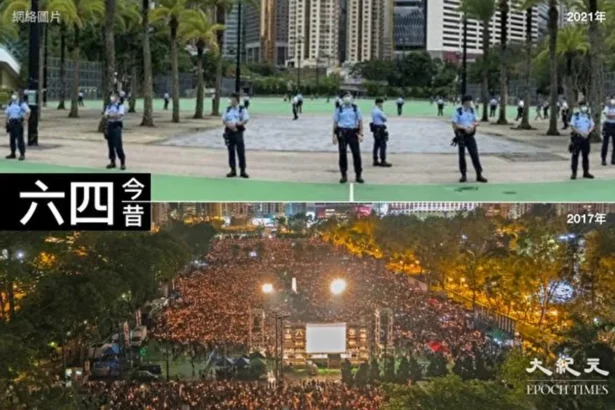
Known pro-democracy voices in the city have also been monitored or harassed in an attempt to deter any bigger incidents. But Chinese around the world in cities such as Taipei, Sydney, London, and New York will gather for vigils to commemorate the June 4 anniversary.
In a statement the morning of June 4, Taiwanese President Lai Ching-te called on China to acknowledge the deadly clampdown on Chinese protesters in Tiananmen Square 37 years ago and “face the wounds of history” for a better future.
“What was shot and crushed that year was not only the life and youth of those who participated in the democracy movement, but also the desire and practice of the pursuit of freedom and democracy by an entire generation of China,” he said in a post on social media.
“I sincerely hope that China will face up to the June 4 incident 37 years ago, recognize the truth, comfort the pain, and open reconciliation and dialogue."
Lai said that a "sound government" should support the next generation to "live a better life than themselves, instead of killing their dreams and erasing their opinions with violence, surveillance, etc."
“Taiwan will stand with all those who pursue freedom and democracy until the truth is seen, the pain is comforted, until no one else loses their lives in the pursuit of freedom. Because a country that respects its people, protects freedom, and practices democracy is a country that is truly worthy of respect,” he said.
"Remember, breathtaking ‘Popularity’ first, and then, guaranteed DEATH AND DESTRUCTION!" he wrote on Truth Social.
"Has anyone ever seen a Happy Communist?" he added.