


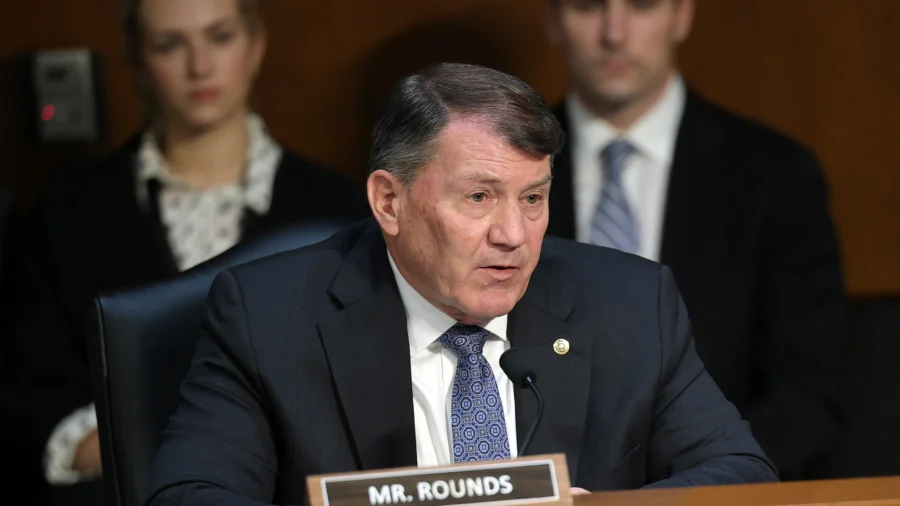
The Senate has unanimously passed legislation aimed at preventing American-made semiconductor chips from being smuggled to China.
“The United States has taken extensive measures to prevent American-made semiconductors from falling into the wrong hands, particularly China; however, China continues to smuggle these chips into their country, Rounds said in a statement on May 22.
Rounds said the legislation would strengthen export control enforcement at the U.S. Commerce Department’s Bureau of Industry and Security (BIS) by rewarding whistleblowers who come forward with credible information on illegal activity.
“I look forward to working with our colleagues in the House to get this important legislation through Congress and to President [Donald] Trump’s desk to be signed into law,” Rounds added.
The legislation would amend the Export Control Reform Act to require BIS to create a secure public portal for whistleblowers to submit reports. The bill also states it would also create a whistleblower incentive program funded by fines collected from export control violations to encourage individuals to “provide high-value information on potential violations.”
Whistleblowers would be guaranteed confidentiality and protected from retaliation under the legislation. Employers would be barred from firing, demoting, suspending, threatening, harassing, or otherwise discriminating against workers for reporting suspected export-control violations.
Credible whistleblower reports would be required to trigger formal investigations within 60 days of submission under the legislation.
Whistleblowers who provide original information leading to fines against violators would receive 10 to 30 percent of the amounts collected. According to the legislation, federal employees “acting within the scope of the duties” would be excluded from the compensation.
Round’s office said the program is designed to be like the U.S. Securities and Exchange Commission’s whistleblower program.
Warner called the Senate passage of the bill an “important step toward strengthening our export control system and protecting America’s national security.”
“As China continues working to acquire advanced American AI technology through illicit networks, we need stronger tools to detect and prevent these violations. This bipartisan legislation empowers whistleblowers to help expose illegal export schemes and gives BIS additional support in enforcing our export control laws,” Warner added.
Warner is the vice chairman of the Senate Select Committee on Intelligence. Rounds serves on the same committee.
On April 22, the House bill advanced out of the House Committee on Foreign Relations.
“America’s technological edge is one of our greatest strengths, & we can’t let adversaries steal it and threaten our security,” Johnson wrote at the time.
The case centered on Tommy Shad English of Atlanta, who allegedly acted on behalf of a Thailand-based firm in ordering 750 computer servers worth roughly $170 million from a California supplier. Six hundred of those contained a computer chip listed on the Commerce Department’s control list, which requires a license for export to China.