


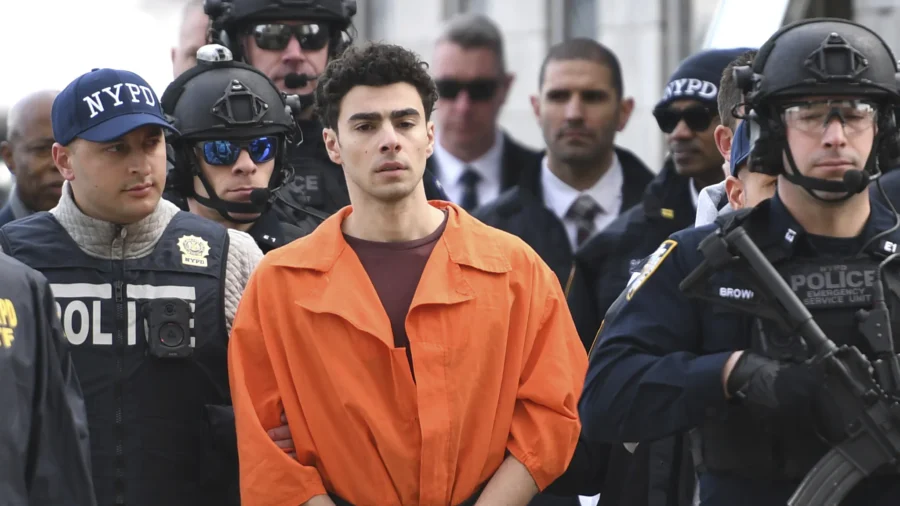
Chinese fast-fashion giant SHEIN has removed a men’s shirt from its online marketplace after shoppers noticed the model closely resembled Luigi Mangione, the man accused of assassinating UnitedHealthcare CEO Brian Thompson last year.
The SHEIN ad featured a short-sleeved white shirt, priced at less than $10, with a model who looks nearly identical to Mangione. A link to the ad shows that the listing is not currently online.
A SHEIN spokesperson shared with NTD in an email that "the image in question was provided by a third-party vendor and was removed immediately upon discovery."
"We have stringent standards for all listings on our platform. We are conducting a thorough investigation, strengthening our monitoring processes, and will take appropriate action against the vendor in line with our policies," stated the SHEIN spokesperson.
The ad drew widespread attention after Pop Crave, a social media account, posted on X that “Shein’s website appears to use Luigi Mangione’s face to model a spring/summer shirt.” That post quickly went viral, prompting media outlets worldwide to report on the listing.
Comments on the post ranged widely. Some expressed disgust, saying it was “weird” or questioning the ad as "maybe glorifying murderers isn’t a good thing?" Others questioned the state of society, posting remarks like, “Is this the world that we’re living in now? We need God back in our country!” Many users responded with jokes or seemed to find the situation amusing, while others debated the authenticity of the image, claiming it must have been AI-generated.
Some commenters also questioned SHEIN and accused the company of a shameless marketing ploy, writing, “It is not strange that the murderer of a CEO of a company is being covered by Shein.”
Mangione, 26, a prep school and Ivy League graduate, is accused of fatally shooting Thompson outside a Midtown Manhattan hotel on Dec. 4, 2024. Federal prosecutors allege Mangione meticulously planned the assassination as a symbolic attack on the health insurance industry, taking steps to evade law enforcement, flee New York City, and cross state lines while armed with a privately manufactured firearm and silencer.
He faces both federal and state charges, including murder, terrorism, and stalking. Prosecutors have filed a notice of intent to seek the death penalty, citing Mangione’s potential to present a future danger—and his apparent intent to rally political and social opposition through lethal violence.
Mangione has pleaded not guilty. If convicted in the federal case, a jury would determine whether to recommend capital punishment. He is being held at the Metropolitan Detention Center in Brooklyn.
Mangione developed a significant online following since his arrest, with fans both in the United States and abroad treating him as a cultural figure. In China, users on the social media platform RedNote, also known as Xiaohongshu, call him "Lulu." These users share fan art, memes, and discussions about Mangione.
A recent study analyzed TikTok content expressing hybristophilia—the attraction to individuals who commit violent crimes. It found that such content often portrays offenders as objects of desire, minimizes the severity of their crimes, and reduces empathy for victims.
"This lack of empathy and increased desensitization to serious crime offenses can not only potentially be harmful to victims of crime but also encourage the notion that it is acceptable to portray crimes and offenders in these romanticized and trivialized narratives," the study reported, adding that it "has the potential to encourage further creation and dissemination of content that depicts criminal offenders and their crimes in positive frameworks."
"An online culture and identity that is developed from a lack of sympathy for victims of serious crimes and celebrates the offenders that committed these crimes, is a serious issue that can have a long-lasting impact on the mental health and recovery of victims," the researchers wrote.