


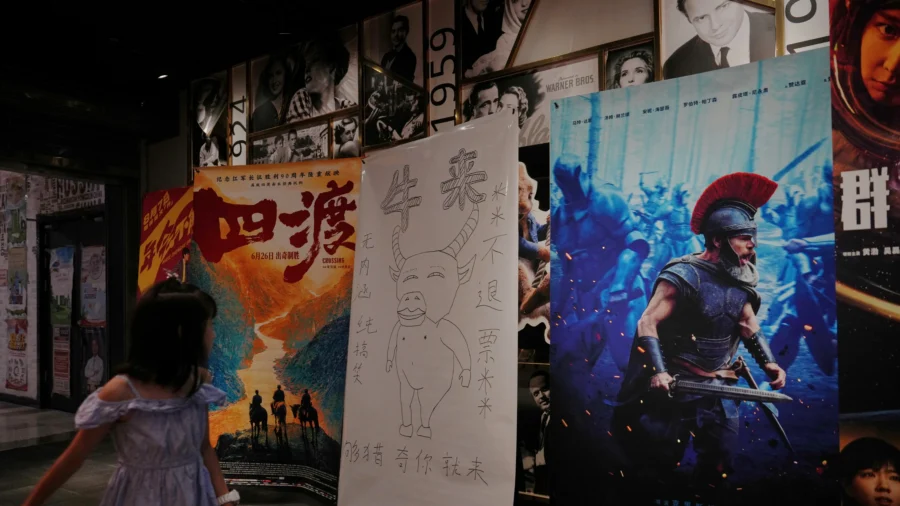
A film with simple content and rough production has unexpectedly exploded in popularity in China, surging at the box office in a very short time to exceed $2.36 million and triggering heated discussions among netizens.
Inside the cinema, the audience was laughing continuously—not because Niu Lai (Bull Come) is a comedy, but because its story is so childish and its production level is very backward.
That Niu Lai could become so wildly popular by being "so terrible" is considered a backlash by young people against a movie market currently filled with low-quality, preachy films.
Many people competed to watch this film, which lasts about an hour and a half, and a saying began to circulate: "Regret it for 86 minutes if you watch it, but regret it for a lifetime if you don't."
The production team of Niu Lai consisted of only two people—Xin Yumeng and his mother, Sun Lifang. They spent 5 years self-teaching 3D animation production, editing, and other technologies as they made it.
The actual expenditure was only between $200 and $1,400. Xin served as the director, 3D animator, and voice actor; Sun was responsible for screenwriting, voice acting, and singing the ending theme song.
The movie tells the story of a young calf named "Niu Lai"—who is timid and shy—growing up through hardships in a difficult environment.
Before its release, the movie had almost no promotion, with only a single ink-wash style poster.
In the early stages of its release, the film shocked audiences with its crude 3D animation and was initially met with a flood of bad reviews, earning a total box office of just over $970 before it went viral on social media.
A movie like Niu Lai is actually not rare in cinema history; there is even a dedicated term for them—"so bad it’s good" (terrible to the point of being interesting). This type of movie is so genuinely, uniquely, and absurdly bad that it turns into a peculiar viewing experience instead.
In recent years, many movies made by famous Chinese directors and featuring big-name stars—despite having production costs of hundreds of millions, lavish special effects, and overwhelming marketing—are not lacking in communist preachy styles.
One netizen said: "How do those famous directors and stars in the entertainment industry feel? I'd rather watch Niu Lai than watch the trash made by famous directors."
Another said: "Instead of famous directors spending hundreds of millions to shoot high-and-mighty preachy trash, it's better to watch the 'genuinely crude' work hand-crafted by two people. At least they didn't scam my money or treat me like a fool."
In addition, under the pressure of real life and the workplace, young people's core demand when watching movies has gradually shifted from "receiving artistic enlightenment" to "seeking simple stress relief."
A netizen said: "I think the audience who goes to see this movie is part of the movie itself—a room full of people laughing, laughing senselessly! Spending around [$3 to $4] to have a good time, and then everyone walks out giggling together!"
"Just thinking about being able to laugh foolishly with a room full of people makes me happy."
"Niu Lai is not a simple movie; it is a cultural experience. The audience is not just a passive receiver, but a part of this cultural experience."
The name "Niu Lai" also sounds like "the bull market arrives" in the stock market. Some netizens connect the act of watching the movie with a good omen and auspicious phrase for "bringing good luck to stock accounts and investments."
Someone said: "May everyone who goes to see Niu Lai make a fortune in the stock market; let the A-share bull market arrive!"
"If A-shares surge on Monday, it can definitely help its box office break millions."