


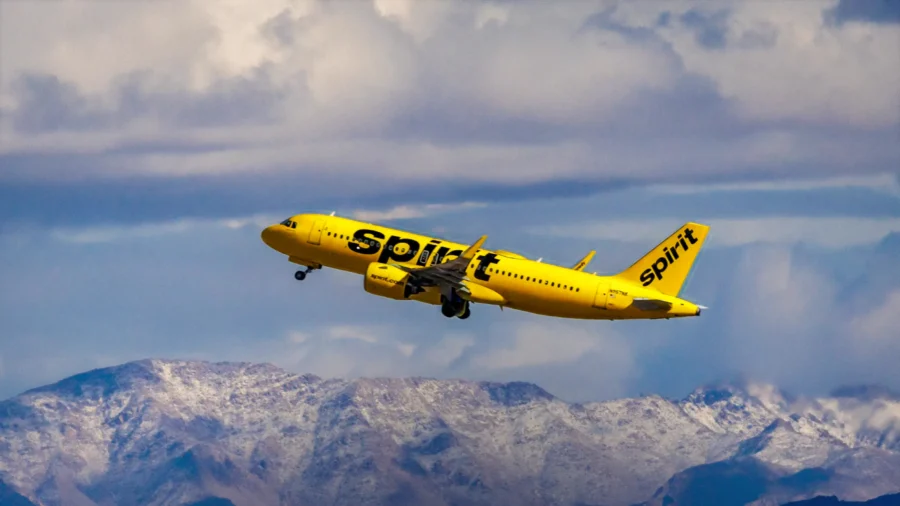
Spirit Airlines’ ongoing operational and financial challenges deepened this week. The budget carrier has canceled more than 250 flights since Feb. 13, stranding passengers across several Florida airports.
A spokesperson for the Fort Lauderdale-Hollywood Airport told the news outlet that despite the cancellations, there was not a “large volume of stranded or displaced passengers.”
NTD News sought comment from Spirit Airlines and the Fort Lauderdale-Hollywood Airport but did not receive a response prior to publication.
According to the Spirit Airline's cancellation policy, events within its control are listed as plane maintenance, operation disruptions, and crew scheduling conflicts. If a flight is cancelled under such conditions, passengers are entitled to a refund to their original payment method, rebooking, or a Spirit reservation credit. Hotel accommodation may also be provided if an overnight stay is required.
In a memo to employees in September, Spirit announced it would furlough about one-third of its cabin crew—roughly 1,800 flight attendants—beginning Dec. 1. That move followed earlier furloughs of 270 pilots and demotions of 140 others in July, part of what the airline described as efforts to “shift our focus to a complete rightsizing of the airline.”
The Association of Flight Attendants said in a separate memo at the time that the furloughs were necessary, saying the company’s drastic reduction in aircraft and routes required “a much higher reduction in force.”
“The first thing you’re going to do is remove some seats. You know how easy that is? And then you’re going to come up with a reasonable pricing system,” Miller said, detailing his plan to restructure the airline’s business model. He added that any transition to a New Orleans hub would take time. “We are not going to be able to move it to New Orleans right away. We have some improvements to do.”
Miller also described possible infrastructure options, including a new terminal at Louis Armstrong New Orleans International Airport or even a new airport on the West Bank. Before construction can begin, he said he must first convince investors of the project’s potential to boost Louisiana’s tourism and economy.
“If somebody is visiting Louisiana and visiting New Orleans and they would have absolutely not have come if it weren’t for this service … they spend about $4,000,” Miller said, highlighting the potential for increased local spending from out-of-state and international travelers.