


The U.S. government has sanctioned five more Cuban companies and organizations as it continues to ramp up pressure on the communist regime.
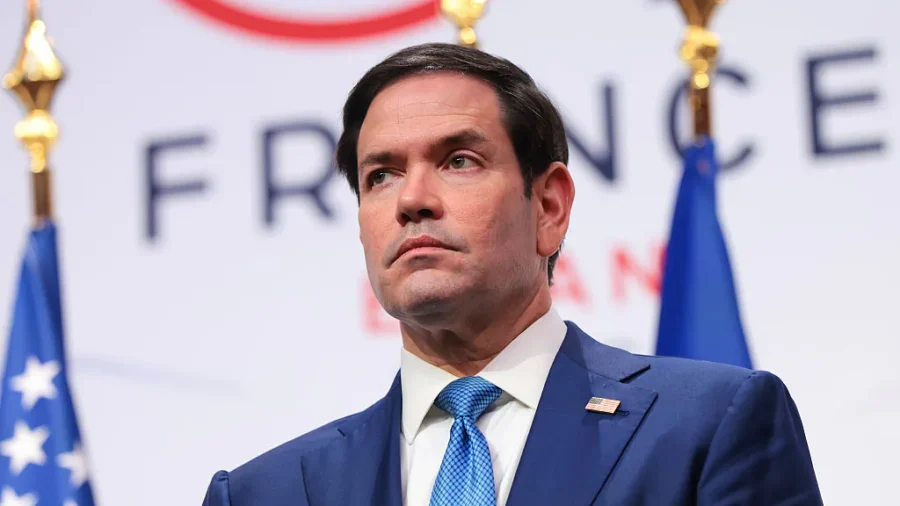
Secretary of State Marco Rubio on Tuesday designated five new entities that he said generate revenue for the Cuban regime and its malign activities at home and abroad, including three entities associated with the Grupo de Administración Empresarial S.A. (GAESA) and a member of the extended Castro family.
Rubio wrote in a post on X that “the situation in Cuba is devolving” due to the regime’s moves to “prioritize its own total control over the freedom, opportunity and basic wellbeing of the Cuban people” in the midst of economic hardship and energy shortages that have plagued the island in recent months.
“Anyone providing services to these sanctioned actors is at risk of being sanctioned themselves,” he added. “Foreign banks and other companies that provide services to these entities should freeze those activities immediately.”
“GAESA continues to operate as the financial muscle behind the Cuban regime’s repressive security apparatus,” Rubio said in a statement. “Two of the entities designated today are GAESA-linked financial institutions associated with moving money on the regime’s behalf, and one is a GAESA-linked logistics company that executes the regime’s bidding across the island.”
GAESA is a Cuban conglomerate owned and operated by the regime’s military, founded by former Cuban leader Raul Castro, and is estimated to control a significant portion of the country’s economy, according to an article published last year by the Columbia Law School. Sections of the economy where GAESA or its affiliates play a role include tourism, wholesale trade, retail, and the country’s banking and financial system, it said.
Rubio also designated two entities that were generating revenue for the regime including state-owned GeoMinera, as well as the wife of Alejandro Castro Espín, who was previously designated in a May executive order.
President Donald Trump has repeatedly called Cuba a “failed nation” and raised the possibility of a “friendly takeover” of the island.
He intensified the U.S. pressure campaign by expanding sanctions and restricting oil shipments to the island after the capture of Venezuelan leader Nicolás Maduro in January. By cutting off shipments of subsidized Venezuelan oil, the Trump administration effectively severed Cuba’s most critical economic lifeline.
Rubio has described Cuba as a long-standing national security threat to the United States, citing its close ties to Russia and China and its role as a leading sponsor of terrorism in the Western Hemisphere.
Cuban lawmakers last week unanimously approved sweeping reforms backed by country’s communist party that would privatize a vast swath of the country’s socialist economy in a bid to survive punishing U.S. sanctions.
The reforms open the door to private real estate development on the Caribbean island, propose to transform state-owned businesses into private commercial ventures with shares and equity stakes, and would allow private banks to enter Cuba’s once-state-dominated finance sector.
The measures, if implemented as passed, would represent the single largest change to Cuba’s communist model since Fidel Castro’s 1959 takeover of the country and a major shift toward a market economy.
But Cuban leader Miguel Diaz-Canel, in a speech before the vote last week, told lawmakers to recall Cuba’s communist history.
“What is being debated here is the dilemma of how to continue the process of socialist construction, which has suffered the longest blockade in history from the world’s greatest power,” Diaz-Canel said in reference to U.S. sanctions against the country.