


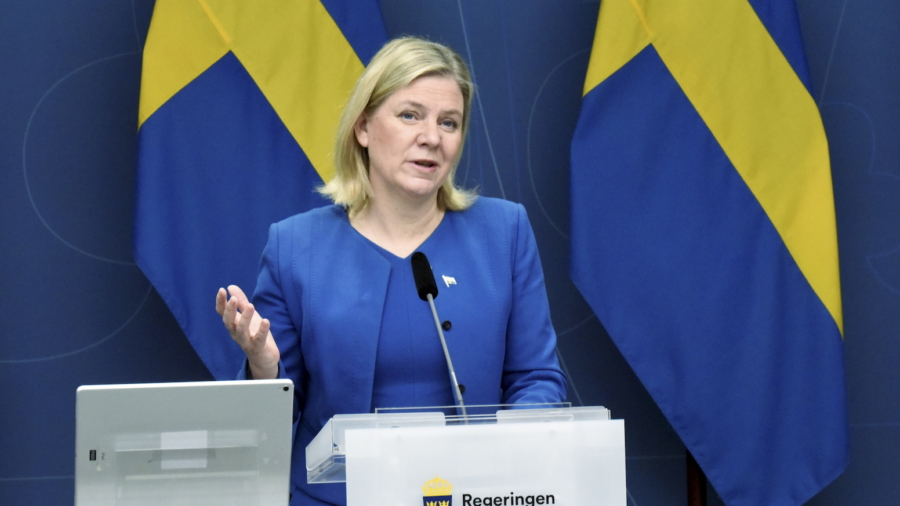
"It is time to open up Sweden again," Swedish Prime Minister Magdalena Andersson said during a press briefing. "While the pandemic is not over it has entered an entirely new phase."
"The message today is therefore that restrictions are dropped from Feb. 9, and at the same time we urge all employers who have staff working at home to plan for a gradual return to the workplace," she added.
Starting next week, people will be allowed to dine at restaurants again with no limitations on how many people can be inside, or how much space there should be between them. The requirements for COVID-19 vaccine certificates and wearing face masks on public transportation will also be removed, as well as the recommendation to limit social contacts.
Andersson said the reason the government loosened many restrictions is due to health authorities having an improved understanding of the CCP virus and a rise in the country's COVID-19 vaccination rates.
"This allows us to open up society, not least to everyone vaccinated," she said. "Looking ahead, infection rates will remain high for a while longer, but as far as we can judge, the worst consequences of the contagion are now behind us."
Meanwhile, in other parts of Europe, the Danish government lifted many CCP virus restrictions this week, with officials saying COVID-19 is no longer considered a "socially critical disease."
Just hours after Denmark lifted restrictions, Norway also followed by lifting its ban on serving alcohol after 11 p.m. and removing the cap on private gatherings of no more than 10 people.