


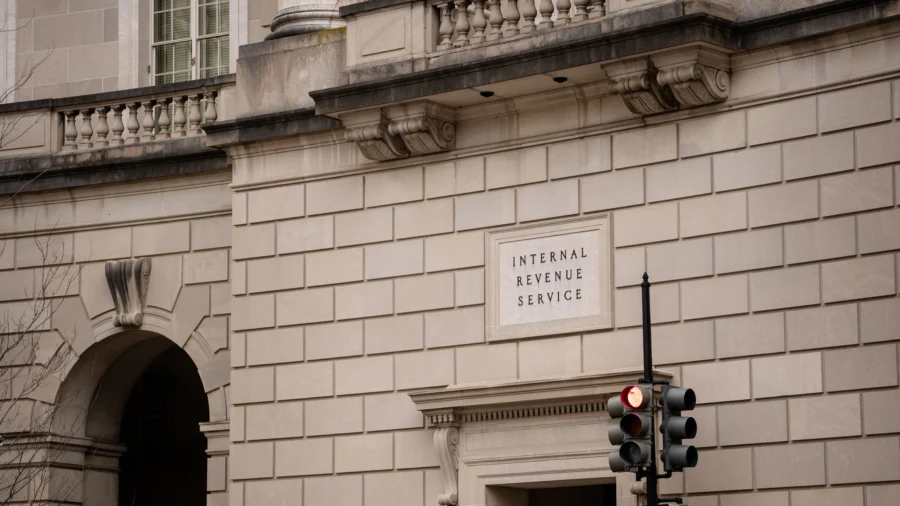
Tax noncompliance among federal employees and retirees has increased over recent years, partly due to the suspension of certain collection programs during the COVID-19 pandemic, according to a May 6 report from the Treasury Inspector General for Tax Administration (TIGTA).
Data from the Internal Revenue Service’s (IRS) federal delinquency initiative (known as FERDI) shows that “the overall delinquent balance owed by federal employees and retirees increased by more than $1.5 billion (32 percent) between FY 2021 and FY 2024,” TIGTA said.
“The federal and retiree workforce decreased by less than one percent from FY 2021 through FY 2024. However, there was a significant increase of 43 percent in the number of delinquent federal employees and retirees during the same period.”
As of 2024, “there were more than 571,000 current federal and retired employees with an outstanding tax obligation owing approximately $6.3 billion.”
According to the IRS Collection management, the annual increase in taxes owed by current federal employees and retirees was due to temporary pauses in three initiatives during the COVID-19 pandemic and recovery years—collection notice issuance, levy programs, and the Automated Substitute for Return program, which is an enforcement tool to deal with nonfilers.
In August 2024, the IRS started a phased resumption of levy programs, with the agency anticipating that delinquency rates will decline over the upcoming years, the report said.
To address noncompliance among current federal employees and retirees, IRS Collection created Notice LT36 in May 2025. The letter encourages such people to voluntarily pay off their tax dues. By July 14, 2025, around 427,000 of these letters were sent by the IRS.
As of August 2025, around 59,000 LT36 recipients had made a payment, with 4,700 taxpayers paying off their outstanding balances in full. In total, the IRS collected $58 million following the issuance of these notices.
In the report, TIGTA cited a letter sent by Sen. Chuck Grassley (R-Iowa) to the Acting IRS Commissioner last year, which expressed concerns about high delinquency rates among current federal employees and retirees.
“All federal employees have a heightened responsibility to follow the laws and rules and pay their taxes,” Grassley said in the April 2, 2025.
“Taxpayers deserve to be assured that federal employees, whose salaries and benefits are funded through taxpayer dollars, are held to account by the IRS for failing to pay their tax obligations, just like the rest of Americans are held to account.”
IRS Employee Non-Compliance
In 2024, TIGTA published a report detailing its auditors’ assessment of IRS employees. According to the report, out of the 85,359 employees at the IRS, 3,414 had unpaid taxes of around $21 million.In addition, among IRS contractors, many of whom are former agency employees, 10 percent had outstanding taxes of roughly $25 million.
And while “the law requires an employee who has either willfully not filed or willfully understated their taxes due to be removed, subject only to the IRS Commissioner’s mitigation, this disciplinary action is not always enforced,” the report said.
Meanwhile, an August 2025 post by the Taxpayer Advocate Service, an independent organization within the IRS, said that current and former federal employees can get an LT36 notification even if they do not owe any tax dues.
In fact, not filing tax returns is enough for the IRS to issue these notices, according to the organization. “The IRS can garnish your pay and benefits. FERDI permits wage garnishment, pension withholding, and other automated collection actions,” the post said.
According to the organization, the IRS was sending LT36 notices to several former and current federal workers with unpaid tax debts at the time.
“Some agencies are seeing more notices than others. The U.S. Postal Service and Department of Veterans Affairs report higher rates of affected employees. Noncompliance can lead to job loss. Proposed Office of Personnel Management rules will now allow agencies to fast-track dismissal for an unresolved tax debt.”