


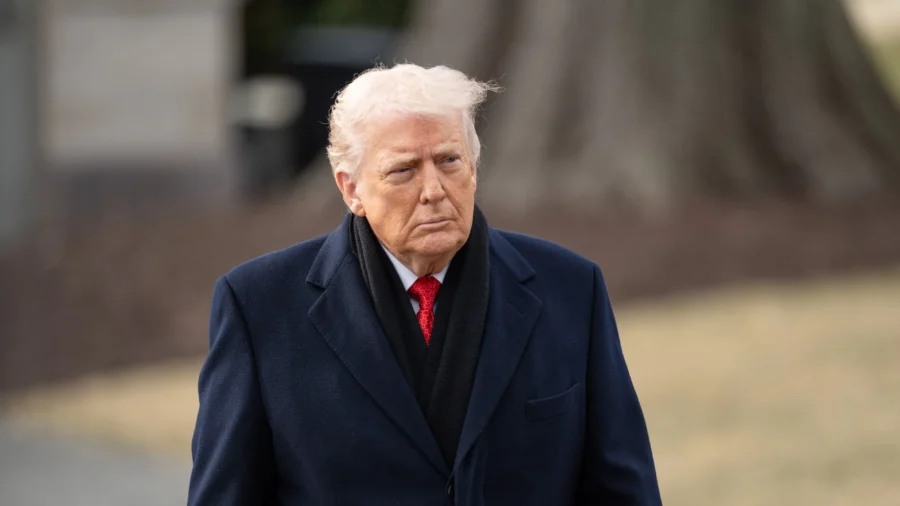
U.S. President Donald Trump said on Jan. 28 that a “massive armada” is heading to Iran and urged Tehran to come to the table to make a deal on nuclear weapons.
“Hopefully Iran will quickly ‘Come to the Table’ and negotiate a fair and equitable deal – NO NUCLEAR WEAPONS – one that is good for all parties. Time is running out, it is truly of the essence!” Trump wrote.
According to Trump, the fleet is ready to “fulfill its mission, with speed and violence, if necessary.”
“As I told Iran once before, MAKE A DEAL! They didn’t, and there was ‘Operation Midnight Hammer,’ a major destruction of Iran. The next attack will be far worse! Don’t make that happen again,” Trump said.
The message, shared on X, also said that if pushed, Iran would defend itself and “RESPOND LIKE NEVER BEFORE!”
“Last time the U.S. blundered into wars in Afghanistan and Iraq, it squandered over $7 trillion and lost more than 7,000 American lives,” the post also said.
Statements on US–Iran Talks
Last month, Trump said he may support more strikes on Iran if the country makes advances in its nuclear or long-range weapons program.However, according to local media reports, Iranian Foreign Minister Abbas Araghchi told reporters in Tehran on Jan. 28 that there has been no contact in recent days with U.S. regional envoy Steve Witkoff.
He added that Iran has not submitted any request for negotiations and said that “negotiations cannot work under threats.”
“Talks must take place in conditions where threats and excessive demands are set aside,” Araghchi said, according to Iranian state media Press TV.
Responding to questions about a potential meeting with IAEA Director General Rafael Grossi, Araghchi stated that no such meeting is currently planned.
US and Allies Push Enforcement
Diplomatic pressure on Iran increased in September, when the U.N. reinstated an arms embargo and other sanctions on the Iranian regime.It included bans on arms imports and exports, restrictions on ballistic missile technology, travel bans, asset freezes, and provisions allowing the seizure of prohibited cargo linked to Iran.
European powers offered Iran a delay of up to six months before reinstating sanctions, giving negotiators time to pursue a long-term agreement—provided Tehran readmit U.N. nuclear inspectors, address concerns over its enriched uranium stockpile, and return to talks with the United States.
The United States and about 40 countries gathered last week in Prague for a symposium focused on implementing the restored U.N. Security Council resolutions (UNSCRs).
“In view of the Iranian regime’s continued proliferation threat and the brutal crackdown on Iranian protestors, the United States and partners recognize the urgent need to promote universal implementation of the UNSCRs and associated restrictive measures on Iran’s proliferation activities,” Pigott said.