


WASHINGTON/ISLAMABAD—President Donald Trump said on Sunday he had told his representatives not to rush into any deal with Iran.
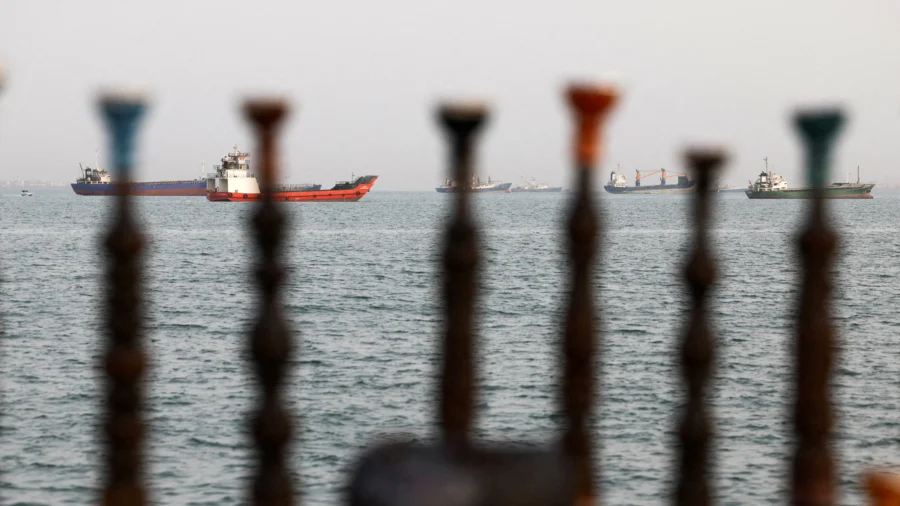
The U.S. blockade on Iranian ships on the Strait of Hormuz would "remain in full force and effect until an agreement is reached, certified, and signed", Trump wrote on Truth Social.
Negotiations were progressing and the U.S. relationship with Iran had become more professional and productive, he said. But he added: "Both sides must take their time and get it right. There can be no mistakes!"
A day earlier, Trump said Washington and Iran had "largely negotiated" a memorandum of understanding on a peace deal that would reopen the Strait of Hormuz, which before the conflict carried one-fifth of global oil and liquefied natural gas shipments.
It was not clear whether the agreement he was referring to on Sunday was the interim memorandum of understanding that has been under discussion, or a much more challenging final peace settlement, likely to take much longer.
Hope for Relief in Global Energy Crisis
Various media in the United States and Iran had said the memorandum setting out a framework for ending months of fighting would, if concluded, initially lift a U.S. blockade on Iranian vessels and reopen the waterway, which Iran has shut with threats to attack shipping.Iran's Tasnim news agency said differences remained over one or two clauses. Tasnim cited a source as saying there would be no final understanding if the U.S. continued to create obstacles.
In another potential stumbling block, a military adviser to Supreme Leader Ayatollah Mojtaba Khamenei said Tehran had the legal right to manage the Strait of Hormuz, though it was not clear if that meant continuing to decide which ships can go through.
Any deal reinforcing the current fragile ceasefire would bring relief to markets but not immediately quell a global energy crisis, which has driven up costs of fuel, fertilizer, and food.
Even if the war ends now, full flows through the strait will not return before the first or second quarter of 2027, the head of the Abu Dhabi National Oil Company said last week.
Iran's Revolutionary Guards said 33 vessels had passed through the strait over the past 24 hours after getting permission from Tehran, still far short of the 140 on a typical day before the war.
Trump has repeatedly said the United States struck Iran to prevent it from obtaining nuclear weapons.
Iran "must understand ... that they cannot develop or procure a Nuclear Weapon or Bomb", he reiterated in his post on Sunday.
Iran has long denied it is pursuing such weapons and says it has a right to enrich uranium for civilian purposes, although the purity it has achieved far exceeds that needed for power generation.
Washington's close ally Israel sees its arch-enemy Iran's nuclear program as an existential threat. It is also reluctant to have its hands tied in Lebanon, where it has occupied part of the south to fight Hezbollah, the Iranian-backed terrorist group that has repeatedly attacked Israel in support of Tehran's aims.
Trump had spoken on Saturday to Israeli Prime Minister Benjamin Netanyahu, and on Sunday Netanyahu said the president had agreed with him that any final agreement with Iran must remove the nuclear threat, adding:
"That means dismantling Iran’s nuclear enrichment sites and removing its enriched nuclear material from its territory."
Iran: 'Issues Still Need to Be Discussed'
Iranian Foreign Ministry spokesperson Esmail Baghaei said on Saturday that "the trend this week has been towards a reduction in disputes, but there are still issues that need to be discussed through mediators."Baghaei said the issue of the U.S. blockade on Iran's shipping was important, but that its priority was ending the threat of new U.S. attacks and the parallel conflict in Lebanon.
The U.S.–Israeli bombing of Iran killed thousands of people in Iran before it was suspended in early April.
Israel has also killed thousands more and driven hundreds of thousands from their homes in Lebanon, which it invaded in pursuit of Hezbollah. Iranian strikes on Israel and neighboring Gulf states have killed dozens.
Trump said on Friday he would not attend his son's wedding this weekend, citing Iran among the reasons for staying in Washington.
He also spoke on Saturday with leaders from Saudi Arabia, Qatar, the United Arab Emirates, Jordan, Egypt, Turkey and Pakistan, who encouraged Trump to agree to the emerging framework, the U.S. news outlet Axios reported.