


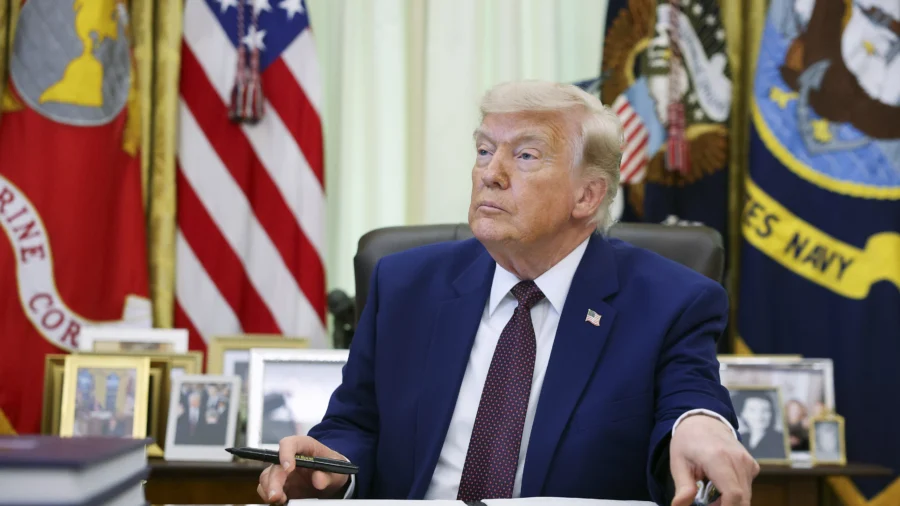
U.S. President Donald Trump said on June 9 that the United States and Iran were in the "final throes" of negotiations on a deal that would permanently block Tehran from obtaining nuclear weapons, while Iranian officials said they hoped talks could reach a conclusion by the end of June.
Both sides halted attacks following a weekend exchange of missile strikes that threatened to derail months of efforts to settle the war through diplomacy, which Trump said is his preference rather than more bloodshed.
“If we do the bombing, you know a lot of people are going to be killed. Who wants to do that? I don’t," Trump said. "We’ll have a signed document that’s actually stronger than doing the bombing.”
Trump said he had a "very good conversation" with Israeli Prime Minister Benjamin Netanyahu, during which the Israeli leader agreed to avoid further escalation with Iran for the time being.
"He was hit, and he hit back, and I can't blame him for that," Trump said. "But he was hit, he hit back, and now they've called it quits. So they're going to just leave each other alone for another week or something."
Trump also said that the Strait of Hormuz, a critical shipping lane through which roughly one-fifth of global oil and liquefied natural gas trade normally passes, could reopen quickly once an agreement is signed.
"The Strait will open up right away. It will open up immediately upon signing, which could be in two or three days," he said.
He said the agreement would also prevent Tehran from obtaining nuclear weapons, another key objective that Trump has pursued in the negotiations alongside reopening the Strait of Hormuz and restoring unrestricted shipping of crude and other critical commodities.
"We are in the final throes of what will be a very, very good deal that will not allow in any way, shape, or form nuclear weapons," Trump said.
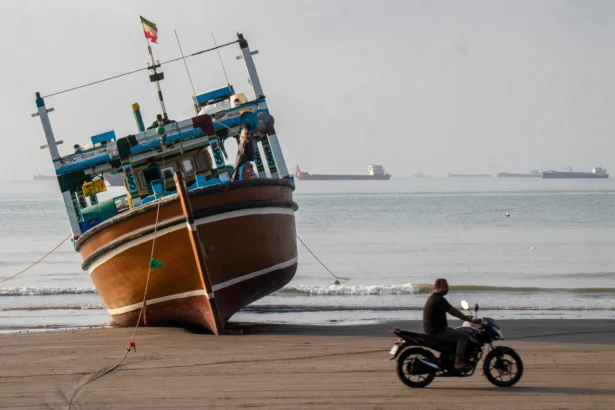
Even as Washington and Tehran have pursued negotiations through Pakistani mediation, Iran has continued to restrict maritime traffic through the Strait of Hormuz, rattling energy markets and raising fears of broader economic disruption.
Renewed hostilities between Iran and Israel over the weekend raised concerns that the conflict could devolve into a wider Middle East war.
Iran's ambassador to the United Nations, Amir Saeid Iravani, told reporters in New York that the two sides were still exchanging views on a final text of an agreement framework.
“We have not received to a final document, but we are pursuing to receive it,” he said in response to a question from The Associated Press after he spoke at a U.N. Security Council meeting on Afghanistan on June 8.
When asked whether an agreement could be reached before the end of June, he replied: "We hope so. We hope so."
Blockade Pressure
In his remarks to reporters on Tuesday, Trump credited a U.S.-led blockade of Iranian ports with helping push Tehran toward an agreement, stating that economic pressure had proven more effective than an expanded military campaign."I think we're very close to having a very, very good, strong, powerful deal," Trump said.
"If we go and bomb, which we can do very easily, if we want, and we spend another two or three weeks bombing, they'll have nothing left whatsoever, but you won't have the Strait open for months.
"What has proven to be a very powerful thing is the blockade. The blockade's turned out to be much stronger than bombing."
In a separate appearance during a tele-rally for Sen. Lindsey Graham (R-S.C.), Trump said the United States would soon be in a position to declare "total victory" over Iran, a move that would mark a turning point in the recent run-up in crude prices.
"They cannot have a nuclear weapon. ... We've been a very tough team, and I think we are winning that battle, but you're really going to win it over the next two weeks when we declare total victory," he said. "It'll happen very soon, and oil prices will come tumbling down."
Lebanon Remains a Sticking Point
Despite signs of progress in U.S.–Iran peace negotiations, uncertainty remains over Lebanon, where Israel has continued military operations against the Iran-backed Hezbollah terrorist group.
Iran's military said its forces had delivered a "painful response" to Israel in support of Lebanon and warned that "far more severe and crushing measures" would follow if Israeli operations continued.
Iran's ambassador to the United Nations said Monday that the ceasefire was comprehensive and applied throughout the region, including Lebanon, a position Israel has rejected.
While Netanyahu has signaled support for avoiding further direct confrontation with Iran, he has insisted that military operations against Hezbollah would continue.
Israeli Defense Minister Israel Katz said Israel rejects attempts to link its campaign in Lebanon to any ceasefire arrangement with Tehran and warned that Hezbollah attacks would trigger additional strikes on Beirut's southern suburbs.
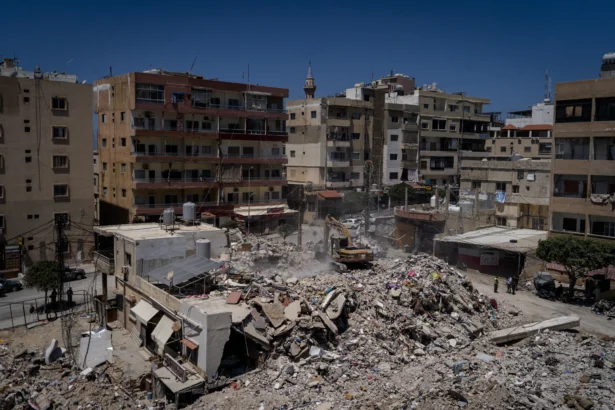
The Israeli military on June 9 issued evacuation warnings for parts of the Lebanese city of Tyre ahead of possible operations, while continuing strikes against what it described as Hezbollah targets.
The dispute over Lebanon has emerged as one of the most significant obstacles to a final agreement.
Iran has said repeatedly that any durable settlement must include an end to Israeli military operations in Lebanon, while Israeli officials maintain that Hezbollah poses a separate security threat that cannot be addressed through U.S.–Iran negotiations.
Pakistani Prime Minister Shehbaz Sharif, whose government has helped mediate talks between Washington and Tehran, urged all sides to avoid actions that could jeopardize the diplomatic effort.
"The recent surge in violence in the Middle East is a stark reminder of the dangers associated with a tenuous ceasefire," Sharif wrote in a post on X. "As we work earnestly and painstakingly ... to find a peaceful diplomatic solution to the conflict, and especially when the final objective is just about to be achieved, we sincerely urge all sides to exercise restraint and give peace a little more chance."